Coming off a winter with zero chances to ice fish any of Connecticut's deep-water lakes, I had been itching to visit one in a kayak this spring. It took a little help during Holy Week for my cards to line up right. With a day off of work, kids in school, and ideal weather conditions, excitement levels were through the roof as I drove north last Thursday.
When I finally launched at 8:30, it was 46 degrees with fog thick enough to make me question how well I knew my surroundings. Later in the morning, when it eventually burned off, temps spiked over 20 degrees. Thankfully there was little to no wind to speak of, making the surface of the lake smooth as glass and allowing sound to carry more than usual. The loud and eerie calls from a handful of loons fishing nearby reminded me of time spent on Woods Pond in Maine as a kid.
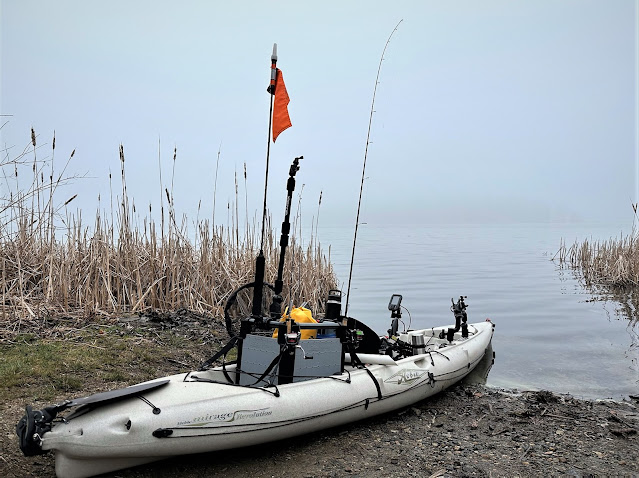 |
| rigged & ready |
After peddling halfway to the planned starting point, I saw a fish eat on the surface close enough to warrant a hasty cast. It resulted in a reactionary strike and a long-distance release, but it was a welcomed sign of activity to come. As I approached the deepest bowl of lake, there were two gents drifting in a small jon boat – the only other anglers on the entire body of water.
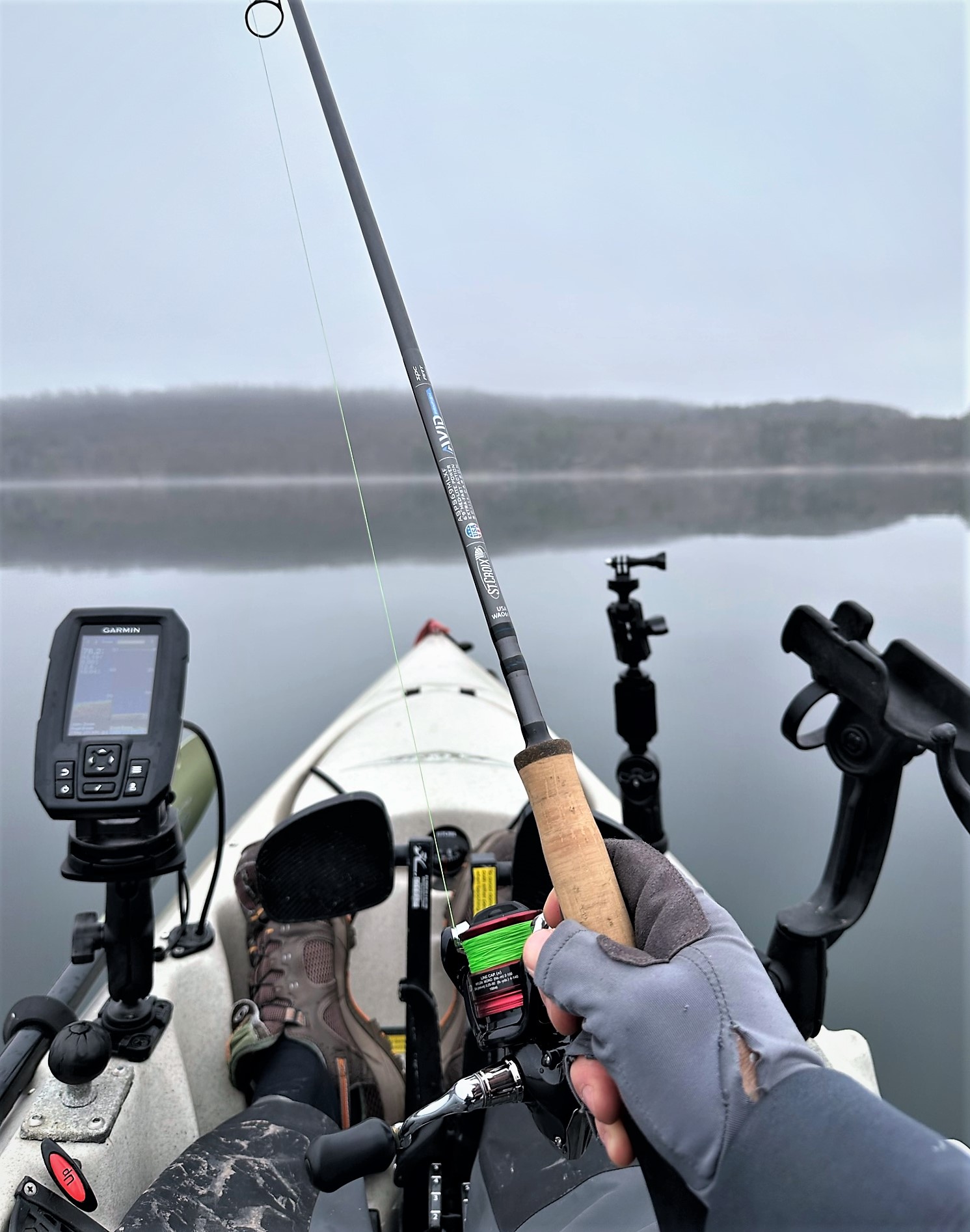
My game plan was the same in the kayak as it was when I have been fortunate to ice fish here: vertical jigging with soft plastics and metal spoons to imitate the lake's main forage of landlocked alewives. Whether my fish finder was not up to the task or I still haven't fully dialed-in the unit yet, I couldn't see my jig or targets on screen in detail like I usually do while on the ice. Though still confident in my method and the spot to keep doing what I was doing, part of me felt like I was fishing blind.
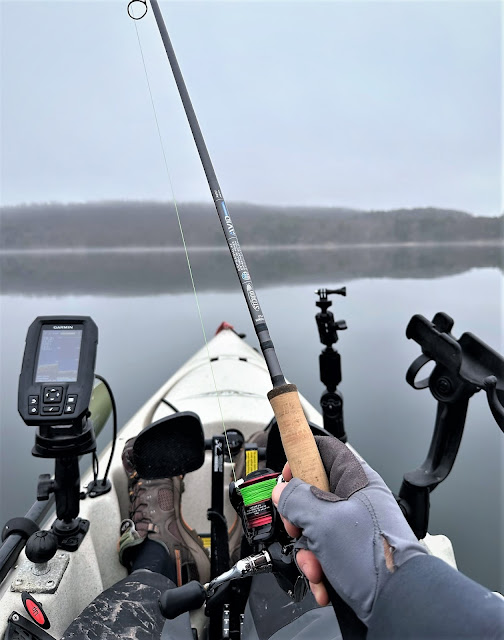 |
| glass |
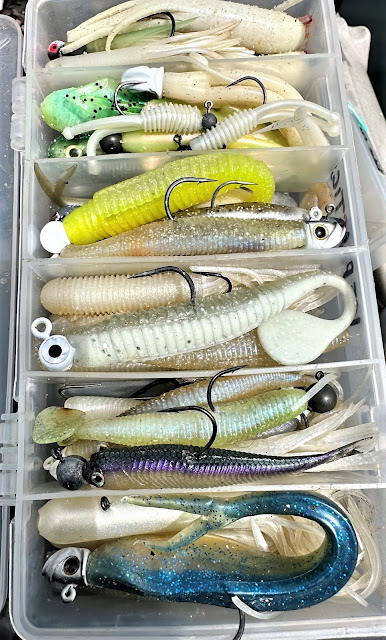 |
| soft plastics |
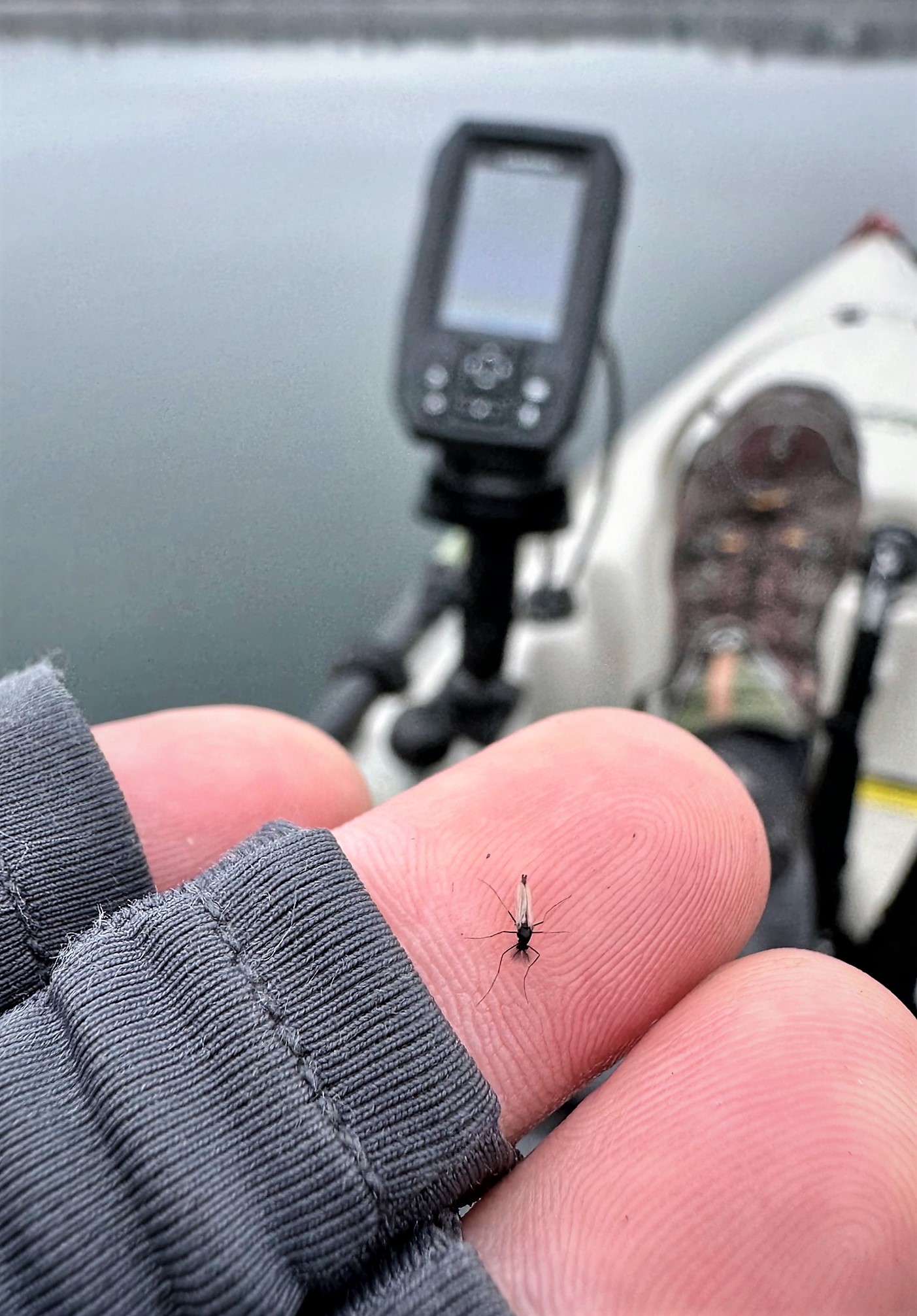
That method consisted of jigging on bottom and up through the water column with occasional pauses in hopes a chasing trout would pounce on my offering. More than few times I stopped to cast at the ever increasing number of trout feeding on top. Some of the takes were gentle sips while others were a porpoising action that revealed flanks of spotted silver and copper. There were unmistakably large fish in the mix. I reached over the side of the kayak and cupped in my hand what they were eating—small midge that were emerging from the lake bottom about 75-feet underneath. As the sun started to peak out, the hatch shifted from midge to larger stone flies. It was a sight to see.
 |
| elephants eat peanuts; big trout eat midge |
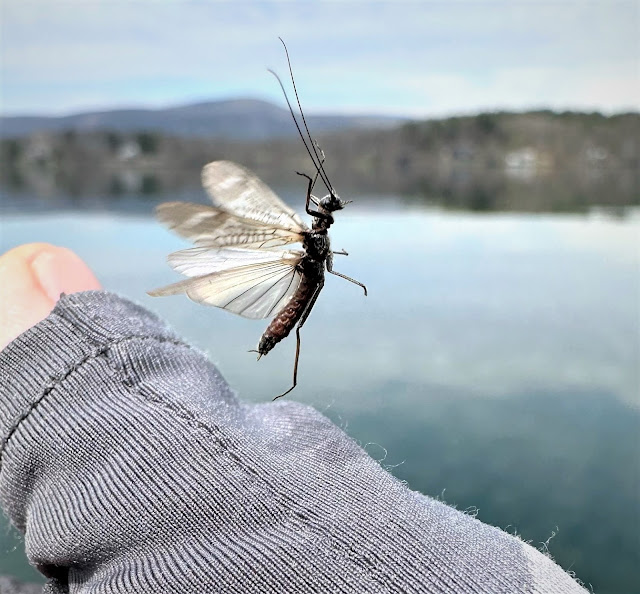 |
| a stonefly takes flight |
The brown trout eating on the surface were keyed in on bugs, wanting not much to do with the baitfish offerings I presented them. Never during the trip planning stage did I ever think a fly rod and assortment of dry flies would be needed. I hooked and lost one more on the surface, but ultimately decided my time would be better spent targeting the trout I couldn't see eating herring down below.
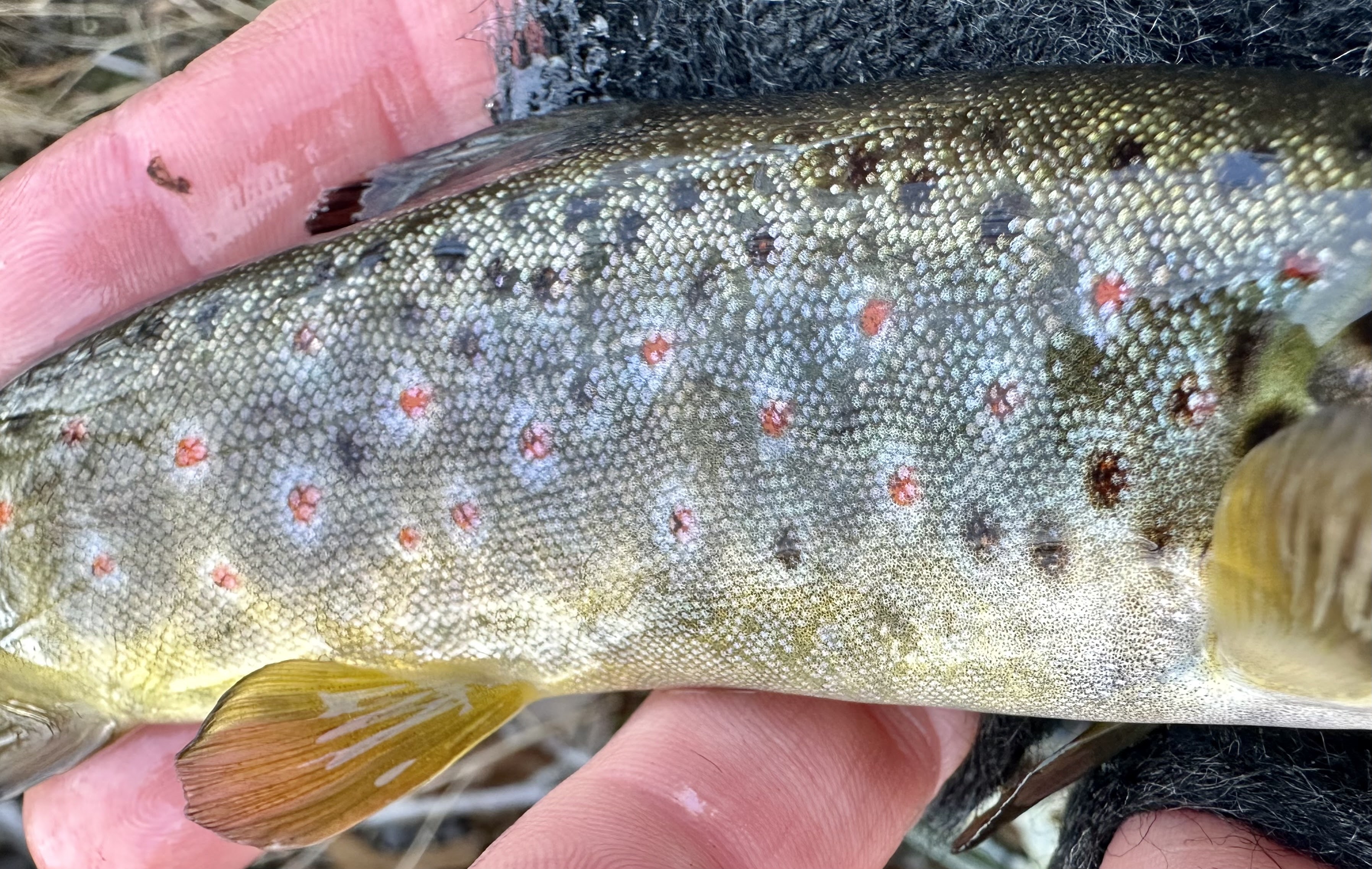
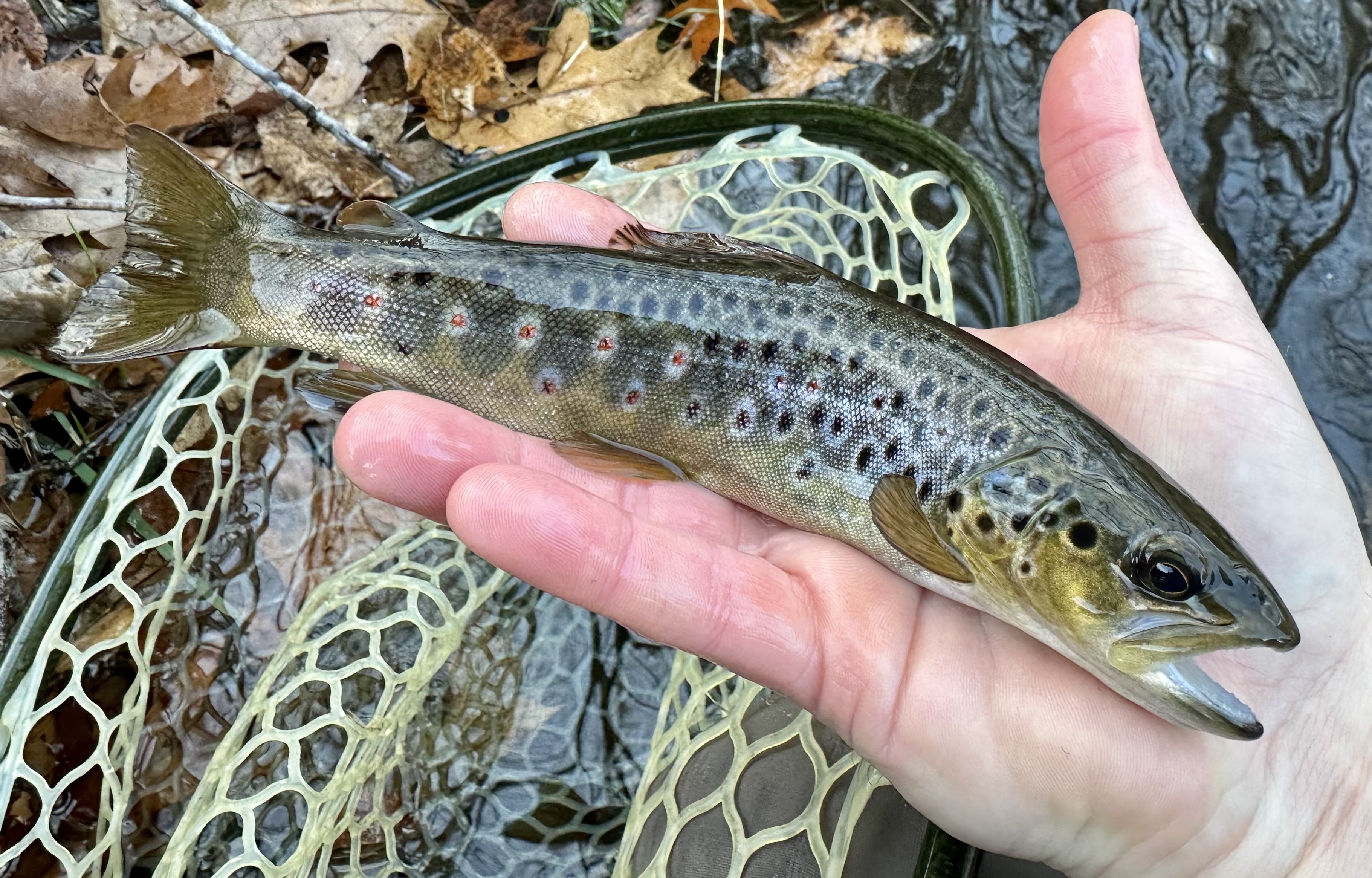
During one of the many retrieves with a lead head and soft plastic, something heavy doubled over my new St. Croix rod on its maiden voyage. With the water so clear, I got the first look of the fat seeforellen brown trout when it was still more than 10 feet deep. I had stared down at many silvery trout on this lake through holes in the ice, but never before in open water. The sharp single hook of the jig was firmly planted in the trout's jaw, yet the jerky headshakes and barrel rolls on its way up from the depths had me muttering a hybrid of prayer and cursing. When it finally came within arm's length, I slid the net under the weight of its body, hoisted up, and let out a sigh of relief.
On a bump board on my lap, the fish measured a hair over 22-inches. More impressive than its length though, was its girth. This trout was built like a Mack truck—a body type achieved on a healthy diet of fish, not just bugs. The population of illegally-introduced alewives in this lake is booming, and the seeforellen strain stocked here are taking full advantage.
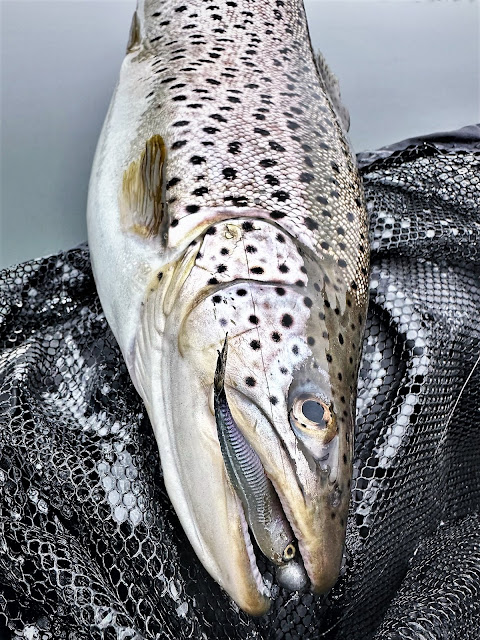 |
| herring eater |
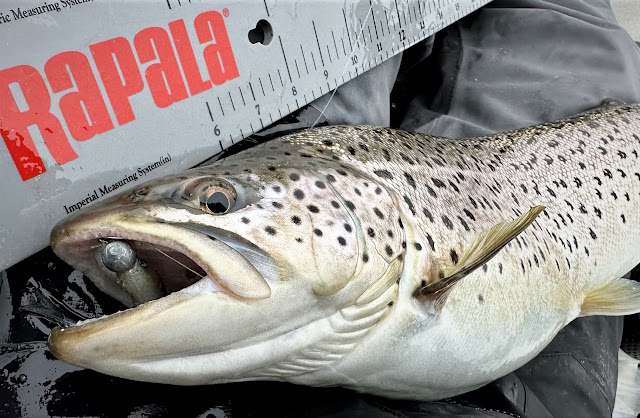 |
seeforellen
|
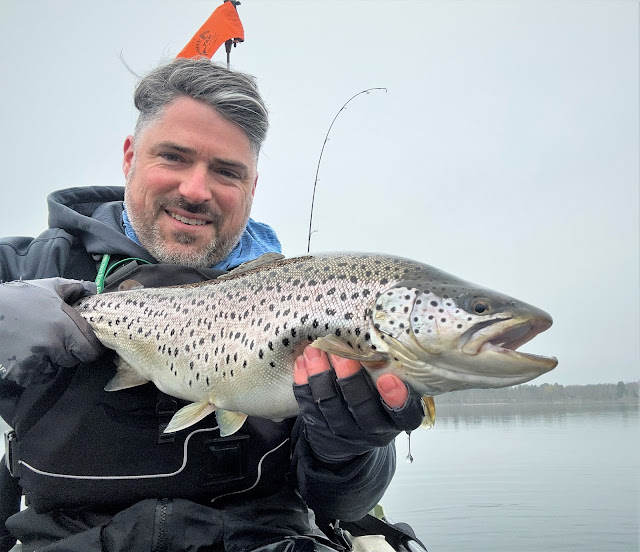 |
catch & release trophy for CT waters
|
After admiring the trout in the water, one of the heaviest I have ever landed in Connecticut, it kicked away strong, straight back down to whence he came. It was an awesome feeling and affirming moment. The idea of a solo kayak mission on this body of water had been consuming me for months since the winter that never was. While I may never luck out with the same extraordinary conditions again, it was satisfying to know that I could pull this type of trip off and have a chance to catch big trout like that, or bigger.
Morning grew late and the fog completely burned off, revealing a bright blue sky and a completely different day than when I started. It was darn right hot out for April. The amount of fish eating up top dwindled. I missed one more solid hit just off bottom. My time on the water was growing thin, but the long peddle back to my truck was an enjoyable one. I hugged the shoreline and snuck right up on a pile of largemouth bass of impressive size, yet couldn't coax one into biting a tube. There were two bald eagles perched in a tree along the last leg of my journey back. A fitting way to finish an outing that I will look back on for as long as I'm around.
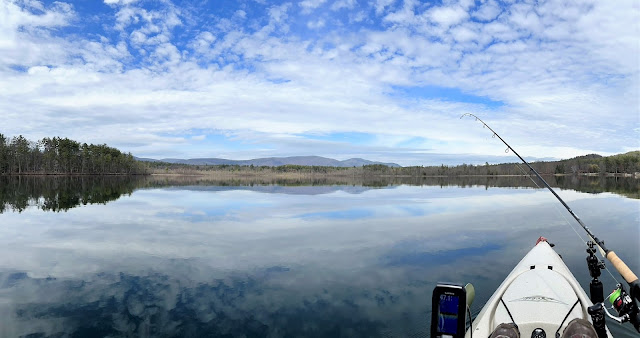 |
a gorgeous body of water
|
 |
| had to pullover for this on the way home; spring in New England |
 |
| celebratory libations |