One of the cool things about fishing for carp is that it be as simple as using beat-up rods and canned corn or it can be as serious as using thousand-dollar set ups and homemade boilies. A few friends that sit on the latter part of that spectrum recently wrapped up a week-long camping and carping trip on private land along the Connecticut River. They may not readily admit it, but these guys are among the best carp anglers in the region. I was fortunate enough to drop in on their carp camp for a day.
The last time I fished with this crew was in the fall of 2013 and it was an absolute blast. The amount of carp knowledge that fell on my lap in that session was out of control. This time didn't disappoint either. While the windy conditions were a pain to deal with, lot of laughs were had and there was a steady pick of smallish carp up to 21-pounds throughout an incoming tide. However, just about every other day that week provided much better action and size with eight fish over 30-pounds gracing their nets.
Throughout the week they had special guests visit from all over and there was enough camera equipment on hand that it looked like a GoPro commercial. This crew takes pride in their fishing and camping and do a hell of a job documenting and sharing their passion. Here is one of their videos from the same spot last fall. I can't wait to see what they have in store for the video project this time around.
One of my buddies is a hardcore carp angler and recently invited me to join him for a day on the Connecticut River, a known big carp Mecca in New England. He and a couple friends stayed on private land for a week with sights set on hauling in serious amounts of fish. For the first part of their trip, weather was rather inconsistent and the carp bite suffered because of it. As the week wore on however, Mother Nature strung together a few days of stable conditions and action picked up the night before I showed up.
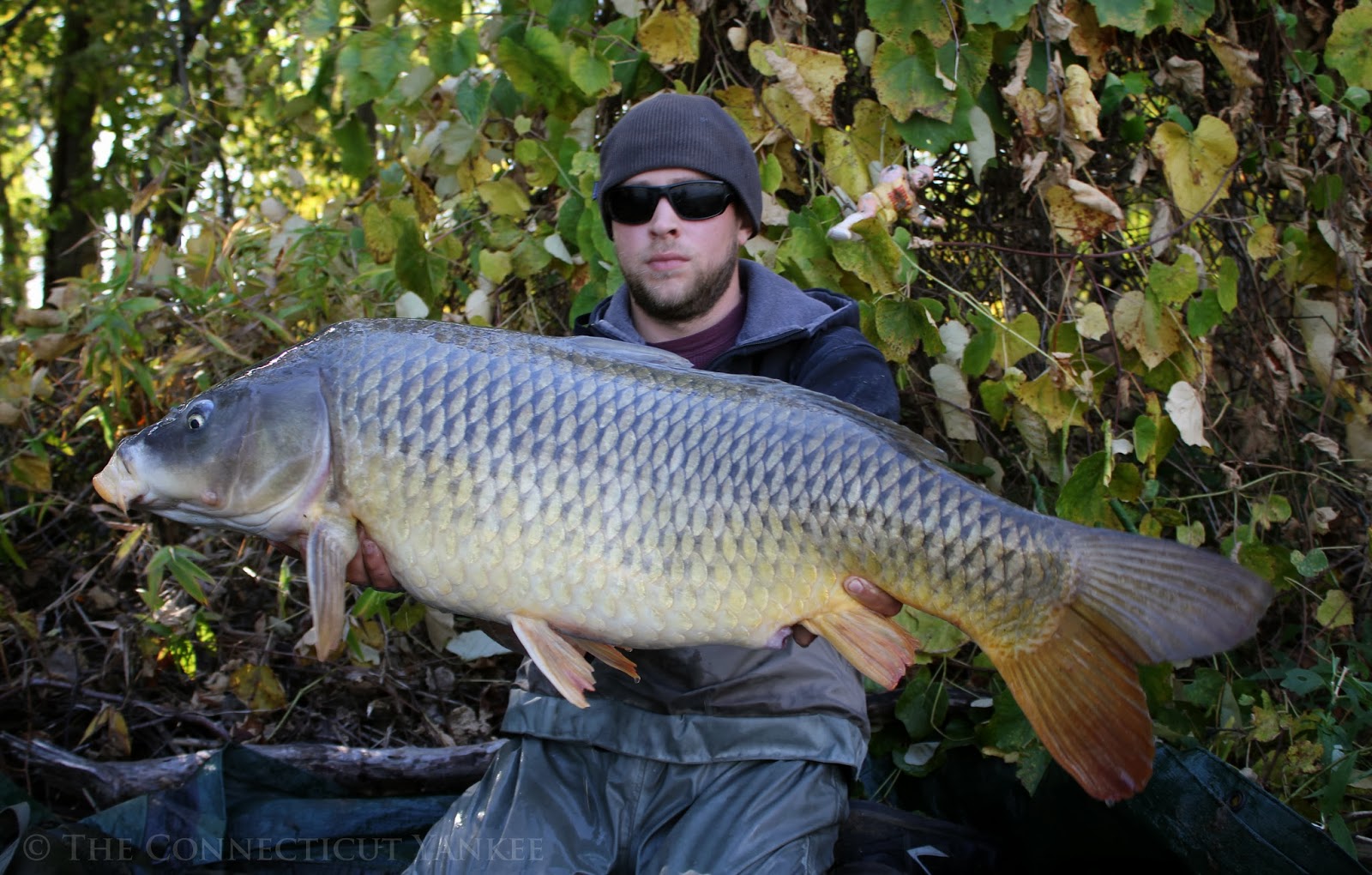
On a picture-perfect autumn day in Connecticut, I watched and learned from some of the best carp fishermen around. The bite grew hot at times, especially during slack low tide when we had four lines go off at once. Over the course of the day, I had an absolute ball hooking four common carp and landing three of them--all over the 10-pound mark. The cherry on top was witnessing a beautiful 33-pounder that was caught and released by Connecticut's current state record holder. And, as in many forms of angling, the downtime between fish was full of stories, laughs and swigs of beer and brandy.
Even though it had been nearly two years since I had last targeted carp, this trip reaffirmed my respect for the species, as well as my appreciation for the knowledge, time and money that goes into doing it right. I guarantee it won't be another two years before I do it again.
A trail like this always leads to something good.
Carp fishing is made up of a good mix of preparation and relaxation with a sprinkle of utter chaos.
Not your father's carp rig; these guys don't mess around.
My first carp of the day was also my prettiest, with great coloration on its fins and tail.
A phenomenal backdrop added to a good day of fishing.
Mike hoisting up a common carp of 33.1-pounds.
The Cindy Crawford of carp?
Another look at the gorgeous fish before its release.
Ethan tallying the catch totals, which were closing in on 1,000-pounds at this point.
My third carp of the day, each one fought as hard as the next.
Late summer is peak season for Atlantic blue crabs in the tidal rivers and creeks around Long Island Sound. According to most reports, we're experiencing a decent of run of crabs this year so far, especially east of New Haven. Friends and I have been getting in on the action and turning out some delicious meals too. Over the last few weeks, I've been fortunate to crab at night and during the day, on shore and by boat, and in a variety of ways from setting hand-lines and traps to scoop-netting along pilings and mud banks.
Crabbing is a fun family-friendly activity that peaks during a time of year when other types of fishing slow down due to warm water temps. One of my favorite parts of crabbing is the camaraderie--there are always lots of laughs, teamwork and cold beer involved. But make no mistake; catching, cooking and picking blue crabs is a ton of work, yet the thrill of the hunt and the tasty finished product make all the effort worthwhile.
While the act of capturing big blue claws is a rush, the end result on the dinner table is the main draw for many crabbers. There are an endless amount of ways to prepare these crustaceans and so far this season we have stuck to classic crab cakes and a Portuguese stuffed-crab dish called Sapateira. Our friends that introduced us to the latter recipe recently made crab-filled raviolis from scratch, which sound amazing. Of course, there is always the option to keep it simple and get dirty with a mallet and Old Bay seasoning right after steaming.
In the end, there is no wrong way to catch or cook a blue crab--just get while the gettin's good!
It had been more than ten years since I last set out to catch blue crabs and I can't really tell you why. Crabbing is such a fun, laid back way of spending time on the water. As a seafood lover, blue crabs are a delicacy that taste all that much better when you catch and cook them yourself. Crabbing is also a great change of pace during the dog days of summer, when surf fishing gets a little tougher due to bath-like water temps. Blue claws thrive in warm water, especially this time of year in the lower Connecticut River. There are several methods of capturing blue crabs. When I was younger, my neighbor used to take me at night to marinas in Clinton and Madison, where we would sneak around the docks like ninjas with flashlights, scooping crabs clinging to the pilings with long-handled nets. Other crabbers live by the hand-line method, which is as simple as tying bait (often times raw chicken) to string and slowly pulling in crabs that hang onto their prize for dear life. Another tactic is setting crab traps. The one that I'm most familiar with is a square cage with trap doors that open up once the trap hits bottom. Crabs smell the bait inside, climb on in and when the line is pulled tight, the trap doors close and voilà. During my weekly calls for fishing reports, numerous tackle shop owners have told me that, as in 2010, this has been a banner year for blue crabs in the tidal rivers of Long Island Sound. I kept telling myself that I was going to capitalize on the opportunity and the time finally came this weekend. Two friends, Blaine of Anderson Guide Service and Andrew of Fishin' Factory III, invited me along on their first crabbing trip in years. The plan was to launch Andrew's Carolina Skiff in Old Saybrook, net some fresh bait, meander up some back channels and trap crabs for a few hours. We met at the empty boat launch at 4:30 AM and set out to locate schools of menhaden for bait. The baitfish weren't tightly balled up so obtaining our share took more time than planned. After about an hour, we had what we needed in the cooler through a team effort of Andrew behind the wheel, Blaine tossing the cast net, and myself manning the million-watt flashlight. Along with the adult bunker for crab bait, we also managed a bucket-full of nice sized peanut bunker, which were vacuum-sealed to be used as pike bait for ice fishing season.
A cooler full of fresh bunker to bait our crab traps.
The smaller peanut bunker were kept as pike bait for ice fishing--that's thinking ahead!
As dawn was breaking, we motored upstream to a spot that we heard had been producing well for a few crabbing regulars. It was low tide on the tail end of a moon phase, so Andrew's high-riding skiff was perfect for the skinny water situation. We readied the traps with fresh-cut bunker chunks, tied them off to empty water bottles as makeshift buoys and set them in a nice line for easy checking every few minutes. By the time our last trap was in, the first we had set had plenty of soak time so we headed back downstream to see if anybody was home.
The first few checks came up empty and we were about to make a spot move when a trap with two keepers (five inches from spike to spike) came aboard. That was just the boost of confidence we needed to stick it out at our original location. For the next hour, almost every trap check yielded a keeper or three, including some huge, pissed-off ones that you didn't want to put your fingers near! The anticipation while drifting up to our plastic bottle buoys was just like the feeling I get when approaching a tripped flag on a tip-up while ice fishing–you never know what's on the other end. When a trap went cold, we picked it up and moved it to another crabby-looking spot, whether next to a creek mouth or along a set of piling or rocks.
Many types of baits will work for crabs, but fresh bunker is up at the top.
Blaine setting one of our traps in four feet of water near structure.
Approaching one of our makeshift buoys along a channel bank.
The blue crabs were just part of the allure of the back channels in the lower Connecticut River. Not five minutes from the boat launch, we might as well have been on another planet. The area was teeming with wildlife including fish of all kinds, diamondback terrapins, great blue herons, snowy egrets, dive-bombing osprey, bald eagles, and so many swallows that the sky looked black when they first woke from their roost. We are so lucky to have this wild oasis tucked away in southern Connecticut.
Of course the crabbing was pretty good too. It was never hot and heavy, but we chipped away at a respectable haul over a few hours. When the sun started getting high in the sky, the action in our traps slowed to a halt. We decided to make our way back downstream towards the boat launch and check the wooden dock pilings as we went. This proved to be a wise move and we added another dozen keepers to our total in short order. Blaine and I stood on the bow of the boat as Andrew navigated the tricky currents to put us an arms-length from the docks. Precise net jobs were key with this method and more than once did I botch a chance at a keeper. It didn't take long to recognize that this is a very productive way of crabbing, probably even more so under the cover of darkness.
We ended up back at the now-bustling boat launch at 11 AM with a tally of 57 keeper blue crabs. Andrew graciously gave up his share, so Blaine and I went home with nearly 30 apiece. He brought his home that afternoon to a family get-together, where they steamed and ate them with drawn butter. I steamed my share later that night and enlisted the whole family in the tedious task of picking their meat for soon-to-be delicious crab cakes. The actual act of crabbing is a big part of the whole experience, but coming full circle by cleaning and cooking the catch is right up there. I can say with the utmost assurance that it won't be another ten years before I do this again!
Crabs weren't the only thing that wandered in our traps; here's a diamondback terrapin.
Watch your fingers around big, angry blue crabs like this one!
We slowly chipped away at a nice haul of delicious blue claws.
These guys sat in the steamer for 30 minutes until bright orange.
Ready for picking and crab cakes.
Editor's note:
At dinner tonight, both sides of the family enjoyed the spoils of yesterday's Connecticut River trip. Crabbing was serious fun, but don't let anyone tell you that completing the full circle isn't a lot of work. After letting the steamed crabs sit in the fridge over night, we set up a chain gang along the kitchen counter to pick them today. It was a tedious job, but well worth the effort. We had well over two pounds of fresh crab meat when all was said and done. Then my sister-in-law whipped up some serious crab cakes, which we fried on the stove and served with a remoulade sauce. Delicious!! And to say that I've had a crab renaissance would be an understatement - I can't wait to get out there again.
Here's a video that Blaine put together from our crabbing trip. Enlarge to full screen and switch to HD viewing - enjoy!