Showing posts with label tip-up. Show all posts

Tuesday, February 4, 2025

Re-Cover

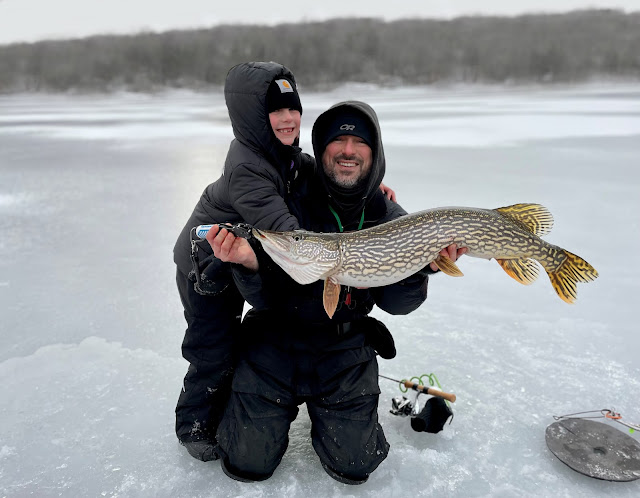
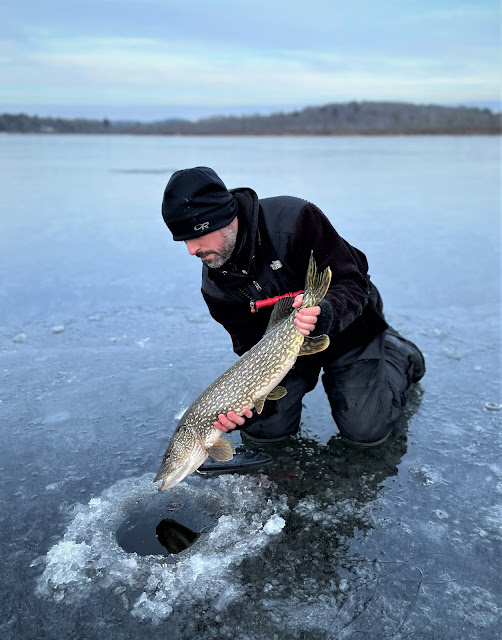
The number of false alarms was starting to remind me of The Boy Who Cried Wolf. The flag on one of my Heritage Lakers kept going up with nothing to show for it. There was zero wind to speak of that day, and my bait was the large and dead variety. Something was messing with me. Still, sooner or later, I just knew I was going to walk up to a spinning spool. I made a small adjustment by lowering the bait, laying it directly on the silty bottom. The next flag was the one. It turned out to be the largest northern pike I had ever landed, through the ice or otherwise. 

That series of events took place one mild afternoon in January 2017. Fast forward eight years and a photograph of me releasing the fish, taken by Aaron Swanson, now graces the cover of The Fisherman magazine. The new cover of an old catch has been a fun walk down memory lane. It's good timing, too, considering the Northeast is finally experiencing a winter like the old days. Unlike the last two years, there is no shortage of ice fishing opportunities. I'm trying to get out as much as I can, revisiting old haunts and even getting my girls on the ice with me. If not now, when? 

Tight lines and stay safe out there!

Sunday, March 13, 2022

Farewell & Adieu

Red-winged blackbirds are calling in the marshes. Stonflies are hatching on thin blue lines. Osprey and river herring are arriving any day. All signs pointing to winter's last gasps and another ice season's end. 

The weeks and months leading up to ice fishing are filled with anticipation. Hours upon hours devoted to prepping gear, securing bait, analyzing forecasts, and checking ice. Then, after arctic blasts transform our lakes and ponds, we fish when we can until its gone. Sometimes the season doesn't last long and the brevity of it all adds to the allure. 

This year my hardwater season lasted 51 days from January 14 to March 5. In that time I made six trips to three water bodies--the first half focusing on northern pike, the second half reuniting with a favorite trout lake I hadn't fished since 2011. Those two styles of fishing are incredibly different, but each enjoyable and exciting in their own right. 

It's always bittersweet packing away the ice gear in the rafters of my basement, but bidding farewell to winter means saying hello to spring and all of the amazing outdoor opportunities it brings. 

Here a is a short video from my ice season finale and a few other memorable moments that will hold me over until next winter.


Tuesday, February 22, 2022

Raising the Bar

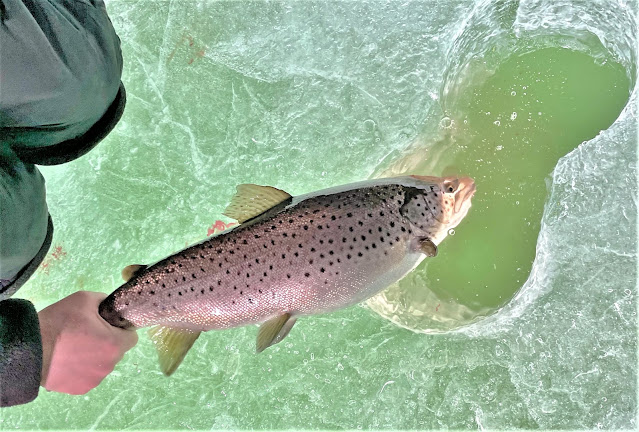
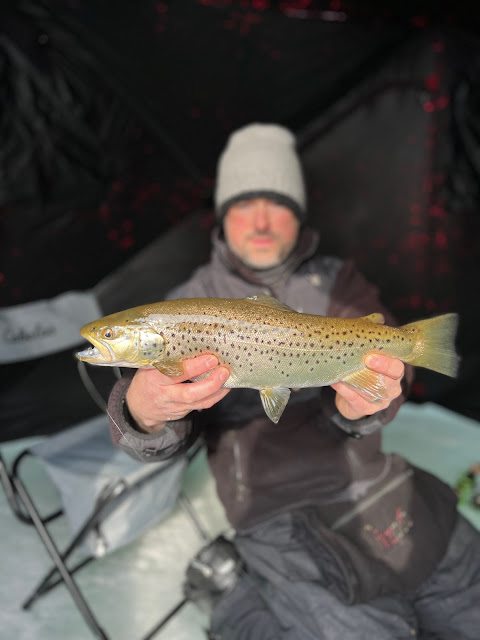
I have hooked and landed longer brown trout through the ice, but never one so heavy. This fish was stuffed yet still had room for my pike shiner set 30-feet down. By the time I had reached my tip-up, it had ripped dozens of yards of Dacron from my spool. Then I gained it back, hand over hand, and it froze on contact against the bare ice. Luckily most of the long battle was between the last 20-feet of line, half of which was 10# test fluorocarbon that gave me a little more confidence during the final throes around the hole. 

When my fishing partner reached down and helped scoop the trout topside, there was a sense of joy and relief, followed by fast action to document the new personal best before its healthy release. It is moments and fish like this one that become seared into our memory and drive us out into the elements each winter.


Saturday, January 23, 2021

Stealing Home

For the second consecutive trip, the morning bite was hotter than two hamsters farting in a wool sock. The type of bait and whether it was alive or dead didn’t matter; the pike were hungry and far from shy. Flags were popping all over our spread, but particularly along a weed line that ran perpendicular to shore. I had just released a small pike and was rebaiting the tip-up it stripped when I heard something hit the ice. I couldn’t immediately place the noise, so I scanned the direction it came from and noticed about 50 yards away the rod in my I Fish Pro was missing from view.

Over the past few years, these contraptions have helped modernize the way ice anglers catch fish with tip-ups by allowing anglers to retrieve fish using a rod and reel, instead of the traditional hand-over-hand technique. They were invented in Canada and popularized by YouTube channels like Uncut Angling, Jay Siemens, and Clayton Schick Outdoors. In Connecticut, where ice anglers can fish with up to six lines, it’s impractical to use just I Fish Pros, but friends and I have added a few to our line-up and it’s been a hell of a lot of fun. 

When it fully registered that that the sound I heard was my rod falling, I broke into the highest gear one can travel in Yaktrax across ice. A pike had taken my bait and the stiff wind had wrapped my bowed line around the tripped flag of the I Fish Pro. The fact that my conventional reel was in free spool didn’t matter; when the fish began to pull the fouled line, the rod jolted from its holder and was gradually towed toward the hole in the ice.

From a few yards out, like the scene in Sandlot where Benny steals home, I slid on my side and scooped up the dragging rod that was inches from disappearing. With some luck, I freed the braided line from the flag and kept the fish tight in the process. That kicked-off an eventful fight consisting of me dancing around the hole to achieve favorable angles while the pike peeled drag and changed directions like a warplane in a dogfight.  

By this point, one of my friends watching the spectacle unfold ran over to assist. After a valiant effort, the pike began to tire and its jaws emerged upward from the icy water. Aaron placed his hand under its gill plate and hoisted up a very well-fed northern pike. Sporting beautiful dark colors and a big head and shoulders, it was my best pike of the ice season and my largest ever taken on a rod and reel.

A couple of seconds was all the difference between me landing that fish and losing an expensive combo in a frozen lake. A lesson was learned about the need to be more cognizant of wind direction when setting the I Fish Pro, but that awesome fight and fish further cemented the tip-up’s place in my hardwater rotation. Thankfully things turned out how they did and I have noteworthy memory that will always be tied to that morning on the ice.

Photo credit: Aaron Swanson

Monday, January 4, 2021

Hells Bells

Our limit of 12 lines was set under the ice before the sun lifted over the trees. Despite only having a half day to fish, hopes were high as we drilled the first holes on this waterbody of the season. There was a layer of gray ice on top of a thinner layer of black ice; enough to feel comfortable, but an approaching storm bringing warm air and heavy rain meant a total reset was imminent.  

It’s funny how two anglers in the same area using the same thing can have completely different results, but that’s precisely how our day started. We had a mix of tip-ups and jigging rods spread over a familiar spot. They were baited with medium shiners that Buddy was able to secure on short notice. For the first two hours, my partner’s flags popped left and right resulting in more than a dozen yellow perch to my none. When one of Buddy’s perch came topside, it puked up dragon fly larvae and gave us a neat glimpse at what some of the fish were eating below.    


Out in deeper water, I hopped around and jigged the extra holes we drilled at first light. There weren’t many targets showing on my sonar, but I eventually coaxed a bluegill into eating a Hali jig. If not familiar, this little lure has a gold drop-chain hook and I tipped it with a piece of fish meat. The flash and action of the jig call fish in, but the freebie on the hook is what seals the deal. The dark bluegill was a modest first fish of my ice season, but I was happy to be on the board.  

The calmness was soon broken up by a jingling sound behind me. Bells clipped to a jigging rod bouncing violently set me in motion like a fire alarm. The drag on my reel had been loosened, but apparently not enough as the rod managed to free from its holder and inched closer to the hole in the ice. I grabbed the sliding rod and, all in one motion, cupped the spool and reared back to set the hook. 

By the weight on the other end, I knew straight away this wasn’t a panfish. I tightened the drag, yet left it loose enough to protect the light line for what turned into a lengthy back and forth. As the fish tired, it flashed under the hole a few times revealing the telltale markings of a northern pike. After a quick photograph it was sent back down to keep on growing. Still, it was a solid pike, especially on the rod and reel.

Once the excitement settled down, I set out for one last jigging mission. Every so often I picked my head up from staring at the fish finder to scan our spread. After one such check, I looked back down at the screen to see a large mark merge with the small mark of my jig. The hit and hookset were simultaneous and the rod immediately bowed over. It was on the lightest rod and reel combo on the ice that day and, while it was a smaller pike than the first, the battle was just as spirited. Thankfully the Hali’s tiny hook perfectly pierced the outer skin of the fish’s top jaw or else there was no chance of landing it. Catching those fish back-to-back further cemented just how much I enjoy fighting pike through the ice on jigging rods.

While my time was up, Buddy stayed through the afternoon and returned for a few hours the next day with another pike and more yellow perch to show for it. Unfortunately, after that, the integrity of the little ice we had came into question. The warmup and rain on Christmas Eve were the death blow for this spot and a handful of other places in Connecticut that had fishable ice. It was a tease by any definition, but I was grateful to have been on ice at all. As I type this in early January, I’m holding out hope for an extended cold spell and the semblance of a real hardwater season, yet the days are getting longer and sun is getting stronger so it had better happen soon!

Saturday, January 4, 2020

False Starts


Connecticut’s ice fishing season has been a series of false starts so far. With our current weather pattern, it’s been a case of one step forward, two steps back. The first holes drilled in the state this fall were around November 17th on the usual small, shallow ponds in the northwest corner of the state. But, in what seems like a yearly occurrence now, it warmed up before the ice really took hold. This temperature tug-of-war didn’t change in December. It got could enough for more ponds, coves, and even some larger lakes to lock up, but not could enough to build a solid base of ice to survive the next warm spell and bouts of rain.

All that said, if you really wanted to fish hardwater in Connecticut right now you still can. There are a handful of water bodies tucked away in higher elevations of either corner of the state where fishable ice endured.  However, they have been pressured hard and, at least to me, aren’t worth using up the few free passes I’ll be given this winter. With the predicted long-term forecast, it’s going to be a while before anything exciting freezes over again. We could use an extended blast of cold air. I just don’t see it yet.

The first hole drilled of ice season
While watching the forecast and plotting my next move, I’ve been reliving the two times I was fortunate to get out this floundering ice season. Two weeks ago, my friend Jeff and I were the first ones to put holes on popular northern pike fishery, which had us brimming with confidence. We were treated to an incredible sunrise and three inches of gorgeous, black ice, but the pike bite never materialized, at least for us. Another group did quite a bit of flag chasing and landed their share of hammer handles using small live shiners. We were fine ruling out smaller fish that day in hopes of finding one large pike, but our dead baits sat mostly untouched. Fish or no fish, it was an awesome return to hardwater. I hadn’t laughed that hard or fished on ice that nice in some time.  

Into the black
The most important tool in ice fishing
Tecumseh at first light
Frozen in time
Oatmeal in the shelter

About a week later, a couple days after Christmas, we were lucky to get out again, this time on a different body of water with a few more friends. I’d fished there once before and knew it was in our best interest to ditch the dead baits for live shiners. Collectively for the group, it was a day on the ice to remember with both quality and quantity. The morning action was scorching hot; multiple times there were two or three flags up at once. The best part of my day, a moment now seared in my brain, came during a phone call home.

It was FaceTime call with my girls who were enjoying a lazy morning during Christmas break. I was jigging over a hole in the ice with a phone in one hand and a rod in my other. I had tied on a Hali tipped with a piece of smelt flesh, hoping to entice some keeper yellow perch or calico bass. There were a few marks on my electronics, but I was caught off-guard when my rod doubled over. This was no panfish and the kids could sense my excitement. When Jeff walked over, I passed the phone so he could give my wife and kids a live look at my first fish of the ice season, and what turned out to be my first-ever northern pike caught while jigging. A pretty cool moment for those on the couch and on the ice. 

A FaceTime pike on the jig!

It was that kind of day where things just went right. We were surprised to even be on fishable ice. There was about two inches of soft, grey ice on top and almost four inches of black ice underneath, but with temps in the high 40s, we lost ice throughout the day. That turned out to be the last day this spot was fished in 2019. Even cooler was that all five of us caught our first fish of the ice season that day, which would have been the highlight if it wasn’t for two brutes that capped off the trip.

Our host Mark hooked the first a little after 10 a.m. He’s not an avid angler and doesn’t own ice gear (yet), but his brother Frank insisted that he take a few of his flags that outing. Mark chose the right one to take and latched into a hell of a fish on light line and fought it very well. When it finally came topside, the pike measured about three feet in length and was thick all around; by far the best fish of Mark’s life. It was the high point of the day for sure until Buddy topped it no more than 20 minutes later with another girthy pike that went about a half inch longer. Both pike were released in incredible shape. With good genes and appetites, those fish are well on their way to becoming trophies. 

Mark with the best fish of his life


Buddy with best fish of the day.
Between the group we landed about 20 pike that trip, perhaps the most I’ve seen in one outing, with a crappie and smattering of perch mixed in. The majority of the pike were smaller in size, but all well-fed and growing, which leads me to believe this area is a healthy nursery for northern pike. It’s nice to know that there is always the prospect of very respectable fish moving through too. The two December ice trips were a great way to close out a year in angling. Now it’s a waiting game for the next ice trip, but there are plenty of open water opportunities to keep anglers busy until then. All the best to you and yours in 2020—tight lines!

Bye bye ice.
Last fish of 2019!
First fish of 2020!

Monday, November 25, 2019

First Ice

Around the time the mums begin to wither and oaks are the only trees left with leaves, diehard ice anglers experience a concoction of feelings—equal parts eagerness and excitement peppered with a dash of agita. These feelings wash over like a wave with the first true cold snap of fall. Akin to a bat signal, it sends hardwater fanatics across the north to basements and garages to tie leaders, tinker with tip-ups, and dust-off augers. We set up crude tanks and trek to streams or ponds to catch bait. We interpret long-range weather forecasts and Farmers’ Almanacs. We look to nature for signs of a pending hard winter: an unusual abundance of acorns; early departure of waterfowl; the width of the brown bands on woolly bear caterpillars. We wait for ice.

Ice fishing is unique and highly anticipated for a bevy of reasons. Perhaps the most important is that the allotted time anglers are able to partake in it each year is very unpredictable. We have zero idea when the season will begin or end any given winter. In comparison, I know exactly when blackfish season starts; I can set my watch by when migratory striped bass show up; I can go to my local tailwater and catch trout all year long. For ice fisherman, Mother Nature is the ultimate decider when our season starts and stops. We must be patient. 


Here in southern New England, in our coldest winters, the fishable ice window is about three months long, four if we are lucky. Some years things don’t always pan out that way. I’ve experienced more than one season that started with an early freeze and came to a halt with a midwinter thaw. I’ve also witnessed ice seasons that never got going until the late innings with only a handful of bodies of water locking up. While walking on water is more of a certainty to our north, it’s still not a guarantee on large and popular lakes like Sebago and George. As the old adage goes, absence makes the heart grow fonder and ice fishing’s indefinite and limited timeframe each winter certainly helps me appreciate it more. 

Though I get jazzed up for any kind of fishing, the lead up to first ice—that brief period when lakes and ponds initially freeze over with clear, hard ice—is tough to beat. When our quarry, unpressured for weeks, sometimes months, are still active and sense the coming doldrums ahead. This can translate into fast action—whether jigging up a pile of panfish or chasing flags all day—and it’s not unheard of to pull your best fish of the season during this early part of the season. It’s not some magical time where fish are committing hara-kiri on the end of your line but I’ve doing this long enough to know that you want to be on the ice as early as you can once it starts.

There are no hard and fast rules with first ice. For example, we know it begins when liquid finally becomes solid, but it’s less precise when it ends. First ice doesn’t necessarily happen all at once either. Your shallower lakes and ponds lock up first, naturally. That’s why bass, pike, and pickerel are usually first on many anglers’ target list. As the season progresses, deeper bodies of water follow suit and ice anglers start spreading out to target different species like trout, walleye, and crappie. 


There is nothing in the world like walking on a sheet of black ice before any snow covers it. It’s a thing of beauty—the consistency and hardness of it and its lack of imperfections; the way shanty anchors bite into it and the crunching sounds boot studs make on it. The optics of black ice are surreal. When walking over shallows, you can make out every piece of structure from boulders to weed lines to stumps. If you’re really lucky and hook into something under black ice, you get a first-row seat to the tug-of-war right underneath your feet. It’s a wild experience.

As in any type of fishing, having a small circle of friends that you trust and share information with pays dividends, but it’s tough relying solely on second-hand ice reports. Checking the ice’s thickness and quality yourself is the only way to know for sure. I live at least an hour’s drive from my favorite ice spots, so scouting is both time consuming and costly, yet those who scout are usually on the ice first, long before anything trickles down to social media. There’s been times I’ve bailed from work early to check spots that I had hoped to walk on the following day only to find wide-open with white caps. I’ve also gambled without scouting and drove 90 minutes only to be been turned away from crap ice, all before the sunup. First ice will always be a risk/reward scenario—wait until word gets out or be one of the first groups out there. 


I don’t have the flexibility at home or at work as I once did, so I try to make the most of every opportunity and relish the days or nights on the ice when they come. I’ve come to accept that that feeling in the pit of my stomach won’t ever go away when I am stuck at work knowing other anglers, friends or not, are drilling holes on fresh ice. I know they feel the same way when the tables are turned. Just fish when you can.

Here I am, more than 20 years after being introduced to hardwater, and those feelings of excitement and anxiousness as the season approaches haven’t faded a bit. My sled is packed and ready by the basement door like a bird dog waiting for the next upland hunting trip. Until then I’m keeping an eye on the weather and hoping for a string of calm, cold nights. If we’re fortunate to get some good ice this winter, have fun out there and stay on top.


Tuesday, February 12, 2019

What's In A Name?

Tip-ups, tilts, traps—whatever you call them—are a standard piece of equipment for ice anglers. They come in an array of shapes and sizes for different situations and styles of fishing. My go-to traps are Heritage Lakers. Each one is handmade in Maine from white ash. They can be cumbersome when lugging around a full set of six traps, but they are dependable and can take a beating. 

Most of mine are more than ten years old now. Their components are a bit tired—the flags don’t snap to attention like they used to—but they get the job done and I love them like old friends. I’ve spent many a night over a work bench tinkering with them or swapping out leaders. Each one of their bright orange flags has a name written on it. Maybe it is habit or superstition perhaps, but I’ve been naming my tip-ups ever since I got into ice fishing. Here are the stories behind their names. 


The first Heritage Laker that I ever purchased was from Kittery Trading Post and I named it Old Faithful. Wish I could say it's named after the famous Yellowstone geyser, but I haven’t made it there yet. It’s just a reliable piece of gear and usually the first trap out of my sled any given outing. It has fished classic waters from Sebago Lake to Lake George and if this tip-up could talk, it would have some cool stories to tell.


It is family lore that my eldest brother was almost named Tecumseh after the famous Shawnee warrior and chief. My dad ended up losing that battle to my mom and Gavin he became. I’ve always been big into Native American culture and history and enjoy looking for their long lost artifacts. Naming one of my traps Tecumseh was a nod of respect to the people that fished and hunted these lands before us.


I fell in love with this name after seeing the classic Wes Anderson film 'The Royal Tenenbaums.' A couple scenes in the movie show Richie Tenenbaum practicing falconry on a New York City rooftop. His badass bird was a Saker Falcon named Mordecai. That’s it. 


It’s hard to nail down exactly what mojo means. Lucky comes close. Surfcasters often speak of mojo when referring to favorite battle-worn plugs. Tip-ups can have mojo too. This one lives up to its name and has been part of some of my largest fish through the ice. 


The winter solstice has been celebrated for eons. In the northern hemisphere, it’s the shortest period of daylight of the year. Each day afterward, until the summer solstice, we see the gradual lengthening of days. It’s not every year that there is fishable ice in Connecticut by the winter solstice, but it’s a good sign if there is. 


Sleeper is always the last tip-up I set. It’s purposely put a little out of the way—either at the end of my trap line or behind the shelter slightly out of sight. It’s the trap I want to set and forget and hope to see with a flag up when I remember to check it. More than once it’s been Sleeper that has saved the day out there for me.