One weekend each spring
camping, camaraderie;
tradition lives on.
tradition lives on.


“Lotto fishing,” quipped the Cape Codder from across the street. “You need to be in the right place at the right time and get lucky.”
My family and I were renting the same cottage that we have
each summer for the last several years. While chats with the neighbor are
minimal during our stay, I always take stock in what he says. A hardworking
waterman, in summers past he had gifted us freshly-raked little necks. This
time he offered fishing advice, or at least hope that something special could
happen if luck was on my side.
There was a pile of striped bass feeding just offshore of
the outer beaches, and they could easily follow bait to within casting range at
a moment’s notice, but you needed to be there when it happened. Reports from other
anglers and tackle shops nearby confirmed as much. So, while it was a family
vacation, I put in as much time fishing as I could get away with.
Our third day there was the Sabbath. We spent it at our
favorite bayside beach. I brought my fly gear along and spotted a few spooky
stripers on the flats during low flood tide. Despite some casts in front of
moving targets, there were no takers. Come to find out, these bass have been dialed-in
on crabs more than usual and I made the mistake of having only sand eels in my
fly box. The lesson here being that you should always hit the local fishing
shop at the beginning of vacation. Even still, it was really neat to see stripers
hunt the shallows in August, and I hope the adrenaline rush from sight-casting never
fades.


After the Bay, we went mini golfing, grilled burgers back at
the cottage, then biked down the street for homemade ice cream. It was still
early, around 6 p.m., when we decided on a whim to see the water again, this time
the ocean. I put the surf rod on top of the truck just in case. I had fished
and blanked on this stretch of shoreline the previous two sunrises. No signs of
fish or bait that I could tell, but the large seals cruising the surf line hinted
otherwise.
The evening beach crowd was in full effect when we arrived.
Large groups of vacationers sitting in Tommy Bahama chairs, set up in
half-moons facing the water. I spiked my rod and laid a blanket on the beach
berm, but no one sat. We all stood there soaking in our surroundings, enjoying
the waves crashing at our feet and the sun getting lower in the sky behind us.
My wife pointed it out first. A few hundred yards to our
left, there was a large patch of water darker than the rest, parallel to shore
with a commotion of birds flying around it. It was the pot of gold at the end
of the rainbow; a bonified blitz that was slowly moving south towards us. I
could see a line of fishermen at the water’s edge in the distance, but it was
hard to make out if they were hooked up or not. To be honest, I didn’t freak
out right away because the action looked beyond casting distance. Once I saw
splashes tighter to shore, on the inner side of the main body of fish, I bid
adieu to my family and began a brisk walk to intercept the melee.
The walk changed to a jog when bent rods came into view. The
beachgoers I passed were completely oblivious to what was going on, at least
for the time being. I stopped well short of the nearest angler, it was a kid
from Canada who was catching hickory shad on epoxy jigs when we first arrived. The
fish he was casting to now were striped bass, thousands of them gorging on
unidentified baitfish.
The plug I had been using most on the trip to this point was
a pencil popper in a green mackerel pattern made my 247 Lures. That was before
I broke it off earlier in the day and watched it bob-away in shark-infested
waters. What I reached for next was more sentimental, a flat-bottomed pencil turned
decades ago by the late John Haberek. I
clipped on the Hab’s, leaned back and launched the furthest cast I could. A
striper crushed it on the surface before a full turn of the reel handle. It had
been a long time since I had hooked one in the Atlantic surf—it felt damn good.
When the bass came through the last
wave and hit the wet sand, a few inquisitive kids stepped forward asking all
kinds of questions. As instructed, they avoided the pointy dorsal fin and ran
their fingers down the flank of the fish before watching it dart back into the
wash. By now my family had caught up and served as a cheering section and
paparazzi rolled into one. The highlight of the whole vacation was sharing the
unfolding scene with them. A second cast into the outskirts of the frothing
water produced a tight line nearly as fast as the first. Another bass, not
especially large, but aggressive and punching above its weight class in the
ocean currents.


The next 20 minutes went on like that...wash, rinse, repeat. Acres of boiling water sluggishly moved down the beach as anglers followed along, fighting and releasing fish, then leap-frogging others who were hooked up in order to get in position for their next cast. The noncombatants behind us watched in awe at what was taking place. There was good reason to be amazed. I had been visiting and fishing the Cape for more than two decades and had never stumbled into anything like it. Only once before did something remotely similar happen to me on vacation, about 25 years earlier with my Uncle Frank in Charlestown, Rhode Island, but even then, that blitz was all bluefish.
While it all felt surreal, I was ready for this exact scenario,
beaching a half dozen stripers up to the mid-30-inch class and dropping a few others.
By the time we made it back to our blanket, the top-water action drifted far enough
away from shore to make the decision to call it a night easier. A few anglers
kept up in pursuit, but the damage was done was for us. My girls and I absorbed
what just went down while enjoying the last frames of sunset.


Each of the next four days, we spent significant time along the
Cape’s outer beaches and never saw another fish or bent rod, still marine life
was all around us. We were treated to an incredible display of whales a few hundred
yards offshore, humpbacks full-on breaching and bubble-net feeding for hours. Another
lively sighting was a giant ocean sunfish, mostly exciting because its fin poking
out of the water looked awfully like a shark fin as it passed us on the beach.
Toward the end of our trip, I visited a tackle shop to stock
up on crab flies and replace the pencil popper I had lost earlier in the week. In
comparing notes with one of the employees, he experienced the same blitz we did, and shared that the next three evenings at
that beach were dead; no signs of life anywhere. In turns out, we were in the right place at
the right time and got lucky. That’s lotto fishing for you.


Usually my inaugural fish each year is caught while ice fishing in Connecticut. It goes with saying that wouldn't be the case this year. Every day this month at the climate station in Bridgeport has been warmer than normal. The average monthly temperature there of 40.1°F is 8.4° above normal. The same goes for Hartford where the second warmest January on record is underway, 9° higher than average. For ice anglers and snow lovers, we are stuck in winter purgatory; a seemingly permanent state of early March.
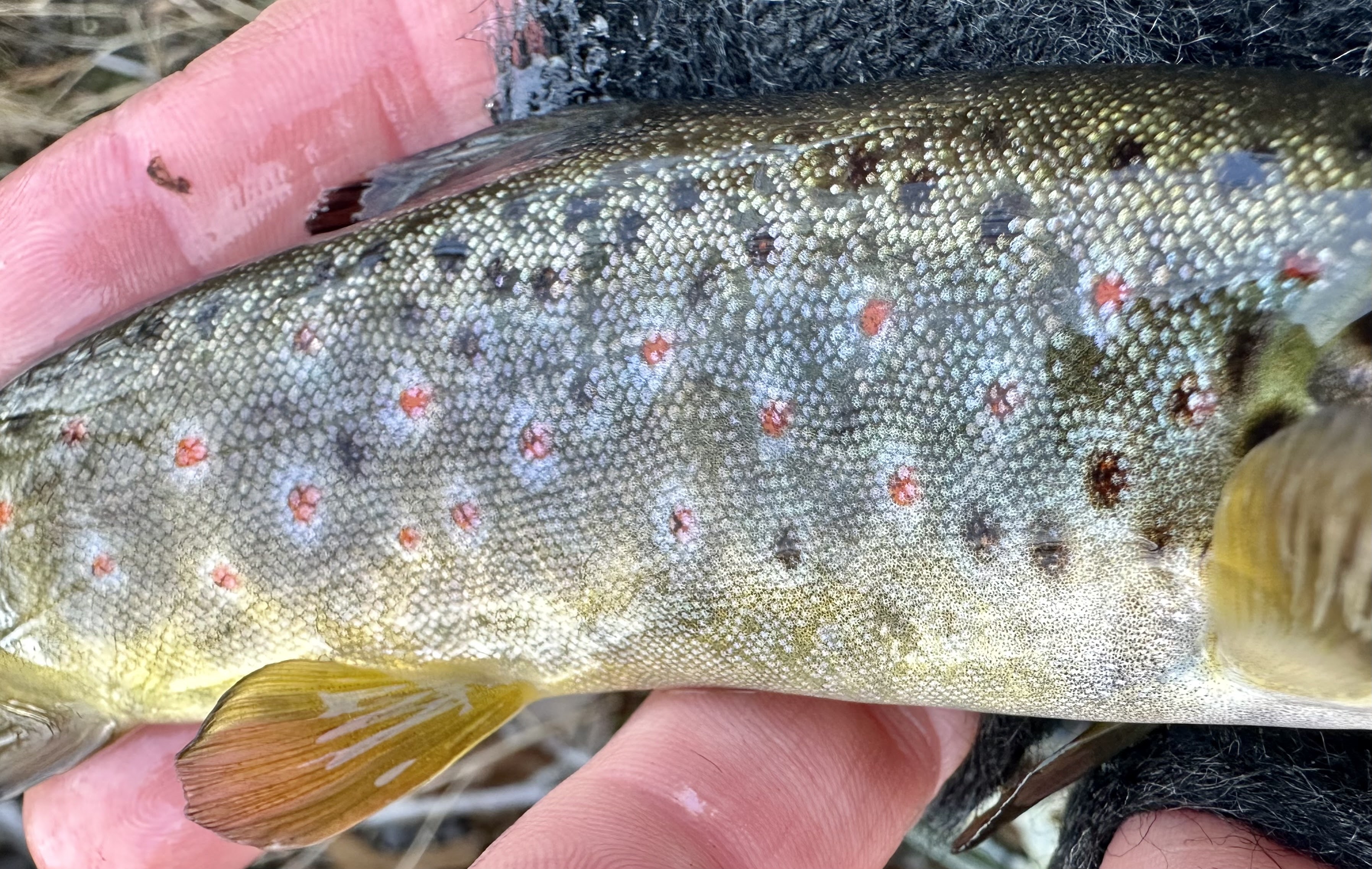
With no ice fishing opportunities within a two-hour drive, I have been looking for other ways to scratch the itch. I had a few hours to myself on a recent afternoon and decided to spend them along a stream I had not seen since May. A fresh rain had the flow in its sweet spot. I started out with the dry-dropper method and never strayed from it. The first combo of flies was my go-to; a #14 Stimulator dry with an #18 bead head pheasant tail nymph trailing below it. Kneeling on the bank beside a familiar riffle, I watched a small wild brown trout attack my dry fly. A surface eat in mid-January for my first fish of 2023. I'll take it.


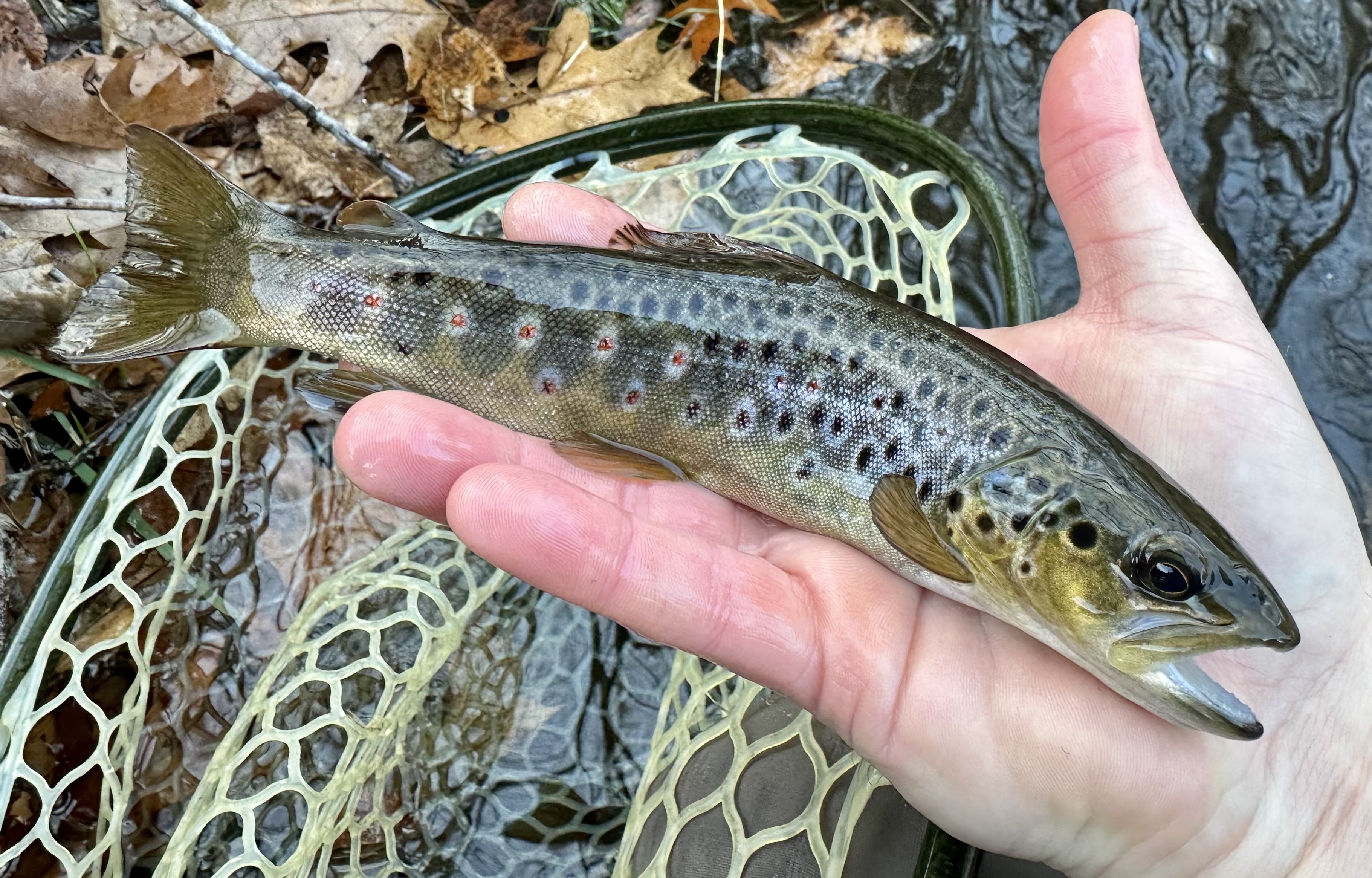
The second and last stop of the afternoon was a short drive downstream. There were trout rising to what I believe were small winter caddis. I didn't bother embarrassing myself with a cast in this shallow, slow stretch; instead I just watched them feed for a while. I walked up to the next riffle and missed a fish on top during my first drift. That was it. A couple hours of fresh air and a few tight lines. It may not have been ice fishing, but to quote a legendary Stones tune, "you can't always get what you want, but if you try sometime you'll find you get what you need."
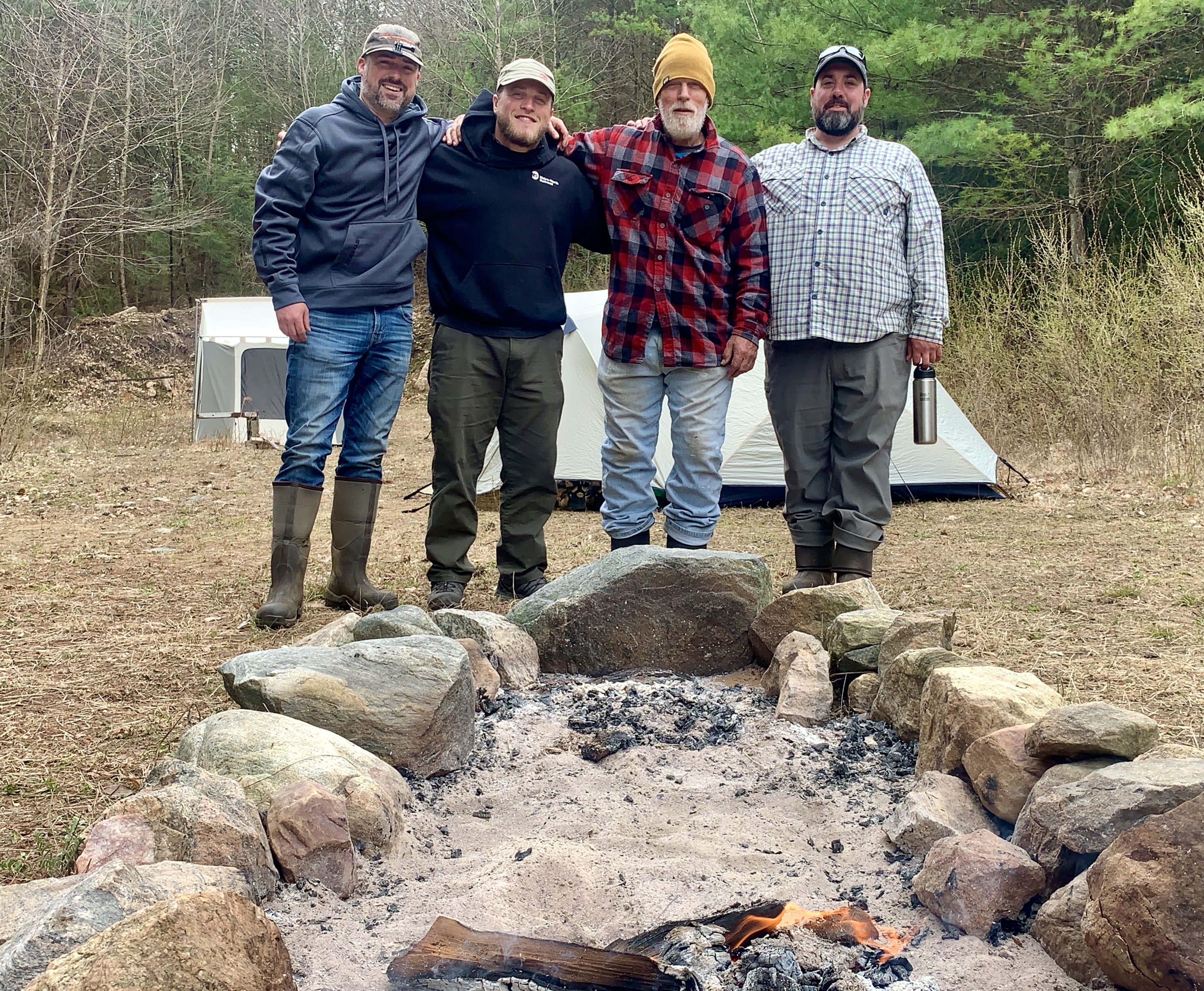
Though several months removed, the trip is still seared in memory and the smell of wood smoke clings to my gear. While a recap from our annual Opening Day celebration is long overdue, sifting through photos from that weekend brought me right back and had me itching for more.
Traditions never die, but they do evolve. Our trip is a hell of a lot less about fishing now than when it started decades ago. It's pretty evident that we spend way more time swapping stories and eating good food around the fire than we do making drifts for trout. I'm not bothered by that. I still love fly fishing and the Farmington River, but when the third weekend of April rolls around, and I get a little time off from work and dad duties, I'm taking it slow and soaking it all in.
This evolution doesn't change the fact that, come hell or high water, we'll be back celebrating each spring for as long as we're physically able to. It's my favorite weekend of the year by far and something I look forward to introducing my own kids to when the time is right. If they love it half as much as we do, the future of this tradition is bright.