Showing posts with label winter fishing. Show all posts

Sunday, January 22, 2023

Winter Purgatory

Usually my inaugural fish each year is caught while ice fishing in Connecticut. It goes with saying that wouldn't be the case this year. Every day this month at the climate station in Bridgeport has been warmer than normal. The average monthly temperature there of 40.1°F is 8.4° above normal. The same goes for Hartford where the second warmest January on record is underway, 9° higher than average. For ice anglers and snow lovers, we are stuck in winter purgatory; a seemingly permanent state of early March.  

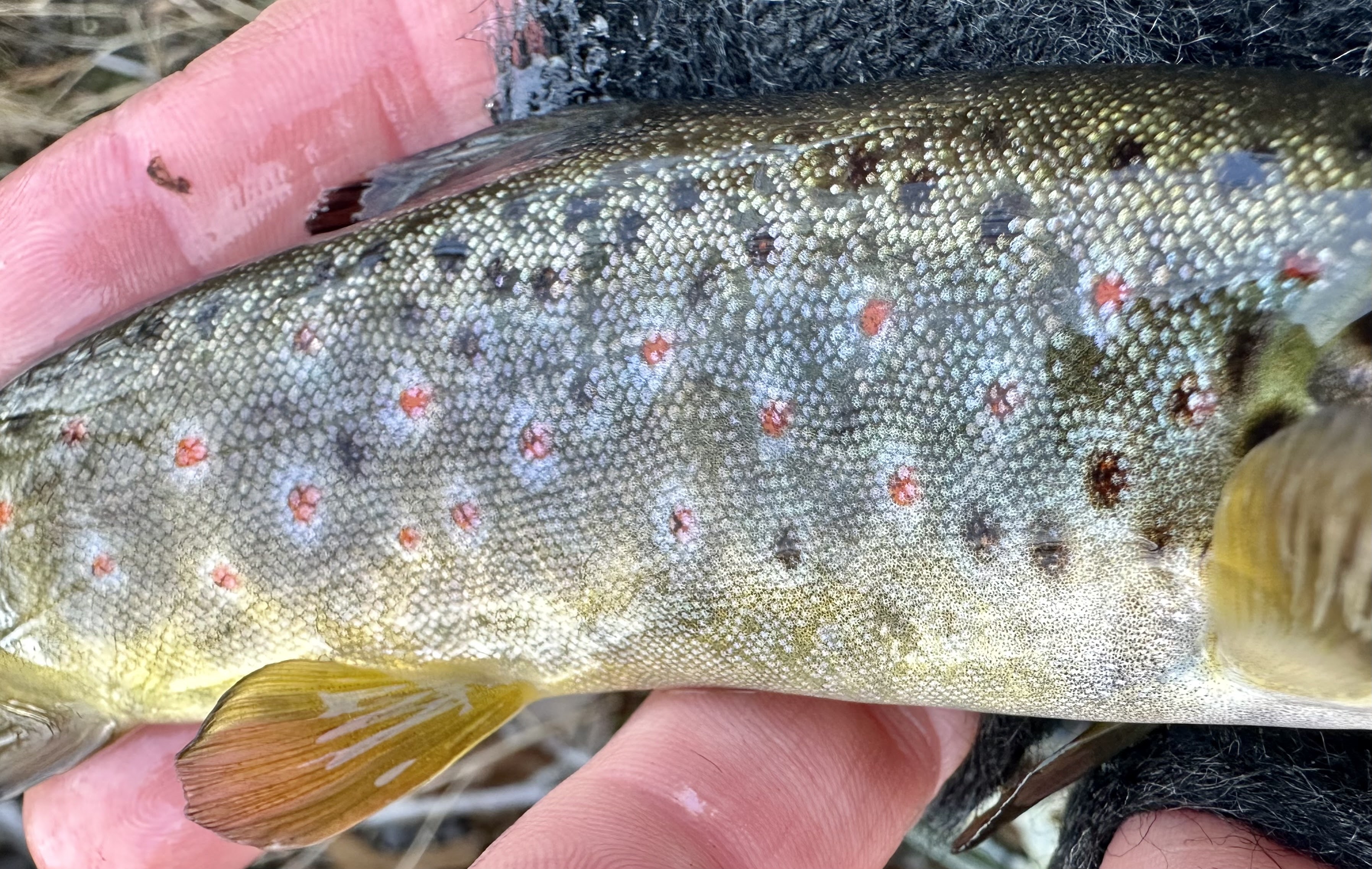
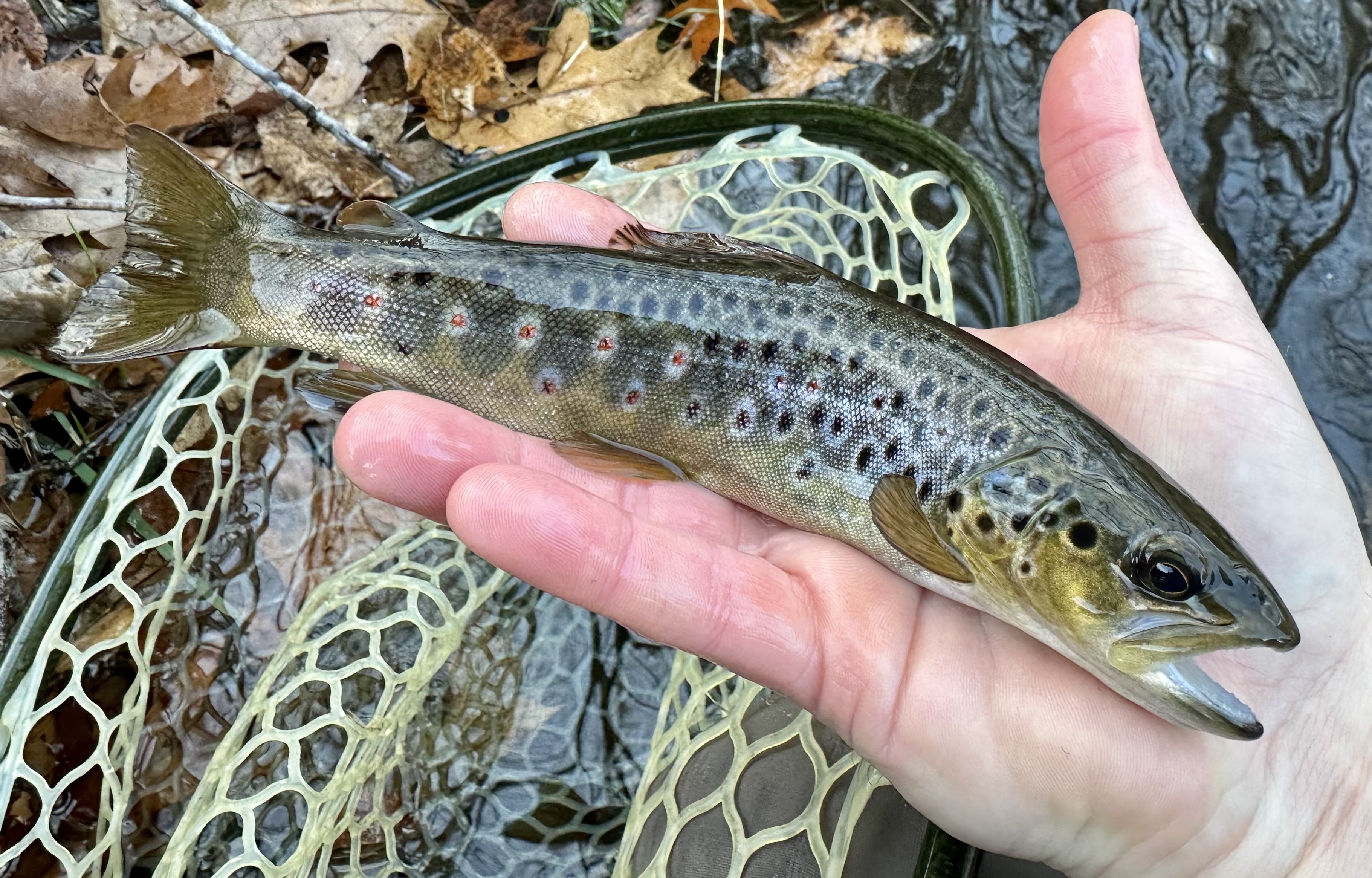
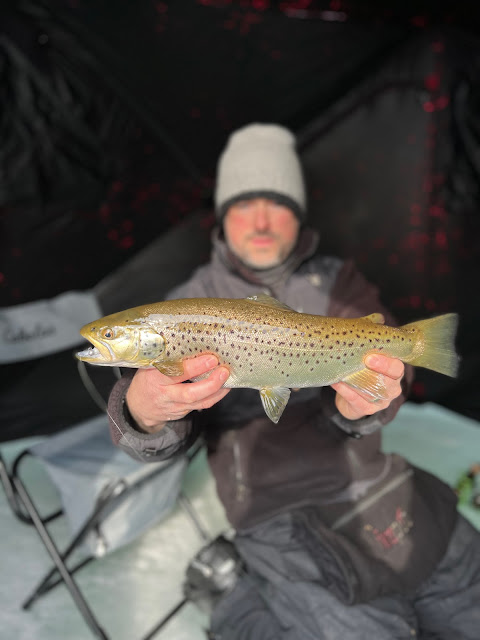
With no ice fishing opportunities within a two-hour drive, I have been looking for other ways to scratch the itch. I had a few hours to myself on a recent afternoon and decided to spend them along a stream I had not seen since May. A fresh rain had the flow in its sweet spot. I started out with the dry-dropper method and never strayed from it. The first combo of flies was my go-to; a #14 Stimulator dry with an #18 bead head pheasant tail nymph trailing below it. Kneeling on the bank beside a familiar riffle, I watched a small wild brown trout attack my dry fly. A surface eat in mid-January for my first fish of 2023. I'll take it. 


After several drifts with no love for my nymph selection, I swapped it out for more of an attractor pattern; a trusty San Juan Worm. That seemed to get their attention and a couple more wild browns quickly came to the net, each slightly bigger than the previous. I also missed one or two others due to late sets on the dry fly. It felt good to wield a fly rod again and shake the rust off. No native brook trout on this trip, and what the browns lacked in size they made up in their beauty. Just gorgeous creatures. 


The second and last stop of the afternoon was a short drive downstream. There were trout rising to what I believe were small winter caddis. I didn't bother embarrassing myself with a cast in this shallow, slow stretch; instead I just watched them feed for a while. I walked up to the next riffle and missed a fish on top during my first drift. That was it. A couple hours of fresh air and a few tight lines. It may not have been ice fishing, but to quote a legendary Stones tune, "you can't always get what you want, but if you try sometime you'll find you get what you need."

Friday, January 13, 2023

The Waiting

The late, great Tom Petty said it best: "the waiting is the hardest part." That's how I and many other ice fishermen feel this winter staring at forecasts and hoping something will change. The issue is not just in Connecticut; since the New Year, large swaths of the Northeast and Midwest are experiencing a lengthy period of above normal temperatures. January thaws are nothing new, but it's hard to remember a sustained stretch of winter warmth like the one we're experiencing now.

I enjoy learning about weather, yet I don't pretend to fully understand all of the reasons causing this particular pattern that we're stuck in. Like the complex Pacific jet and the North American ridge that have been blocking the deep cold air bottled-up in the Arctic. Aside from the elephant in the room that is climate change, there are a lot of moving parts. 

Winter is far from over and we are due for a strong cold spell. However, the days are getting longer and the sun is getting stronger. Ice fishing seasons are always on barrowed time, but this winter, more than most, that seems to be true. We only have a few more weeks to turn the bus around. 

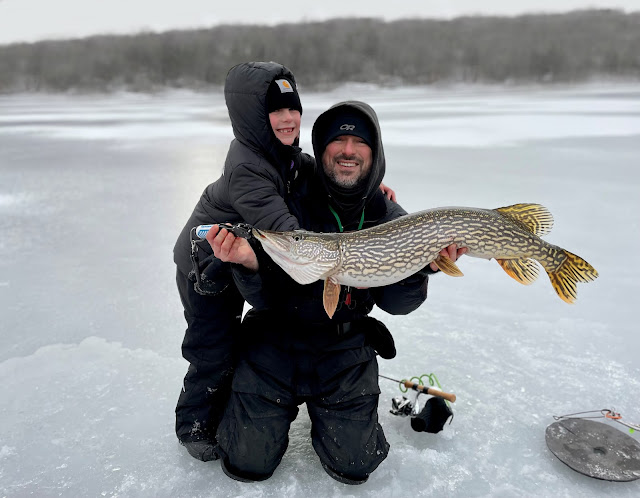
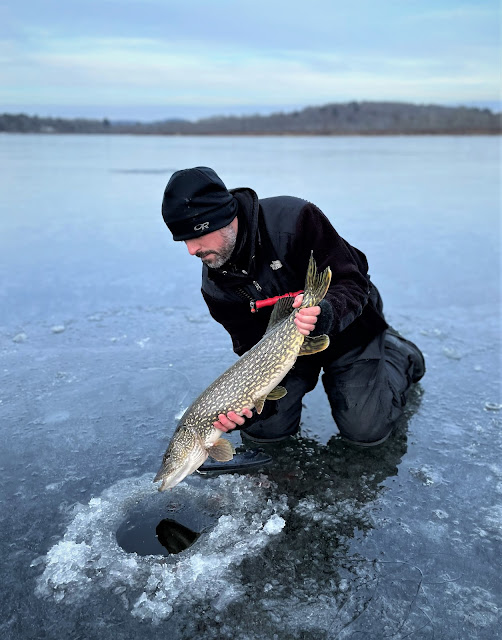
My friend Jeff landed this northern pike on the lone flag of our short-lived ice season

It's crazy how we got here. Only a few weeks ago, right around Christmas, I thought we were off to a banner start to the ice season. A string of frigid days and nights locked up ponds and even some larger lakes in northern Connecticut, enough for eager anglers to squeeze in a few days of ice fishing. My buddy Jeff and I were fortunate to get out one of those days. We fished on three-inches of strong, clear ice. Optimism was high for some classic 'first ice' action. That was not to be. While we were both more than happy to be out there, Jeff got the only flag of the trip and made it count with a feisty northern pike that we watched battle its way to the hole under our feet. 

Things went to crap pretty quickly in the days after that. I went on a family trip to the Catskills for New Year's Weekend—not a lick of snow to be seen. By the time I got back, any ice we once had wasn't strong enough to fish on any more. The real kicker though was having to nix my bucket list birthday trip to the shores of Lake Michigan. For years, a friend and I have been talking about pulling the trigger on hiring a guide to put us on the world-class giant trout fishery in Milwaukee Harbor. Southeastern Wisconsin had early ice around the same time Connecticut did, but the warm stretch during the first two weeks of January killed it. Just today I had to cancel my hotel and flights. Woof. 

God willing I get another crack at that Milwaukee trip in the future. In the meantime, I have my fingers and toes crossed in hopes of a local cold snap that makes just enough ice for us to scratch our hardwater itch. All I'm asking for is the chance to jig up a few trout and chase a few pike flags. We've waited long enough. 

Tight lines and be safe out there. 

Dogs on ice. Mustard only.
WTF


Sunday, March 13, 2022

Farewell & Adieu

Red-winged blackbirds are calling in the marshes. Stonflies are hatching on thin blue lines. Osprey and river herring are arriving any day. All signs pointing to winter's last gasps and another ice season's end. 

The weeks and months leading up to ice fishing are filled with anticipation. Hours upon hours devoted to prepping gear, securing bait, analyzing forecasts, and checking ice. Then, after arctic blasts transform our lakes and ponds, we fish when we can until its gone. Sometimes the season doesn't last long and the brevity of it all adds to the allure. 

This year my hardwater season lasted 51 days from January 14 to March 5. In that time I made six trips to three water bodies--the first half focusing on northern pike, the second half reuniting with a favorite trout lake I hadn't fished since 2011. Those two styles of fishing are incredibly different, but each enjoyable and exciting in their own right. 

It's always bittersweet packing away the ice gear in the rafters of my basement, but bidding farewell to winter means saying hello to spring and all of the amazing outdoor opportunities it brings. 

Here a is a short video from my ice season finale and a few other memorable moments that will hold me over until next winter.


Sunday, April 25, 2021

Cutting Teeth

It’s hard to know exactly when the last day of ice season will be. You can tell when it’s getting close, but the thought of sneaking in one more trip is always there. When it’s finally over, after the auger and tip-ups have been tucked away, it’s good to look back on how things transpired. This past season I was fortunate to get on the ice nine times with friends, old and new, and witness some memorable catches. The highlight, though, was introducing my daughter to the pastime that consumes me each winter.

Cora is no stranger to fishing. She’s been joining me on open water trips for panfish, trout, and snapper blues since she could walk. Ice fishing is a different ballgame though—conditions are harsher, drives are longer, trips start earlier. Cora had been inquiring about hardwater for a while. Now six years old, it seemed like the right time. The season is brief in Connecticut, and circumstances don’t often allow a youngster to tag along, but it happened this winter—twice—and I’m grateful.  

There was a learning curve for both of us. More planning and preparation involved than a normal outing. Each of our patience was tested. It takes time to get set up on the ice before you’re actually fishing. Then there’s no guarantee the fish cooperate. A few things helped keep Cora interested—the first was going with other kids her own age. A friend brought his two boys and they had a ball exploring while us dads put lines in the water. Another way we kept them engaged was assigning tasks to help with. It turns out that keeping ice holes clean of slush with a ladle is a perfect job for six-year-olds.

Keeping busy.

Lucky for us it got cold enough this past winter to lock up a tidal cove of a large river close to home. The cove is deep and full of fish, nothing I would dare ever eat, but there’s always potential for lots of action and the occasional surprise trophy. Flags started popping immediately as yellow perch zeroed in on our live shiners. A couple of the perch were pretty large and all of them were fun for the kids to pull up by hand and proudly display.

Cora hoisting an eater-size yellow perch (that we can't eat due to PCBs).

A Hali jig tipped with a wax worm will catch almost anything through the ice

We didn’t know it then, but the next time the kids came out with us turned out to be the last trip of our ice season. It was a cold start that morning with temps in the 20s, but never once did Cora complain of the cold. Her first pair of merino wool base layers helped, as did the hand and toe warmers. I also busted out the trusty pop-up shelter where she enjoyed a hot oatmeal breakfast, which made it worth the effort.

A big mistake I made was not buying ice grippers to strap under Cora’s small boots. We lucked out with crunchy snow on the ice for her first trip, but the surface was super slick for her second outing and she was falling all over the place, to the point I was worried about her getting hurt. Thankfully our host that day brought an inner tube to lug his gear out and I gladly towed Cora around in it, including to a few fish flags.

Enjoying breakfast in a warm, albeit worn, shelter.

Cora with her first black crappie.

The highlight of the day, in fact the highlight of my ice season, came just before 9 a.m. that morning when the flag of our farthest tip-up went up and, like a sled dog, I hauled Cora a few hundred yards over the frozen terrain. The spool was spinning at a steady clip—I pulled the trap, set the hook, then proudly watched my daughter fight, hand-over-hand, a heavy smallmouth bass. It was the first smallie I had seen from this spot more known for northern pike, so it was a welcomed surprise and a moment to celebrate, one neither of us will soon forget. Cora’s fingers went numb from handling the cold, wet Dacron, but her grin stretched from ear to ear, and so did mine.

A fine fish and proud moment.

Thursday, January 14, 2021

Closure on the Closer

It was the last day of the year and final day of open season at the reservoir. Jeff and I pulled up at the same time from opposite directions. In a normal winter we would have been meeting at a frozen lake, but with no real ice fishing options we agreed instead to a morning session at the res. Jeff lives close by and had never fished it before, so he was in for a good lesson.

The morning was still pitch black and the rain seemed harder than forecasted. Though the thermometer read over 40 degrees, it was the type of wet cold that seeped into your bones. It had been raining quite a lot. In the span of just a few weeks, the drought that lasted most of the year was erased and the water level of the reservoir had risen dramatically to near full capacity. Great for drinking water, but from a selfish angler standpoint, it severely cut down the number of fishing spots around a place with limited access to begin with.

On our walk through the woods, I missed my mark for the spot I planned for us to fish. Instead of backtracking to find the trail, we stubbornly punched through thick underbrush to the water’s edge. There was no casting room where we landed, so we clumsily walked the shoreline over downed trees and boulders to the intended location. It was far from graceful with bait buckets and long rods in a tight corridor. When we finally got to the right spot, I realized my backpack wasn’t on my back. It was full on amateur hour.

While Jeff got situated, I retraced our steps to my truck where the pack was still on the front seat. It turned out to be a blessing—lying perfectly on some cobble along the shore was a giant cookie wrapped in cellophane. Jeff had dropped it in the scramble to the spot and we had a good laugh before splitting it for a hearty breakfast. Now we were ready to fish.

I wish I could say that we slayed walleye and trout at dawn, but it was quiet for the first two hours. The only constants were the rain and the wet chill that took a toll on our dexterity. Even the simple task of re-rigging took twice as long. The conditions also hindered my desire to pick up the lure rod and probe the areas around our baits. It was a hands-in-pockets-in-between-sipping-coffee type of morning.

Finally, a slip bobber started dancing on the surface. It was one of Jeff’s that had drifted towards a submerged tree near shore. When the float slid under, he connected with his first fish from the reservoir—a healthy rainbow trout. Catching at this waterbody on an inaugural outing is a feat in itself considering how many times anglers leave with their tail between their legs.

The bite seemed to be turning on because just a few minutes later another of Jeff’s bobbers disappeared. After a solid hook set, he had something on long enough to feel heavy weight on the other end. The immediate rush came crashing down when his line went slack. Jeff reeled up everything except the hook and shiner. Where it had been tied to his leader was a dreaded curly sue that revealed the knot had failed. A mishap that every angler has experienced at some point or another, but a gut wrenching one no doubt. There are state record-caliber fish swimming in this body of water and chances don’t come often, so the unknown of what was lost was painful.

There wasn’t much time to dwell on it before a third takedown occurred in the same area. It was one of my bobbers with a large shiner set 10-feet down. I gave it a second longer than customary and drove it home. The fish felt substantial and swam up in the water column. At the first glimpse, I thought I saw white-tipped fins of a walleye, but soon a broad, spotted tail of a trout broke the surface. Jeff laid a landing net in the water and I steered the fish in.

Inside the net was a thick silver bar of a brown trout; easily my largest from the reservoir in years. It was a male seeforellen with a slight kype to its jaw and in pristine condition except for an old injury to its right pectoral fin. An impressive specimen on its own, but what happened next is seared in my memory. When I went to remove the hook, along with my shiner there was another baitfish in his mouth. Initially I thought it was an alewife, the main forage in this impoundment, but upon closer inspection I noticed a hook through its back. Well I’ll be damned if it wasn’t the very same fish that Jeff lost only minutes earlier! We were floored—the excitement level on that patch of rocks was already high, but this put it into another stratosphere.

After plucking both hooks and shiners from its mouth, the greedy trout was photographed and sent on its way. We stayed for one more hour hoping for another bobber to go under, but the bite window had closed as quickly as it opened. Not often are anglers awarded that kind of closure after a missed opportunity. We’ve all been left guessing what kind of fish or how big it was after losing it. There was no guessing here—that brown trout was so dialed-in on hunting alewives that rainy morning, he let his guard down and got fooled twice by Arkansas shiners in mere minutes. Lucky for him, he was released unharmed to get bigger and wiser for next time. 

It was a neat way to close out the fishing season at the reservoir and to put a bow on a bizarre year in general. Cheers to a year ahead full of good health and new adventures—stay safe and tight lines!

Monday, November 25, 2019

First Ice

Around the time the mums begin to wither and oaks are the only trees left with leaves, diehard ice anglers experience a concoction of feelings—equal parts eagerness and excitement peppered with a dash of agita. These feelings wash over like a wave with the first true cold snap of fall. Akin to a bat signal, it sends hardwater fanatics across the north to basements and garages to tie leaders, tinker with tip-ups, and dust-off augers. We set up crude tanks and trek to streams or ponds to catch bait. We interpret long-range weather forecasts and Farmers’ Almanacs. We look to nature for signs of a pending hard winter: an unusual abundance of acorns; early departure of waterfowl; the width of the brown bands on woolly bear caterpillars. We wait for ice.

Ice fishing is unique and highly anticipated for a bevy of reasons. Perhaps the most important is that the allotted time anglers are able to partake in it each year is very unpredictable. We have zero idea when the season will begin or end any given winter. In comparison, I know exactly when blackfish season starts; I can set my watch by when migratory striped bass show up; I can go to my local tailwater and catch trout all year long. For ice fisherman, Mother Nature is the ultimate decider when our season starts and stops. We must be patient. 


Here in southern New England, in our coldest winters, the fishable ice window is about three months long, four if we are lucky. Some years things don’t always pan out that way. I’ve experienced more than one season that started with an early freeze and came to a halt with a midwinter thaw. I’ve also witnessed ice seasons that never got going until the late innings with only a handful of bodies of water locking up. While walking on water is more of a certainty to our north, it’s still not a guarantee on large and popular lakes like Sebago and George. As the old adage goes, absence makes the heart grow fonder and ice fishing’s indefinite and limited timeframe each winter certainly helps me appreciate it more. 

Though I get jazzed up for any kind of fishing, the lead up to first ice—that brief period when lakes and ponds initially freeze over with clear, hard ice—is tough to beat. When our quarry, unpressured for weeks, sometimes months, are still active and sense the coming doldrums ahead. This can translate into fast action—whether jigging up a pile of panfish or chasing flags all day—and it’s not unheard of to pull your best fish of the season during this early part of the season. It’s not some magical time where fish are committing hara-kiri on the end of your line but I’ve doing this long enough to know that you want to be on the ice as early as you can once it starts.

There are no hard and fast rules with first ice. For example, we know it begins when liquid finally becomes solid, but it’s less precise when it ends. First ice doesn’t necessarily happen all at once either. Your shallower lakes and ponds lock up first, naturally. That’s why bass, pike, and pickerel are usually first on many anglers’ target list. As the season progresses, deeper bodies of water follow suit and ice anglers start spreading out to target different species like trout, walleye, and crappie. 


There is nothing in the world like walking on a sheet of black ice before any snow covers it. It’s a thing of beauty—the consistency and hardness of it and its lack of imperfections; the way shanty anchors bite into it and the crunching sounds boot studs make on it. The optics of black ice are surreal. When walking over shallows, you can make out every piece of structure from boulders to weed lines to stumps. If you’re really lucky and hook into something under black ice, you get a first-row seat to the tug-of-war right underneath your feet. It’s a wild experience.

As in any type of fishing, having a small circle of friends that you trust and share information with pays dividends, but it’s tough relying solely on second-hand ice reports. Checking the ice’s thickness and quality yourself is the only way to know for sure. I live at least an hour’s drive from my favorite ice spots, so scouting is both time consuming and costly, yet those who scout are usually on the ice first, long before anything trickles down to social media. There’s been times I’ve bailed from work early to check spots that I had hoped to walk on the following day only to find wide-open with white caps. I’ve also gambled without scouting and drove 90 minutes only to be been turned away from crap ice, all before the sunup. First ice will always be a risk/reward scenario—wait until word gets out or be one of the first groups out there. 


I don’t have the flexibility at home or at work as I once did, so I try to make the most of every opportunity and relish the days or nights on the ice when they come. I’ve come to accept that that feeling in the pit of my stomach won’t ever go away when I am stuck at work knowing other anglers, friends or not, are drilling holes on fresh ice. I know they feel the same way when the tables are turned. Just fish when you can.

Here I am, more than 20 years after being introduced to hardwater, and those feelings of excitement and anxiousness as the season approaches haven’t faded a bit. My sled is packed and ready by the basement door like a bird dog waiting for the next upland hunting trip. Until then I’m keeping an eye on the weather and hoping for a string of calm, cold nights. If we’re fortunate to get some good ice this winter, have fun out there and stay on top.


Tuesday, February 12, 2019

What's In A Name?

Tip-ups, tilts, traps—whatever you call them—are a standard piece of equipment for ice anglers. They come in an array of shapes and sizes for different situations and styles of fishing. My go-to traps are Heritage Lakers. Each one is handmade in Maine from white ash. They can be cumbersome when lugging around a full set of six traps, but they are dependable and can take a beating. 

Most of mine are more than ten years old now. Their components are a bit tired—the flags don’t snap to attention like they used to—but they get the job done and I love them like old friends. I’ve spent many a night over a work bench tinkering with them or swapping out leaders. Each one of their bright orange flags has a name written on it. Maybe it is habit or superstition perhaps, but I’ve been naming my tip-ups ever since I got into ice fishing. Here are the stories behind their names. 


The first Heritage Laker that I ever purchased was from Kittery Trading Post and I named it Old Faithful. Wish I could say it's named after the famous Yellowstone geyser, but I haven’t made it there yet. It’s just a reliable piece of gear and usually the first trap out of my sled any given outing. It has fished classic waters from Sebago Lake to Lake George and if this tip-up could talk, it would have some cool stories to tell.


It is family lore that my eldest brother was almost named Tecumseh after the famous Shawnee warrior and chief. My dad ended up losing that battle to my mom and Gavin he became. I’ve always been big into Native American culture and history and enjoy looking for their long lost artifacts. Naming one of my traps Tecumseh was a nod of respect to the people that fished and hunted these lands before us.


I fell in love with this name after seeing the classic Wes Anderson film 'The Royal Tenenbaums.' A couple scenes in the movie show Richie Tenenbaum practicing falconry on a New York City rooftop. His badass bird was a Saker Falcon named Mordecai. That’s it. 


It’s hard to nail down exactly what mojo means. Lucky comes close. Surfcasters often speak of mojo when referring to favorite battle-worn plugs. Tip-ups can have mojo too. This one lives up to its name and has been part of some of my largest fish through the ice. 


The winter solstice has been celebrated for eons. In the northern hemisphere, it’s the shortest period of daylight of the year. Each day afterward, until the summer solstice, we see the gradual lengthening of days. It’s not every year that there is fishable ice in Connecticut by the winter solstice, but it’s a good sign if there is. 


Sleeper is always the last tip-up I set. It’s purposely put a little out of the way—either at the end of my trap line or behind the shelter slightly out of sight. It’s the trap I want to set and forget and hope to see with a flag up when I remember to check it. More than once it’s been Sleeper that has saved the day out there for me. 

Sunday, April 15, 2018

Fresh Tracks

One of the last brushes with winter found me in the woods along a wild trout stream. The snowfall had just ceased but still clung to everything. When the sun poked out, it melted fast and poured down like rain from the canopy. The woods were quiet and my lone footprints meant the trout had yet to see a fly that day. It was one of the better days I had spent on the water in some time. 


Link to video.

Monday, February 5, 2018

Make It Count

Despite a January thaw and a couple of downpours since, ample ice remains on many Connecticut lakes and ponds. It goes to show just how cold it was here in late December when we made the bulk of our ice that we're hanging on to now. After consecutive weak winters, it's refreshing to see photos of things that used to be a given--like smallies and humpback yellows from Candlewood and big browns being iced at East Twin.

I have made it out three times so far this season. Not nearly as much as a younger me with no kids and a flexible job could live with, but the right amount of time for my current situation. I spent two of those days targeting northern pike on a familiar lake and one chasing trout in New York on a body of water I had been meaning to try for years. Each trip was an adventure spent with good company; that's how I prefer my ice outings.

I have taken a couple weekends off in a row now building up the time bank for a potential run up to Lake George for lake trout. Of course a foot of snow just fell there and another foot on the way later this week. That is a likely deal breaker that would keep me on local ice this weekend; a bit of a consolation prize, but you gotta make it count. I'm ready to go wherever that may be. 

Thin ice: didn't need an auger this trip

Beer & Brats: allstar ice combo
Last fish of 2017...a healthy northern pike released to become a trophy (photo credit: Jeff Rubino)

A little meat to sweeten the deal
Nice and toasty over 93 feet of water

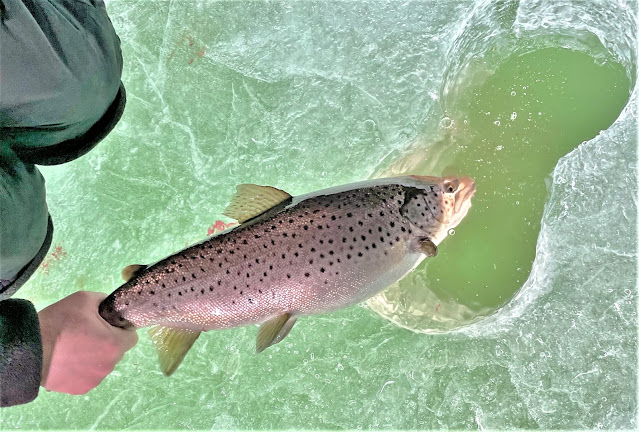
First fish of 2018...a sharp looking brown trout from the depths. 

Ice is nice

Thursday, March 30, 2017

Chasing Esox

Tip-up fishing for northern pike can be summed up as hours of waiting for a few brief moments of chaos. While there wasn't much ice to fish on this past winter, we made the most of what we had. Here is our 2016-2017 hardwater season boiled down to five minutes. All Esox lucius in this video were caught and released in Connecticut waters.

Sunday, February 26, 2012

A Fly Weekend

If this were a typical winter, I would have been drilling through a couple feet of ice on Sebago Lake last weekend. Every February I look forward to the annual ice fishing derby on Maine's second biggest lake. Usually our crew from Connecticut heads up and stays with good friends and old neighbors of mine. It's always a great time with a nice blend of fish, food, drinks and laughs. This winter, however, there was never a real shot at Sebago freezing over. A few of her coves locked up enough ice for trucks to drive on them, but the big bay remains wide open with white caps.

The Sebago derby and the shenanigans that go along with it were canceled for obvious safety reasons. So instead of jigging for lake trout in 100 feet of water, I found myself fly fishing Connecticut streams all weekend. I mixed it up between a small stream and the larger, more familiar Farmington River. Trout cooperated at both locations, but what I gained in knowledge out-shined any catch. I've been fishing the upper Farmington River for nearly 20 years and I still learn something new every time I go. That's just one of the beauties of an ever-changing river and the art of fly fishing.

One of the results of new Farmington River regulations that took effect in January is an expanded Trout Management Area. My friend Todd and I set out to explore the recently added catch-and-release water on Saturday morning. We dropped one vehicle off at the newly established northern boundary and drove downstream to the former demarcation line and fished the 1.5 mile difference. I had seen most of this stretch before, but it had been a while and I had never hiked it all in one clip.

A portion of the Farmington River's newly expanded upper Trout Management area.

Expectations weren't all that high for catching trout, but that's not what this trip was about. If we wanted a better chance at success we would have focused downstream in the more popular winter pools. Instead this day was about familiarizing ourselves with a piece of water. We wanted to take photographs and mental notes of the TMA expansion, which will no doubt improve in trout quality and quantity with no-kill regulations.

Todd and I took our time during the trek upstream, stopping at fishy looking water for the occasional dipstick.  In the 1.5 mile span, six different areas gave us the urge to make some casts.  The river's flow was unusually low for this time of year, which was helpful for getting a good look at the best pools.  We found a nice mix of water types suitable for everything from dry fly fishing to various nymphing methods. As expected, there was an abundant food supply evident by the seine samples conducted in a shallow riffle.

It turned out to be a productive day. We felt confident in our presentations and that fish were in front of us at each stop, yet we couldn't buy a strike. Even without a trout coming to the net, it was a day well spent and will prove valuable down the road on future outings. Unfortunately, the trip ended on a sour note while crossing the river to get to my Jeep.  I unwisely chose a swift, chest-deep section to ford and lost my footing.  The current skipped me downstream a few yards before I could regain my composure with water pouring down my waders in the process. Thankfully it happened when and where it did because I was so close to my vehicle and dry clothes. However, I ruined my trusty Flip video camera in the fray and nearly lost my second iPhone to water damage.  The phone came back to life as I pulled up to a grocery store for a bag of rice to dry it out!  It wasn't my first or last dip in the Farmington River, but it was my first in February's icy waters, but it could have been worse. 

A single seine sample revealed a bounty of trout food from the stream bottom.
The abutments at the tail of Whittemore Pool mark the new upper boundary of the year-round "no kill" zone.


Take Two

Aaron and I had the day off of work on Monday and took advantage of another mild winter day along the Farmington River.  After the lack of action and my soaking on Saturday, it was a pleasant change of pace to spend a day in water I had more confidence finding hungry trout in.  The stretch of river just downstream of where I got skunked Saturday is well known for its excellent catch-and-release winter fishing.  The reports leading up to our outing had been particularly positive there, especially surface activity in the form of winter caddis in the morning and stoneflies throughout the day.  We brought our usual nymph set ups, but packed the dry fly rods just in case.  About an hour into hour trip I saw enough rises downstream to warrant getting them out of the vehicle.  The window was short lived and the gusty wind made things interesting, but I fooled a trout on the surface in the month of February, which I thought was pretty cool.  It was also the first time I brought my usual small stream 3-weight rod to the Farmington.  It's truly a great tool for dry fly fishing. 

Photo credit: Aaron Swanson

Photo credit: Aaron Swanson
The trout were feeding below the surface as well, as Aaron and I found out at each spot we hit that day.  It was interesting to find fish holding in the heads of runs this time of year, but that's precisely where our best specimen came from on Monday.  It was far from lock and load, though we pieced together a good sampling from the river.  With the low and clear flows, a stealthy approach and scaled-down offerings on light tippets were key to success.  A small black stonefly nymph proved to be the "hot" fly of the day and prince nymphs and green caddis larvae also put fish in the net.  It was an awesome outing for me and I even managed to stay dry during this one. 


As I've said before and I'll say it again, it pains me not to be ice fishing in February.  However, when you can experience a great day on fly fishing like we did on Monday so close to home, it helps forget how much of a joke this winter has been.  The Farmington River continues to remind anglers all across the Northeast just how lucky we are and I feel like it's getting better every year. 

Photo credit: Aaron Swanson