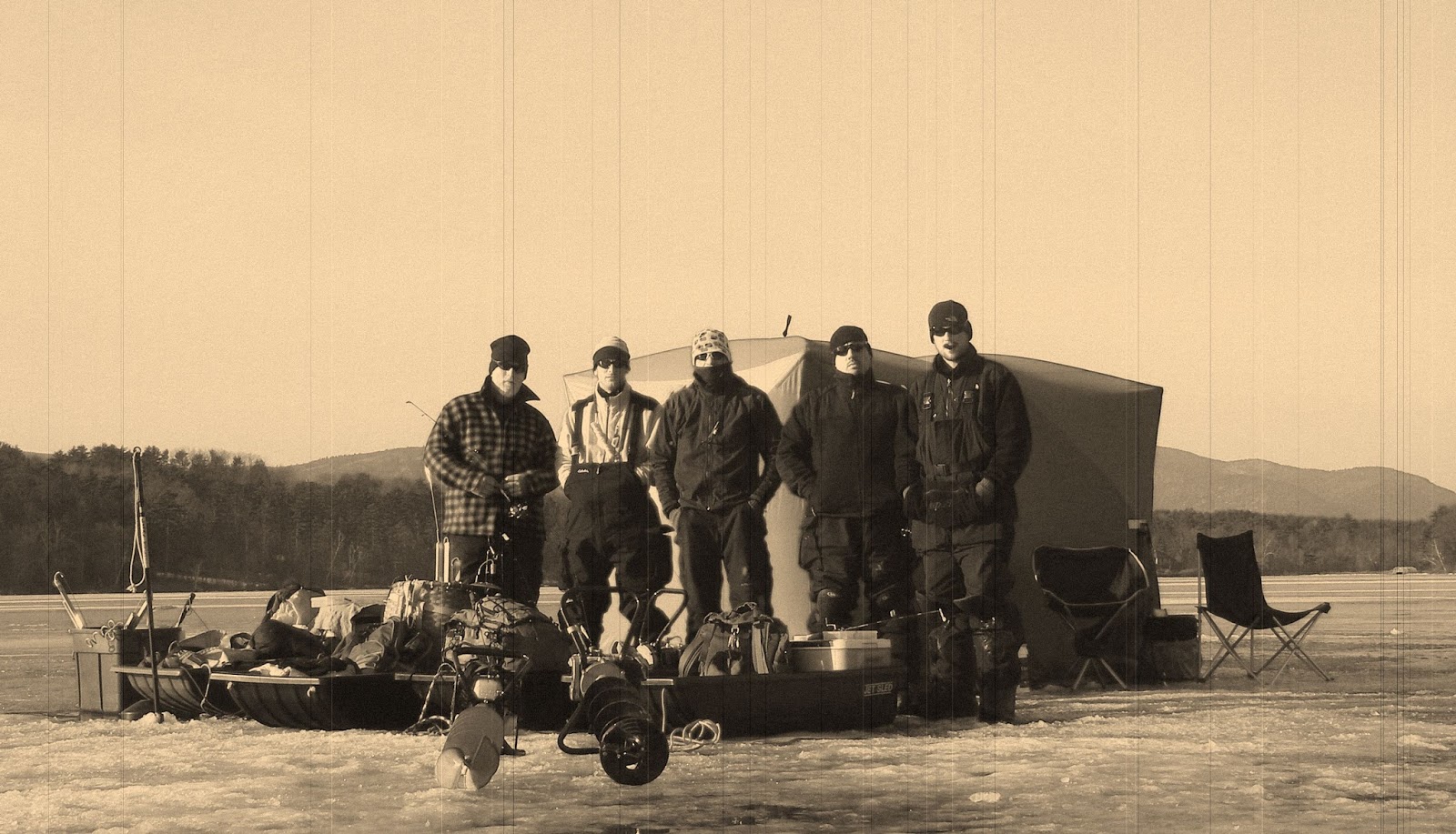
The shelter was packed—a mishmash of anglers, camp chairs,
jigging rods, electronics, and bottles of booze. Between us and our gear, we
were stuffed like sausages in the big red Eskimo, but no one was complaining; hell,
it was a goddamn blast. The more lines we had in the water, the hotter the bite
got, and it hardly mattered that the fish coming through the ice were a mere
six-inches long. We were targeting mouthwatering rainbow smelt; some to use as
trout bait for that outing, some for personal consumption later that day. Smoke
and laughter bellowed from the shanty doors when they opened to the blustery,
bluebird day outside. The shelter’s inhabitants came from all corners of the
state; a group of characters that hadn’t all been in the same space since the
last smelting trip years prior. It was a common bond of ice fishing that
brought us together again.
More than any other type of angling, ice fishing bleeds
camaraderie. Unlike surfcasting that can be unsociable at best in the deep
hours of the night or fly fishing among standoffish anglers in pressured
trout waters, ice fishing is largely about fellowship. From erecting a pop-up
shelter in 20-knot winds to tending your buddy’s tip-up line while he plays a
big pike to being a sous-chef while bacon sizzles on a 40-year old Coleman
grill, ice fishing goes hand in hand with teamwork. That unity is one of the
biggest draws for me. That sense of togetherness, more so than safety in numbers, is why
I never ice fish alone. What would be the point in that?
The camaraderie of smelting is unmatched. There is something about good friends gathered around holes in the ice, catching Rainbow smelt and shooting the breeze. The more the merrier for this type of fishing, as the chum and jigs just attract more smelt.
Many northern New England tidal rivers have winter populations of anadromous Rainbow smelt. However, Connecticut has a handful of lakes with their smaller, land-locked brethren. These slender, carnivorous fish are tasty to both humans and game-fish. The end goal of a smelting trip is to catch enough to bait your tip-ups for trout and to take enough home for a solid meal. Some days you can catch your limit in a few hours, other days you can punch 100 holes and only find a dozen.
Although I release most of what I catch while fishing, smelt don't go back. These are too good to pass up and don't even need to be cleaned. My uncle taught me his way of preparing the smelt that is simple, yet delicious. Heat a small skillet medium-high with peanut or vegetable oil. Dip the smelt in whisked egg yolk, then into flour or bread crumbs. Next fry the smelt in the oil until they take on a light, crispy brown. Afterwards, dry the smelt on paper towels, lightly coat with sea salt and enjoy.