Showing posts with label smelt. Show all posts

Monday, February 15, 2016

The Ice That Binds

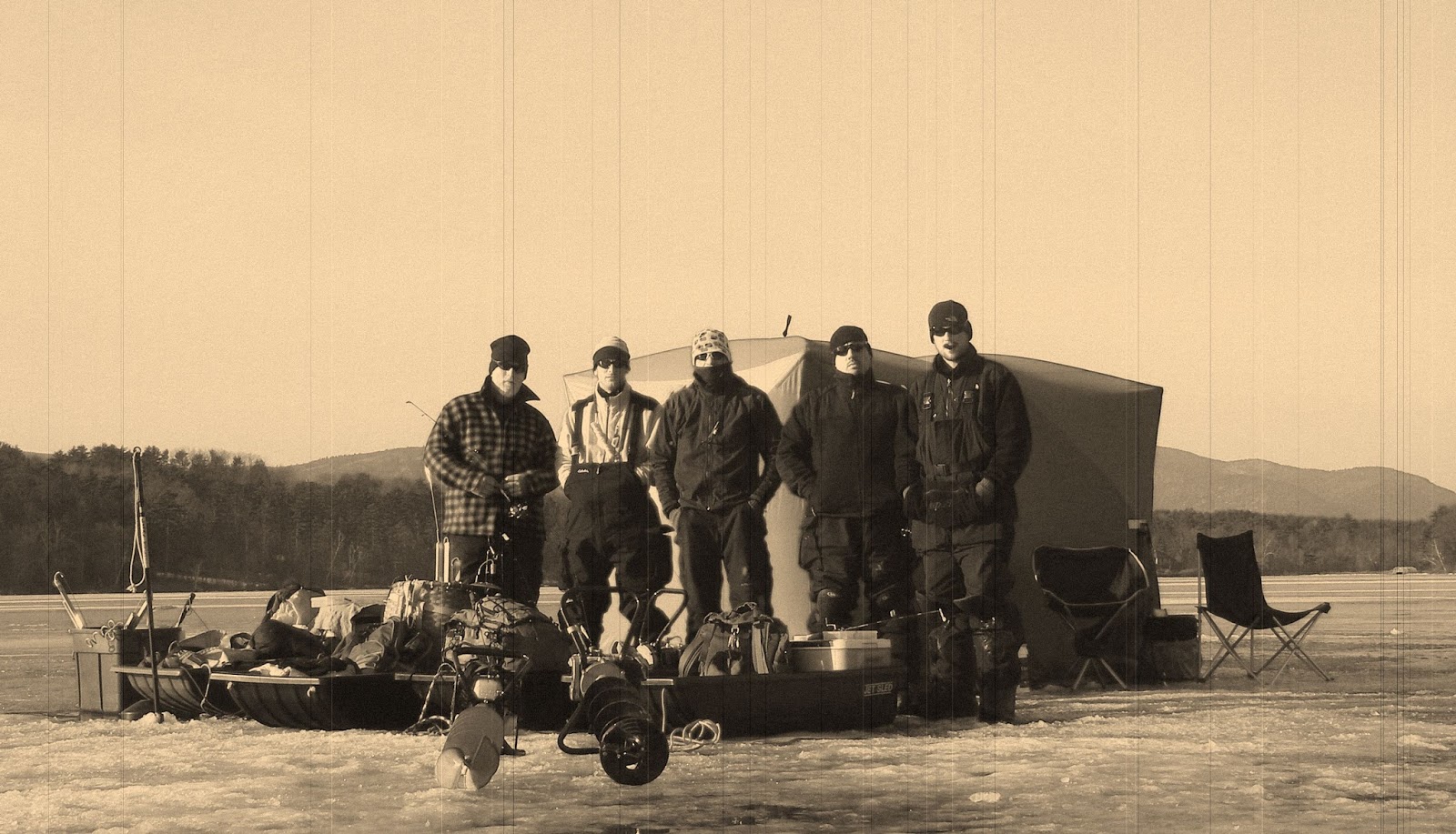
The shelter was packed—a mishmash of anglers, camp chairs, jigging rods, electronics, and bottles of booze. Between us and our gear, we were stuffed like sausages in the big red Eskimo, but no one was complaining; hell, it was a goddamn blast. The more lines we had in the water, the hotter the bite got, and it hardly mattered that the fish coming through the ice were a mere six-inches long. We were targeting mouthwatering rainbow smelt; some to use as trout bait for that outing, some for personal consumption later that day. Smoke and laughter bellowed from the shanty doors when they opened to the blustery, bluebird day outside. The shelter’s inhabitants came from all corners of the state; a group of characters that hadn’t all been in the same space since the last smelting trip years prior. It was a common bond of ice fishing that brought us together again.


More than any other type of angling, ice fishing bleeds camaraderie. Unlike surfcasting that can be unsociable at best in the deep hours of the night or fly fishing among standoffish anglers in pressured trout waters, ice fishing is largely about fellowship. From erecting a pop-up shelter in 20-knot winds to tending your buddy’s tip-up line while he plays a big pike to being a sous-chef while bacon sizzles on a 40-year old Coleman grill, ice fishing goes hand in hand with teamwork. That unity is one of the biggest draws for me. That sense of togetherness, more so than safety in numbers, is why I never ice fish alone. What would be the point in that?

Tuesday, March 25, 2014

Just Jigging

Editor's note: This is a guest post from my good friend Aaron Swanson about a recent trip to Lake George, NY. 

There was time when you could do it Connecticut. In the 1970’s, the DEP (now DEEP) captured a 30-pound brown trout in their trap nets from Washining Lake, a large (for Connecticut) deep-water lake that produced the stuff of legends.  When I was first introduced to ice fishing, it was a place of numbers with enough mystique to make one believe the chance still existed.  By the time I learned enough to start catching holdover browns in the kind of numbers it takes to potentially contact a giant, the herring population that sustained the fishery where I could jig up 50 fish a day, and mostly holdover fish, was crashing.  After a couple years of pounding our heads against the wall that the writing was on, we just stopped going.

This is not to say there aren’t other lakes in Connecticut where you can’t have a decent day jigging up trout.  But “decent” has become relative to current conditions we’ve been living with.  Warm, dry summers (though last summer was pretty wet), lake drawdowns meant to kill weeds that choke the docks and props of lakefront homeowners, and a host of other factors have led to what amount to lowered  expectations when targeting trout through the ice with a tiny rod.  There are large fish to be had, sure; beautiful mutants grown and stocked by DEEP. And there are lakes that still hold-over trout.  And there are the host of other species Yankee ice fisherman can chase.  Great.  But unless there’s a huge conspiracy to keep fantastic jigging action for trophy trout somewhere here in my home state hidden from me…well, as they say, the fishing ain’t what it used to be.
Enter: The Road Trip. As it turns out, a person, or a person and his fishing partners can jump in a car, cross the state line and experience holdover trout fishing “like the old days”  (that’s a joke but not a joke) with numbers and possibilities of unicorns—legit 20-pounders.  They might not be brown trout, but they are trout nonetheless, beautiful and more ancient. Specially adapted to probe the depths in search of cold, oxygenated water and food.  We can go jig for lakers!


Until a couple of years ago, the ingredients for this type of road trip hadn’t really started to mix and congeal in our minds.  Like I said, we had numbers and possibility right here in the Nutmeg State.  As our attention turned to targeting other, more prolific species through the ice like northern pike and walleye, the thought of driving to find the kind of action and conjecture we used to enjoy when staring at electronics and looking for marks on a screen started to sound much more appealing.  I missed it.  We missed it.  Understand, pike and walleye fishing are great and hold incredible potential to see a true monster fish for the region.  The thing is, it’s mostly done by setting tip-ups and forgetting about them in between sips of brown liquor, waiting for short flurries of chaos and excitement.  The urge to use the kind of continued focus it takes to drop a piece of metal tipped with some meat down 70, or 80 feet to waiting trout  finally started to grow into a necessary reality. 
Expectations are always high heading into a trip, no matter how long in duration or how far your travel may bring you.  A fishing trip that takes you away from home for a few nights or more does funny things to your brain.  The possibilities are always endless and YouTube only serves to inflate your expectations.  Watching unknown anglers, in say Quebec or on Lake Superior, haul up fish that would be records on the body of water you’re headed tend to stretch those limits of possibility even further.  Combine this anticipation with a fantastic inaugural trip that exceeded expectations the prior year and you’re flirting with THE. BEST. TRIP. EVER.
Luckily a contact, who none of us had ever met in person, yet has continually bestowed up to the minute information to us helped to temper our zenith-set sights to a more realistic level.  The bite was tough.  Guys were landing say three for every five hooked, or four for six, seven for seven.  You had to work.  Ok; who doesn’t love a good challenge, especially before you even show up and strap on your waterproof bibs? This was certainly a contrast to last year’s excursion to the same body when 50 fish days weren’t out of the question, but how tough could it be?  With the car packed the night before, tailgate sagging toward the ground, we got a couple of shitty hours of shut eye and were off to jig up some lakers; or at least go down trying.


We hit the bait shop by 7am, right on schedule.  We loaded up on small minnows to represent the smelts that make up one of the most prevalent bait sources our intended quarry relies on as well as some larger baits, you know, for “the one”… or something like that.  The procurement of a few jigs and other toys not so readily sold closer to home saw us out the door and doing our best clown car impression unpacking the storage unit’s worth of crap out of my tailgate at the southernmost point of the 32 mile long lake.
The mile-plus walk to the “numbers” we’d been given was exhilarating.  Sweaty, but exhilarating.  Funny thing about the “numbers” was that we essentially followed a foot path that turned out to be the tracks of our contact from the day before.  Some old fashioned sleuthing right there. Excitement and anticipation culminated with disappointing first drops. The screens were mostly blank save for the lines representing our jigs bouncing up and down in 80-plus feet of water.  The reports we true.  Despite the best tricks our sleeves could muster we had a whopping total of two fish on the ice and two missed hits by noon.  Thankfully, the guy in the group who was making his first trip of the season was the lucky lander of those two, respectable fish.  While everyone was there to catch trout, the big numbers seen during the previous year’s foray didn’t seem likely to materialize anytime soon – at least where we were.  

The good news was that the sun was still shining and we had the better part of a half day ahead.  Our attempt to pack ”light” motivated us to take off on foot and start covering frozen water to try and look for fish that would be more willing to attack the white piece of metal so highly regarded by the local lake trout whisperers. 
Nothing, I mean, absolutely nothing.  Having walked the better part of three and a half miles without observing another interested mark the proverbial “plan B” started look better than defining insanity by hoping something might finally try to attack one of our lures.  Only problem was, the details of plan B didn’t quite exist, other than the realization of “this isn’t working.”  Then, lady luck intervened and brought details of some potential next steps into sharp focus.  Another angler within earshot seemed to be doing a little better than us, but not by much.  As we continued to listen to him banter with buddies, he stopped short to take a phone call.  The voice on the other end of the line, now on speaker phone, described a wholly different scene than the one we were part of. The spot, named in detail, gave up 20-plus fish to 26-inches to the lucky, unseen angler.  We made sideways glances at each other, eyes widened as if trying to conceal our giddiness at this good fortune.  At the call’s conclusion the recipient stood up and announced to his partners “Welp boys, change in plans.”  Change in plans indeed!
Instantly renewed with confidence and energy, we made the long trek back to the car and re-arranged the copious amounts of gear that did not catch us fish.  We were off to the spot, thankfully named without shame by our unknown benefactor.  We called our contact during our  eight or nine mile drive north to the promised land and confirmed not only the spot we were headed to, but that contacts in his lake trout circle were there and, indeed, bailing fish! Our hopes were restored as we scouted potential access areas and found, oddly enough, anglers departing the ice who were willing to talk honestly about the day’s action. For three tight-lipped fish seekers and sometimes surfcasters from the Constitution State, this was not normal protocol.  Back home, our smallish bodies of water and smaller productive areas they hold are closely guarded and competed for in the freezing pre-dawn hours.  And here were guys telling us exactly where to walk to, how many fish they caught and what they were caught on.  I suppose the mere size of a lake like George, multiple access points to productive water, and the fact that, as far as I can tell, the bottom is paved with fish, makes information flow a bit more easily in the Adirondacks. 


JonA.  That’s the only way I knew him, his internet handle.  This guy, for some reason, decided to open the door to the kind of fishing we were craving in the Empire State.  Imagine that, someone I’d never even met or talked to on the phone invites up one of the group he’d been corresponding with for years (the subject of previous blog posts here) gave us the keys to making the three hour drive immediately worthwhile by severely shortening our learning curve.  Thanks man, credit where it’s due. 
JonA became Jon the real person early the next morning in a pitch black parking lot about a third of the way up the western shore of the lake.  Our presence combined with good reports caused him to break his usual routine of avoiding weekends in favor of less crowded weekdays.  Our previous day’s speculation as to how to access the deep water out in front of some islands was for naught as he followed some of his regular contacts out to “the spot”.  The cool part about this spot, and likely why anglers in the region are so forthcoming with news and information, is that there is plenty of room for all along the tightly grouped contour lines of the lakes depths. We set up shop and got ready to scratch the old itch.  Numbers on the jigger!  And we were on our way, between the four of us we managed to put a quick pick of fish on the ice, none huge, but marks that would follow your jig off bottom and bend your rod during its ascent through the water column.  There were smiles all around, a few high fives and maybe even a couple of pictures snapped.  And then, the bite shut off.


It wasn’t for lack of effort.   Between all of us we threw the old kitchen sink at the fish we saw.  But most of the day went like this: a mark appears on your screen, moves toward your offering, you move it in anticipation, he’s following, (yes! keep coming!).  The mark stops, you drop down with it, drop below it and raise it back up.  The mark follows again, but only half as far, maybe five feet off bottom this time.  You drop back down and try again.  The mark disappears.  Repeat. At least those fish gave you hope.  The ones that would appear a foot or two off bottom and never move, those are the one’s I’d like to yell at if it were practical to stick my head through an eight inch hole in the ice.  “Move you sonofabitch!” 
Of small consolation was that Jon’s repeated phone calls to other anglers, huddled in blue portable Clam ice shacks strewn across our field of view weren’t doing a whole lot better.  Even the best guys who fish multiple days a week struggled to put up double digit numbers. As the sky started to glow pink through the clouds dropping snow on our stationary hut, the realization that reliving the “glory days” on this trip was sliding further out of reach.  If we were to have any success, it would be during our abbreviated window the following morning.
Still though, there were shots and beers to order at another local bar; laughs to have with new friends and pretty bartenders to sneakily stare at (I’m sure it wasn’t sneaky by the time we left).  Once that was accomplished we could get back to the business of meeting Jon, again at an ungodly hour, in nearly the same parking spaces we had pulled into nearly 24 hours earlier.  A front was coming.  The second of what would turn out to be three dreaded “polar vortex’s (should that be vortices? Thanks a lot cable news) was due to move into the region and we pontificated on the mile walk back out to the spot as to what that might mean for the fishing.  For all our faults it seems to me the one shining commonality among anglers is the ability to hope things will get better.  To believe that “tomorrow is the day we’ll get ‘em good!”
Well, that morning was the morning we “got ‘em good”.  The old days.  Fish shooting up off bottom to grab your jig and struggle during their entire journey, up 80 feet until their beautiful bony faces popped into your hole.  One after another, hoots and hollers rang out from the randomly spaced group, barely a minute passing without a hook up or groan of a missed fish.  There is something about having success on a rod barely three feet long, especially when your quarry all tape out in the range of two thirds of its length.  Were these fish huge by lake trout standards? Absolutely not.  Was it a blast to hook up one after another and gather round the hole, taking pictures and shooting video to preserve the fun of the moment?  You bet your Swedish Pimple it was.  When the bite slowed a bit we switched to jig heads adorned with stinky soft plastic baits and used a different technique to continue to fool fish into eating our little puppets, danced specially for them 13 fathoms below our feet.  Did I mention we caught all of our fish jigging?


The weather conditions that morning, while not particularly brutal, were enough cause to don most of the foul weather gear we had brought.  During one of the short spells I wasn’t working a fish, I looked up long enough to notice the wind had died and the sun was shining partially down through breaks in the seemingly ever-present flow of clouds we’d encountered for the last couple of days.  Not a minute after I remarked (mistakenly of course) at how pleasant our current conditions were, I looked northward to see walls of blown snow moving across the lake in a different direction than any others we’d seen during our stay.  The northwest wind slammed into us like a stampede and the vortex was upon us.  Within twenty minutes our screens were void of fish, our sleds covered in snow and, as a final sign from the universe we’d had our shot, one guy’s electronics crapped out.  It was time to go.
The ride home was one of satisfaction. We hadn’t killed it all three days, or pulled up a giant, or some ridiculous number.  But the possibility was there, and we got ‘em.  I managed my largest laker to date, we finally fished with our New York contact and learned a few new tricks for finicky trout. But the simple pleasure of fulfilling of a goal, one we don’t get a chance to try and achieve all that often anymore, was enough.  We got ‘em just jigging.                


Tuesday, March 13, 2012

All In

Hopes of ice fishing in Connecticut melted away a few weeks ago, but neighbors farther north are still hanging on to a fading season. Each February for the last several years I have traveled to Maine for the Sebago Lake Derbyfest, a massive annual ice fishing tournament focused on lake trout. Being the huge body of water it is, Sebago doesn't always cooperate by locking up with ice from shore to shore and you can't have a an ice fishing event with thousands of people involved if the whole lake isn't 100% good to go. Determined to keep this winter tradition alive, I entered annual Maine's Statewide Derby two weeks later. This ice tournament encompasses all lakes and ponds in the Pine Tree State and, in addition to lake trout, has categories for muskie, pike and pickerel.

Last Friday I drove 215 miles to to the home of my good friend Wayne. He used live across the street from my parents before moving north about eight years ago. We would fish together for striped bass, trout and walleye, as well as drink many a Bud heavy in his garage. As crappy as it was to see him leave Connecticut, Wayne fits in well in Maine and it gives me a great excuse to visit each winter.  His son and brother also made the trek and rounded out a classic crew for the weekend. The only thing left was to settle was where to fish.

No toys were spared for the season-ending voyage
The annual tax-free pitstop

All of us wanted a crack at lake trout, or togue as they are widely known in Maine. We don't have them in our lakes back home and they are fun as hell to target through the ice, especially with a jigging rod. With help from electronics, it won't take long to see why many find fishing for lakers addicting; their cat-and-mouse chase game before striking or passing up an offering. It's an exhilarating feeling to have a big mark on your screen rushing up and down the water column after a jig. Sometimes it's a rapid ascent from the bottom that triggers their interest, while other times they prefer a series of gradual rises and pauses.  Then there are times where they won't commit or the fish finder resembles a barren desert. In short, jigging for lake trout can be active, challenging and fun all bundled together. 

The one and only true trophy lake trout fishery in southern Maine is Sebago Lake. But on the eve of our first day, this vast, deep body of water was 99% ice-free and had full on white caps rolling over where we usually fish. To conjure up game plan, we paid a visit to Greg, the local ice fishing sharpie at the lakeside Jordan's store that I've been dropping by since I was a kid.  He let us know about a cove on the other side of the lake had about 6 inches of ice extending one mile from shore. The revelation that we could fish for togue without driving an hour or more to do so was well taken. We bought white suckers and shiners, soaked in more information and set off for a hearty meal of venison that Wayne's brother Roy harvested during Connecticut's black powder season. The thought of an early alarm clock was neglected for a fun night of drinking, darts and tinkering with tackle. No one was in a crazy rush anyway with the weather forecast on tap.

Last minute tinkering before a weekend on the ice

Cold beers, a warm fire, and "Cricket" passed the hours at headquarters


Rain and ice fishing don't mix well.  All it does is create sloppy conditions and make every task harder to do out there. Saturday's forecast called for mixed precipitation at dawn, changing over to all rain through early afternoon. We knew this well in advance, but there's only so much you can do to prepare for it. The one positive thing about the gnarly weather was that it kept crowding to a minimum that first day. Or maybe it was just that no one wanted to fish the only frozen patch of ice on a gigantic lake. There were only a few trucks in the parking lot when we arrived and we set out towards the black dots on the horizon that were anglers already setting up. 

It was a good mile walk to the point that Greg told us he found fish near the morning before. Each step punched through the melting layer of snow and slowed our progress. The chosen spot featured shoreline 100 yards to our right, anglers 50 yards to our left and open water 30 yards to our front. Underneath us was a gradual drop off from 30 to 60 feet of water; not a bad ambush spot for lake trout, on paper at least. We set up the trusty, yet aging shelter right off the bat. Without it the day would have ended hours sooner than it did.  It leaked like a sieve at the seams, but when the sky opened up we were all  happy to have it. Next everyone got to work. Dozens of holes were drilled, tip-ups were set and jigs were dropped to the bottom. I focused on a long line of holes along the drop off and began mobile jigging, setting a few baited traps as I went. 

After a couple hours of no flags going off and staring at a blank screen in the rain, I headed for the shelter, drilled one more hole and made my last stand. The two "waterproof" outer shells I brought only held up for so long; I was wet to the bone. The temperature was above freezing, but the damp cold was taking its toll. Morale was spiraling downward before Wayne shouted in the distance.  He was setting his last trap a little closer to shore and must have dropped his baitfish right on the head of a hungry lake trout. As soon as he put the tip-up on the ice, its flag tripped and nearly whacked him in the face. Wayne won the brief tug of war and a flopping 24.5-inch lake trout was on the ice and we were on the board.  I couldn't have thought of a better shot in the arm for our group than that first togue.
 
Wayne from Maine showed us how it's done on Sebago Lake.

Great coloration on the fins of this 4-plus pounder.

With a renewed sense of hope, we all got back to work after devouring bacon, egg and cheese sandwiches cooked the only way they could have, on a Coleman stove inside the shelter. The forecast called for sunshine after the rain moved out, so I occasionally glanced at a radar app on my phone with hopes that the yellow and green mess on the screen would pass quicker. During a check in one particularly heavy downpour, a text message from an ice fishing friend flashed across the screen: "Jig 'em up!"  No sooner did the phone go back in a dry sack did the first black mark rise off the bottom on my fish finder. I cranked the reel handle a few turns and the dance began.  The fish followed my chartreuse bucktail jig tipped with a white sucker fillet, but quickly lost interest and headed back down toward bottom. I flipped the bail and dropped the jig below him and, like he saw it for the first time, the togue followed the bucktail up a few feet before again losing interest.  However, the fate of this dance number was already sealed. After a few more rises and falls, the fish couldn't resist and inhaled the jig 35 feet below the ice. The pool cue of a rod made short work of the smallish trout.  For me, it was more about the how, the where, and the when that I was psyched about. I jigged up a togue from Sebago Lake in March!

The one and only lake trout I caught on Saturday


This trout liked the custom made bucktail jig I bought at Jordan's general store a few years ago


The two lake trout we caught on Saturday were hard earned. Our comfort level on a one to 10 scale was hovering near zero.  The rain and slush had cut down our angling effort, but it was obvious by the lack of activity seen that it just wasn't happening. The decision to cut our losses and dry out for day two was an easy one. The prospect of beer and whisky next to a stoked wood stove was hard to pass up. We packed up our wet and now heavier gear and made the long trek back to the lot.  Of course by the time we got there, the sun was finally breaking through the clouds.  

Just by entering lake trout in the Derby, regardless of size, gives anglers a chance to win prizes. So on the drive back we stopped by an official weigh station, which was a convenience store that had a Derby official at a counter with a measuring board and scale. At the time, Wayne's 4.36-pounder was the second place lake trout in the contest, but, as expected, heavier fish came in through the afternoon and the following day.  It was still fun being in the running even if only for a short time. Next we stopped at another bait shop for live smelt at $7 per dozen. These smelt were small, maybe 3 inches long, but were the exact forage Sebago's lakers predominantly feed on. The two dozen we bought would turn out to best money spent all weekend. 

Back at the homestead, Wayne's man cave was turned into a giant clothes line. A bunch of drinks and laughs followed another great meal, especially noteworthy because it was the first time I've ever eaten lake trout.  Wayne prepared "Togue chowda" and faked the thick Boston accent every time he said it. It was excellent and put to rest any misconceptions I've read online about lakers tasting so bad a cat would turn it down. Wayne's brother in-law, one of my childhood friends, stopped over and it was awesome catching up over a beer.  Wayne also broke out his father's Native American artifact collection, which got plenty of "oohs" and "ahhs" as the ancient stone tools were passed around the room. Quitting time was after midnight and the alarm clock came fast once again, but Sunday would offer a welcomed change of pace in both weather and action. 

Drying out in the man cave

"Togue Chowda" was surprisingly and utterly awesome

Wayne shared part of his father's Native American artifact collection.
These quartz projectile points were found in Connecticut farm fields. 


The plan of attack on Sunday was to head back to the same general area and take what we learned and hope some sort of bite materialized.  Surprisingly, even though the weather improved immensely, less anglers were set up on the slowly shrinking cove of ice. The temperatures dipped enough over night to freeze the slush on the ice to aid our mile walk out. Fishermen were already occupying the holes we drilled Saturday, so we pushed closer to the open water and away from the 10 or so others on the cove. There was a light south wind creating a chop and pushing water on to the ice, slowly eating it away. Even though what we were standing on was strong enough to support snow mobiles, the sound of open water so close was a little eerie at times. 

Without the rain bogging us down, everything was easier to do. We set up the shelter, but more to dry it out as we never stepped foot in it being so comfortable out. A few more traps were put in the water on Sunday too, increasing our odds of finding some action. It didn't take long to notice there was more going on below us than the day before in regards to activity.  Our fish finder screens displayed more life right away and that's where the live smelt came into play. On Sunday's jigging mission I drilled another long line of holes, but this time in pairs of two. In one hole I would drop down a jig like a classic white tube, an airplane jig, a Swedish Pimple, or the bucktail that produced the day prior. In the other hole I had a gold willow leaf hook tipped with a live smelt; the theory was the smelt would impart action to the willow leaf, which would put off gold flash and draw in passing fish. So I jigged aggressively to call in fish from the surrounding area. When one came in for a look yet wouldn't chase, then sent down the more subtle and natural offering, the live smelt.  This one-two punch worked on a few different occasions Sunday, but the first time I won't soon forget. 

When a lake trout struck my smelt in 55 feet of water, I set the hook and connected on what felt like an ordinary fish. However, as I horsed it off bottom, my rod tip doubled over and it was apparent this was something heavy. I called over the boys to clear the hole of ice and help grab the fish when it was ready. I had a great feeling for a couple minutes until I looked over to my jigging rod in the other hole and noticed its bail open and line peeling out. This 22-inch fish wrapped itself around my other line and gave the appearance and feeling of a 10-pound trout. Talk about a let down! I went from thinking I had a tournament-winning fish on to learning my lesson of not having both lines down at the same time so close together.  At least we were catching, right?

The 22-inch "10-pound" lake trout and a light jigging rod next to it
A close up of the gold willow leaf hook in the laker's mouth

In the three hours that followed I witnessed my most active period of lake trout activity yet. All four of us were marking targets and getting them to chase. A few different jigs were garnering interest and even our baited tip-ups received a little play. One of my filleted five-inch suckers lying on bottom was picked up and dropped after a 20 yard run as I was busy dealing with a fish on the jigging rod.  Wayne landed another fish on a trap that took a live smelt in about 60-feet of water. Both Roy and Wayne jigged up togue using bucktails tipped with smelt. I also experimented and had success with Gulp smelt, soft-plastic minnows soaked in a stinky concoction. All the fish were in that same lower 20-inch size class, but it was consistent action and loads of fun. If the lake had more ice, we could have ventured to deeper water or to a spot better known for bigger lake trout, though we were glad just to be on Sebago at all. The chance for a trophy is ever present there no matter where you are on the lake. 


The morning bite slowly tapered off around lunch time and eventually the flags and fish finders shut down completely. Another form of entertainment picked up, however, in the form of a family of four bald eagles eating leftover baitfsh on the ice. Two adults and two sub-adults were hanging around us for a while calling to one another and keeping watch for easy meals. Seeing the national bird is a sight that will always stop me in my tracks as it did that day; just awe-inspiring animals, I only wish I had a zoom lens for my camera!


With the four-plus hour drive home looming and work coming early on Monday, it was time to pack up and say goodbye to Sebago and good friends once again. I'm so glad I pulled the trigger on this final ice trip of the season. If nothing else it leaves me with another positive memory of the weakest year of ice fishing that I've ever known. As always, it was great to see Wayne, Roy and Sean. The two days on the ice left us with valuable experience. The crew gained important confidence in a few jigs, baits and techniques. We learned a part of the lake we had never been before. We toughed out some horrible conditions and were rewarded with a banner morning because of it.  The most important thing was that we had a hell of a weekend and are already looking forward to next year. Now it it's up to Old Man Winter to hold up his end bargain and have all of Sebago Lake frozen and fishable next year!

The 2012 Sebago crew (beard mandatory)
The ice sled in all her glory
Happy trails!

Friday, February 10, 2012

Lost Winter

It may be hard for someone who does not ice fish to comprehend just how frustrating this winter has been for those of us who were chomping at the bit waiting for it. There are not many fishing seasons that get virtually skipped over certain years because of weather, but hardwater is one of them and it's happening again this winter. I am thankful for things that I can blindly count on throughout the year, such as striped bass chasing river herring or trout rising to may flies, but targeting northern pike and walleye through the ice in Connecticut is not one of them.

October's mega snow storm had me excited for another impressive showing by Mother Nature this winter and perhaps an early start to our ice season. Instead the last few months have been a constant tug of war between warm and cold, with one never outright beating the other. Our local ice fishing options have been severely limited since. Many of my favorite bodies of water were good to go for a few days or right on the cusp before rain and warm temps rendered them shady at best.   

This ice was FUBAR.


So things have been rather depressing lately for hardcore ice anglers. There are a handful of shallow lakes in high elevations that I can burn $30 worth of gas driving to, and I have done just that a half dozen times already, but most of our bigger lakes don't stand a chance now. The days are growing longer and the sun is getting stronger. The deep freeze this weekend will help, but next week brings more mild temperatures and rain. That's the hand we've been dealt.    

But it is not only the ice anglers who are missing out. How about all the small businesses that are sitting on bait and hardwater inventory? Expect some ice fishing sales coming soon. For me the breaking point was the 60-degree day on February 1. To add insult to injury, just two days later a chubby rodent in Pennsylvania claimed there will be six more weeks of winter. I'm not buying what you're selling, Phil!

This ice was better.


And this was safer than it looks...

It's not just Connecticut anglers experiencing this winter hiatus; it's the same story all over New England. Our neighbors in Rhode Island haven't had a decent patch of safe ice all season. The anglers to our north have fared a little better in regards to ice opportunities, but it's no picnic up there either. The annual ice fishing derby that I fish on Maine's Sebago Lake every February was canceled and there are currently white caps where there should be two feet of ice.

Like anything else, it's what you make of it. If the ice doesn't come to you, you have to go it. Plenty of dyed-in-the-wool ice fishermen are heading north and west to find quality frozen waters. Lots of my fishing buddies have been hoofing it to the Berkshires or Adirondacks. I have a trip to Maine in the works for the first weekend of March to fish the annual Statewide Derby with old friends. There is a $100,000 bounty on the 54-year-old state record lake trout, but it will take an old togue of nearly 32-pounds to best it! 

Nevertheless, a short season of plan B ice outings is still beats not getting on the ice at all. I turned down some prime winter fly fishing for trout last weekend to catch a handful of eight-inch smelt through the ice. But, hey, I I was ice fishing, and pretty soon it will be another nine months before I can do that again; maybe. 


Photo credit: Aaron Swanson

Photo credit: Aaron Swanson

Thursday, February 17, 2011

Bait & Switch

We stepped foot on the lake as the first hints of dawn were creeping over the hills. And for the first time in over a month, dragging gear across the ice was easy. The right combination of mixed precipitation, thawing and refreezing had packed the snow well.  My power auger got its toughest workout of the season boring eight-inch holes through 30 inches of snow and ice. I punched holes in a tight circle and Jon cleared the mass amounts of slush. We then sat over 55 feet of water and got to work trying to catch our bait for the day.

Jon and Aaron had some live shiners as a backup plan, but the real meal tickets for trout in this lake are land-locked rainbow smelt. Smelting can either be a blast or flat-out frustrating. This trip started out as the latter. We had light-action jigging rods with spring-bobber extensions to aid in strike detection. Our small jigs and ice flies were tipped with fish meat and dropped down to the appropriate depth on the fish finder. Then we imparted little action and waited for the tiniest depressions of our rod tips to let us know that smelt 30-feet below were nibbling our offerings. 

On this particular morning they were not cooperating. We set some tip-ups with shiners anyway and waited for any type of bite to turn on. Confidence for flags flying was low without smelt on our traps, so we continued to try and crack the code. Around mid-morning, as if someone turned on a switch, we finally started getting them to eat, and one by one we switched out our shiners for fresh smelt. It did not take long before flags started to pop. 

Photo credit: Aaron Swanson

Both the smelt and trout action continued to pick up as the morning wore off.  Though not awfully big, these trout sport some awesome colors thanks to the cold, clean water and their healthy smelt diet. It keeps me coming back knowing what a real trophy out of there could look like. Unfortunately, we had to leave them biting, as all three of us were headed to the same obligation that afternoon. But before packing up, Jon capped off the outing with a nice 16-inch holdover brown on his first-ever smelt. It goes to show that having the right bait can sometimes be the difference between a skunk and a decent day. The leftovers didn't go to waste; I bagged them up individually and put them in the freezer when I got home, as dead smelt are better than no smelt.  


Wednesday, February 2, 2011

When The Going Gets Tough

The National Weather Service recently announced that Connecticut's snowfall amount in January was higher than any other monthly total since record keeping began in 1905. That sucks for just about everybody except plow guys and ski bums. Dragging an ice fishing sled full of gear through all this snow is torture. If the slush beneath the snow layer cakes to the bottom of your sled, just forget about it. It's tough out there, but if you want to ice fish then you have to deal with it.    

Sloppy conditions or not, some friends and I were determined to get out last Saturday. We spent the early morning hours jigging up rainbow smelt in one of our favorite lakes. It wasn't on fire by any means, but we caught enough for a days-worth of trout bait. The cold, clean water here and healthy smelt diet always ensures good looking trout if you can find them. We kept the smelt fresh in a live-well and eventually set them on tip-ups and dead-sticks suspended under the ice. It didn't take long for some trout to key in on our baits. The first flag produced my only trout of the day, a beautiful 17-inch holdover brown. Aaron scored the next two fish, including a nice 16-inch brown. That was about it for action, but it was a blast to be on the ice again.

Bring enough shit?

Photo credit: Aaron Swanson
Photo credit: Aaron Swanson