Showing posts with label spring fishing. Show all posts

Sunday, May 10, 2026

Renewal

After the long winter we had, it has been refreshing to check off the boxes of another spring season. The first striped bass of the year is always a notable fish. For me, this came in mid-April along a sandy beach, at high tide, before getting chased off the water by lightning. The fish ate a yellow wooden darter made by my friend Jim. He was next to me when I caught the striper, which was pretty damn cool.


Spring is also a favorite time to look for Native American artifacts. When I spent a day off arrowhead hunting in April, it was a bit early as the farm fields I visited had not been plowed yet. Fortunately, I was still able to find a small-stemmed projectile point made of quartz. It was evident that this point had been heavily reworked over time; a good reminder of how prudent these ancient tool-makers were. 


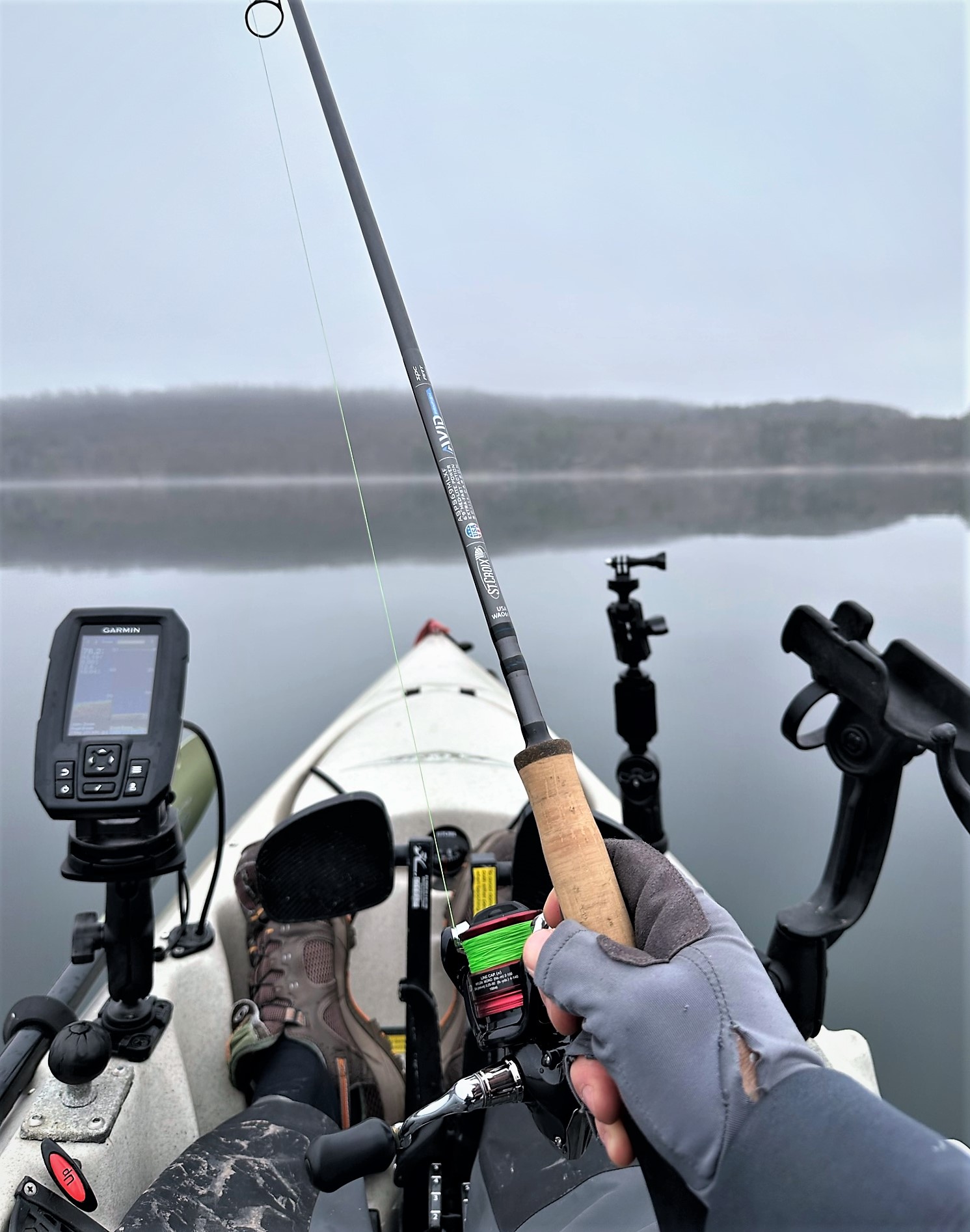
Another day this spring was spent in my kayak, on the same body of water that I was ice fishing just weeks before. A stiff wind made things challenging, but I found some lee behind land and worked my tail off for a 22-inch brown trout. I hooked another one that felt larger, but it came unbuttoned during the fight. It was the first time with my new electronics in the kayak—a gamechanger from what I was using previously, yet I still need to spend more time dialing it in just right. 

Saturday, December 21, 2024

Best In Show

Tomorrow is the first day of winter and it will feel like it. With the solstice comes the coldest air of the season so far. Nighttime lows in the single digits could make some good ice up north when the wind lays down. But thanks to the seesawing temps of late, I'm trying my darndest to temper excitement. Still, the old Jet Sled is packed with gear by the basement door, ready to go at a moment's notice. 

Waiting for ice strong enough to walk on takes time. Time to reflect on favorite catches of the year as 2024 winds down. I couldn't pick just one. It had to be two favorites, each a personal best of their respective species. One caught in the spring, one in the fall. One caught from shore, one in a kayak. Both with native names derived from the Algonquian language.

The PB tautog story has been told here before, and I'm fortunate to have captured it on video. The PB squeteague story, while much less documented, was nonetheless memorable...

When I was young, my late grandfather told me there used to be so many weakfish in Long Island Sound that you could walk across their backs. Hyperbole yes, but his point was clear. I'll never witness squeteague runs like he did, yet I'm thankful there remains spots they can be found each spring if you put in the time and effort. Earlier this year, while waist-deep in a May outgoing tide, I hooked, landed, and released the biggest weakfish of my life. Though not giant, she was from a bigger size class than any I had previously come across, and from a place that holds special meaning. A beautiful and impressive specimen that set a new bar; a bar I will be aiming to raise again next May. 


Wednesday, April 12, 2023

Spring Seef

Coming off a winter with zero chances to ice fish any of Connecticut's deep-water lakes, I had been itching to visit one in a kayak this spring. It took a little help during Holy Week for my cards to line up right. With a day off of work, kids in school, and ideal weather conditions, excitement levels were through the roof as I drove north last Thursday.

When I finally launched at 8:30, it was 46 degrees with fog thick enough to make me question how well I knew my surroundings. Later in the morning, when it eventually burned off, temps spiked over 20 degrees. Thankfully there was little to no wind to speak of, making the surface of the lake smooth as glass and allowing sound to carry more than usual. The loud and eerie calls from a handful of loons fishing nearby reminded me of time spent on Woods Pond in Maine as a kid.

rigged & ready 


After peddling halfway to the planned starting point, I saw a fish eat on the surface close enough to warrant a hasty cast. It resulted in a reactionary strike and a long-distance release, but it was a welcomed sign of activity to come. As I approached the deepest bowl of lake, there were two gents drifting in a small jon boat – the only other anglers on the entire body of water.

My game plan was the same in the kayak as it was when I have been fortunate to ice fish here: vertical jigging with soft plastics and metal spoons to imitate the lake's main forage of landlocked alewives. Whether my fish finder was not up to the task or I still haven't fully dialed-in the unit yet, I couldn't see my jig or targets on screen in detail like I usually do while on the ice. Though still confident in my method and the spot to keep doing what I was doing, part of me felt like I was fishing blind.

glass

soft plastics

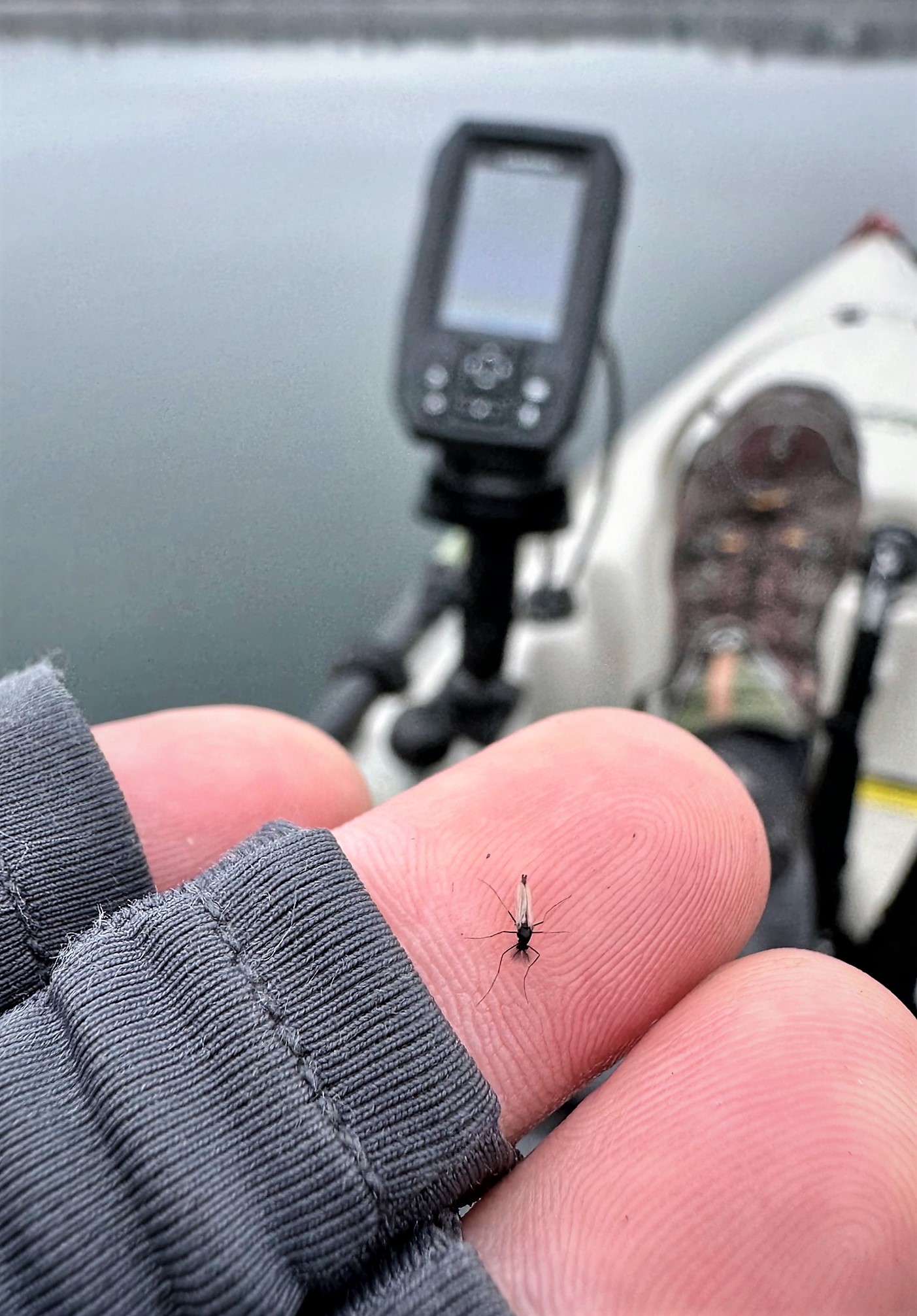
That method consisted of jigging on bottom and up through the water column with occasional pauses in hopes a chasing trout would pounce on my offering. More than few times I stopped to cast at the ever increasing number of trout feeding on top. Some of the takes were gentle sips while others were a porpoising action that revealed flanks of spotted silver and copper. There were unmistakably large fish in the mix. I reached over the side of the kayak and cupped in my hand what they were eating—small midge that were emerging from the lake bottom about 75-feet underneath. As the sun started to peak out, the hatch shifted from midge to larger stone flies. It was a sight to see.

elephants eat peanuts; big trout eat midge

a stonefly takes flight

The brown trout eating on the surface were keyed in on bugs, wanting not much to do with the baitfish offerings I presented them. Never during the trip planning stage did I ever think a fly rod and assortment of dry flies would be needed. I hooked and lost one more on the surface, but ultimately decided my time would be better spent targeting the trout I couldn't see eating herring down below.

During one of the many retrieves with a lead head and soft plastic, something heavy doubled over my new St. Croix rod on its maiden voyage. With the water so clear, I got the first look of the fat seeforellen brown trout when it was still more than 10 feet deep. I had stared down at many silvery trout on this lake through holes in the ice, but never before in open water. The sharp single hook of the jig was firmly planted in the trout's jaw, yet the jerky headshakes and barrel rolls on its way up from the depths had me muttering a hybrid of prayer and cursing. When it finally came within arm's length, I slid the net under the weight of its body, hoisted up, and let out a sigh of relief.

On a bump board on my lap, the fish measured a hair over 22-inches. More impressive than its length though, was its girth. This trout was built like a Mack truck—a body type achieved on a healthy diet of fish, not just bugs. The population of illegally-introduced alewives in this lake is booming, and the seeforellen strain stocked here are taking full advantage.

herring eater

seeforellen


catch & release trophy for CT waters


After admiring the trout in the water, one of the heaviest I have ever landed in Connecticut, it kicked away strong, straight back down to whence he came. It was an awesome feeling and affirming moment. The idea of a solo kayak mission on this body of water had been consuming me for months since the winter that never was. While I may never luck out with the same extraordinary conditions again, it was satisfying to know that I could pull this type of trip off and have a chance to catch big trout like that, or bigger. 

Morning grew late and the fog completely burned off, revealing a bright blue sky and a completely different day than when I started. It was darn right hot out for April. The amount of fish eating up top dwindled. I missed one more solid hit just off bottom. My time on the water was growing thin, but the long peddle back to my truck was an enjoyable one. I hugged the shoreline and snuck right up on a pile of largemouth bass of impressive size, yet couldn't coax one into biting a tube. There were two bald eagles perched in a tree along the last leg of my journey back. A fitting way to finish an outing that I will look back on for as long as I'm around. 

a gorgeous body of water
had to pullover for this on the way home; spring in New England

celebratory libations

Wednesday, April 15, 2020

Great Escape

Everything about my drive to the reservoir felt a little off, at least right until I was at the water’s edge. It had been more than four weeks since I had gone fishing or looked for artifacts or any of the other things I love do outside in springtime, but this has been far from a typical spring. In fact, it’s been batshit crazy.

I have been taking the quarantine seriously, not only for the wellbeing of my family but for others too. We have abided guidelines and sheltered-in-place since early March, only leaving for necessary shopping or to take walks, always with a goal of getting our kids exercise and fresh air while steering clear from people.

I’d be lying if I said fishing or other hobbies weren’t on my mind. This weekend I’ll miss a traditional spring camping trip for the first time in 25 years and it sucks, but feeling bad for myself about not being able to camp or fish during a global pandemic is pretty silly in the grand scheme of things. There are tens of thousands out there that are sick and dying, many more are out of work and wondering where their next paycheck will come from.

At the moment, my family is healthy and we have our jobs. That’s what’s important and what I’m most grateful for. That said, maintaining a healthy state of mind is important as well. With two parents working from home and juggling two little ones, our weekdays have been long and exhausting. Selfishly, I wanted to get out, alone, for a few hours. Tying flies, organizing tackle, purchasing gear online has helped scratch the itch, yet nothing can substitute for the real thing. I was going to fish, close to home, without coming near another soul.

It was a Sunday afternoon and I headed inland to a pristine body of water opened to fishing three weeks early thanks to an executive order by Connecticut’s governor. People were out soaking in the last of the day’s rays—hikers, anglers, cyclists. I drove the entire length of the reservoir scouting for dirt pull-offs without a vehicle. On my way back down, I found the one.

Loaded for bear with four rods, a backpack, and a bucket of shiners, I took a worn and familiar path to an opening in the tree line. The water level was as high as I’d ever seen it. While nice to have a drinking water supply at full pool, it dramatically cuts down on accessible spots with room for casting. I was lucky to have this sloped patch of dirt to myself and I camped there for the next three hours. 


There was still enough daylight to focus solely on trout when I first arrived. I set shiners under slip bobbers five and 10 feet below the surface and peppered the water around them with a metal spoon. A good and a bad thing happened soon after. I watched one of my bobbers disappear under the surface and I took a swing and missed. I was connected to the fish for just a second, yet long enough to feel heavy weight. I kicked myself for not giving it more time to eat. At the same time, I felt giddy that fish, maybe big trout, were feeding in the vicinity.

After the early takedown, things went quiet for a while. There was a little breeze on the main lake, but the protected area I was in was smooth as glass. A lone loon coasted into view. It didn’t make a ripple or a sound as it inched closer ever so slowly. They are such a beautiful and graceful bird. It was the closest I had been to a loon that I can remember.

When the sun started creeping below the trees behind me, it was time to shake things up. I slid the bobber stops quite a bit deeper and sounded the area in front of me. The depth in the sweet spot was about 25 feet or so. While the slip bobber system can be finicky at times, when things are working right, it’s a killer method for suspending bait off bottom. Just minutes after the change, one of my bobbers vanished. I scurried to the rod and set the hook to find something fighting back this time. The fish went ballistic and swam up to the surface almost immediately. After a spirited fight complete with acrobatics, it felt great to lip a healthy smallmouth bass from the net.


Without fully realizing it until the smallie swam off, it was well into magic hour—the span of time between day and night when special things seem to happen on the water. The fading daylight hung around for a while longer while the waxing gibbous rose high in the sky. It was a couple nights before the full pink moon and there was just enough light so I could watch my bobbers without squinting. But it was the sound, not sight, that I was most focused on. The chorus of peepers in the wetlands around me was deafening. So much so I had to record it on my phone for prosperity. Also notable was the lack of vehicles driving around the reservoir—usually they are constant and you can hear them coming from a mile away. I didn’t want to leave.

Magic hour wasn’t over yet. Before it got too dark to see, the other bobber went down. The few seconds it took me to get in position seemed long enough, so I set on the fish straight away and the weight against the bent rod felt substantial. This fight was different than the bass—longer with slow, strong runs and less headshakes, and nothing close to an aerial. It was my target species and I knew it instantly. A tense minute or two later, there were big gold and olive flashes in the shallows in front of me. The endgame must have been a sight to see—me balancing on a rock with the rod in my right hand guiding the fish into a long-handled net in my left. I knelt beside her curled in the mesh and fist-pumped in silence, gazing at my best walleye ever.

Old marble eyes taped out a hair over 24” and looked like it hadn’t missed many meals—trophy size by CT DEEP standards. I was so jacked up I could barely operate the self-timer on my phone, but managed a shot that will help me remember that evening forever. Walleye are the best eating freshwater fish around here, but this one had to go back and I took great joy watching it kick off strong. After losing some bruisers over the years, it seemed like a good omen to let one like that go.  


Walleye are one of the most popular gamefish in North America, though I gather that fishing for them is different in places like upstate New York, the Midwest, or Canada, where the sheer number of them make it an easier species to target. Here in Connecticut, every single walleye in our lakes and ponds is trucked here hundreds of miles from a commercial supplier. There is no spawning population and all walleye are stocked as six-inch fingerlings. It takes them three to four years of surviving the odds to reach the legal size of 18-inches. That’s why I consider them all special fish when they grow past keeper size.

The big moon allowed me to see my bobbers a little longer, long enough to catch a short yellow perch with eyes bigger than its stomach. It was now past the legal time to fish and I reeled in the lines and enjoyed a sip from my flask. I took my time packing up and hiking back to the truck, savoring the sounds of the spring night in the woods. As I drove home on a nearly empty Merritt Parkway, I replayed the trip over and over in my head. It had been many things. A reunion with a favorite spot. A solitary celebration of a personal best. A three-hour escape to clear my head and almost forget all that is going on in the world right now. It was perfect.