Showing posts with label Seeforellen. Show all posts

Sunday, May 10, 2026

Renewal

After the long winter we had, it has been refreshing to check off the boxes of another spring season. The first striped bass of the year is always a notable fish. For me, this came in mid-April along a sandy beach, at high tide, before getting chased off the water by lightning. The fish ate a yellow wooden darter made by my friend Jim. He was next to me when I caught the striper, which was pretty damn cool.


Spring is also a favorite time to look for Native American artifacts. When I spent a day off arrowhead hunting in April, it was a bit early as the farm fields I visited had not been plowed yet. Fortunately, I was still able to find a small-stemmed projectile point made of quartz. It was evident that this point had been heavily reworked over time; a good reminder of how prudent these ancient tool-makers were. 


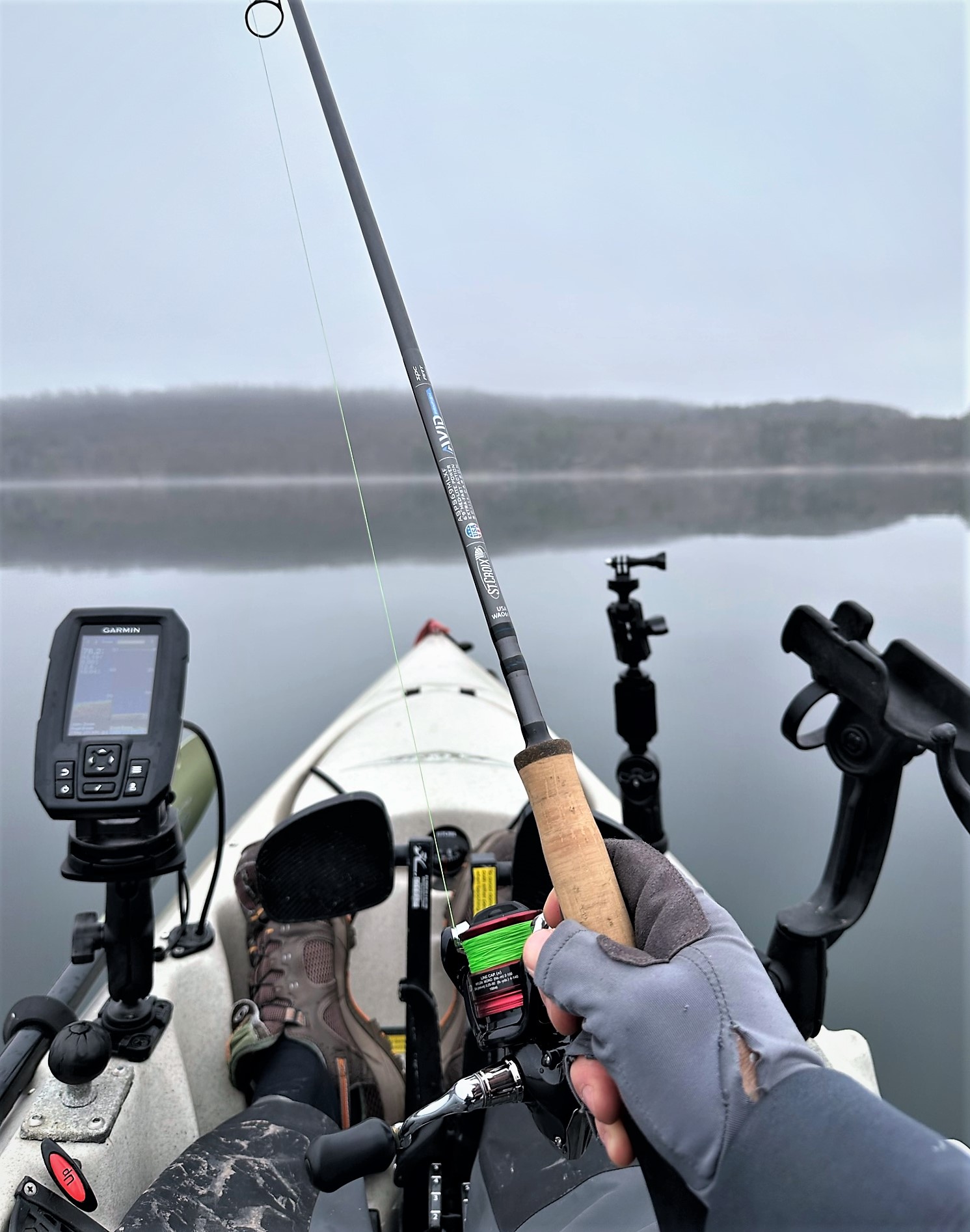
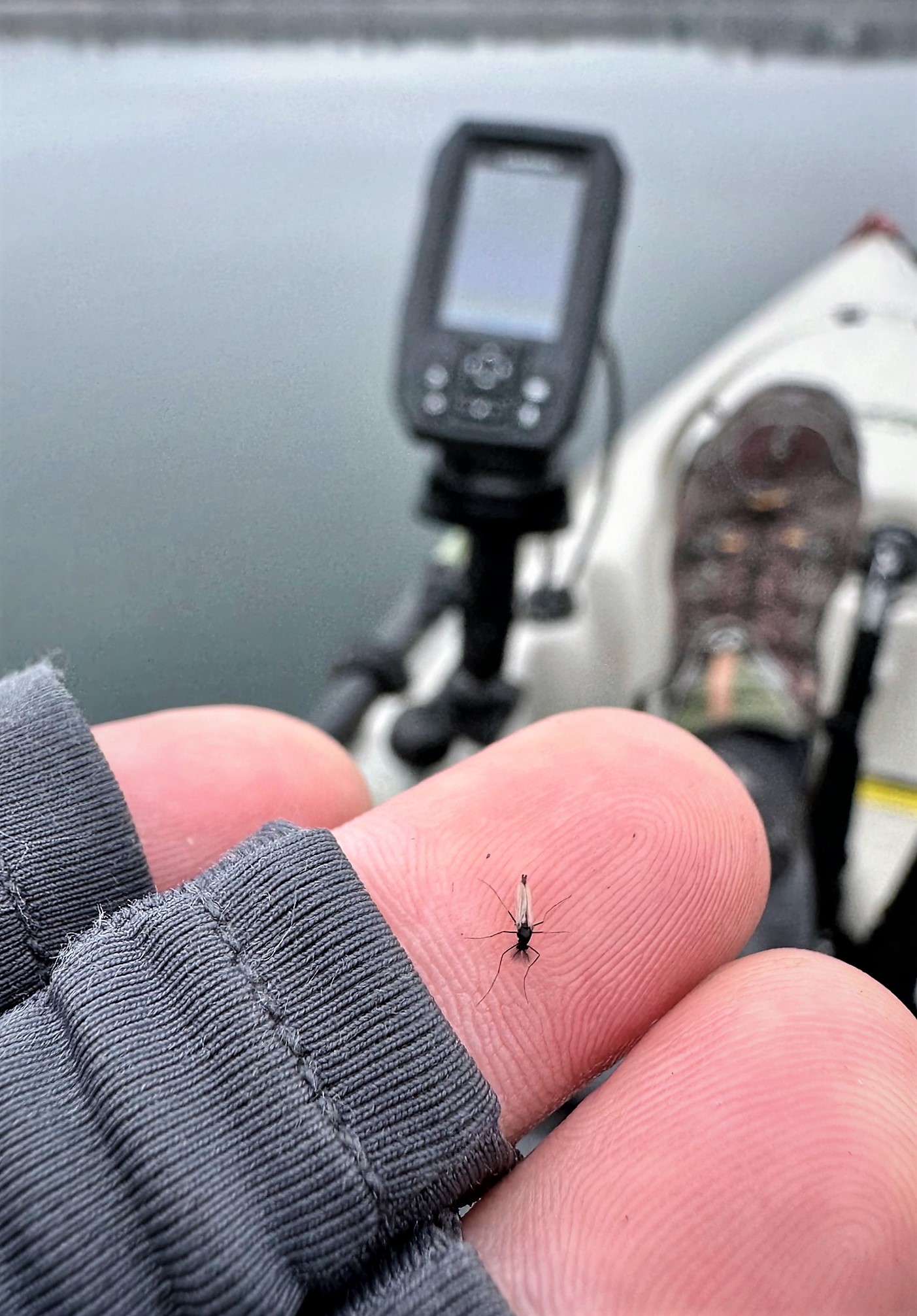
Another day this spring was spent in my kayak, on the same body of water that I was ice fishing just weeks before. A stiff wind made things challenging, but I found some lee behind land and worked my tail off for a 22-inch brown trout. I hooked another one that felt larger, but it came unbuttoned during the fight. It was the first time with my new electronics in the kayak—a gamechanger from what I was using previously, yet I still need to spend more time dialing it in just right. 

Sunday, March 8, 2026

Old Fashioned Winter

It's been a cold winter and I squeezed as much out of it as possible. I fished through ice on 10 different days, in four different months, on six different waterbodies, with a bunch of different people, targeting a number of different species. There is still more than foot of ice on certain lakes and ponds in Connecticut, yet my season is over. And it will go down as one of the most memorable of my life. 

There were lots of highlights, but one that rises to the top was ice fishing with my uncle again after nearly eight years. I will always owe him a debt of gratitude for getting me hooked on hardwater. It came full circle this winter, with both of us witnessing each other's best ever trout through the ice. Those memories will forever be etched in my brain. 

Bringing my girls out three times this season was another high point. It felt a bit forced one 13° morning, while doing sock changes in our shelter in front of a Mr. Heater. They fought through it and earned the chance to see the biggest bass any of us had ever experienced through the ice. A couple of weeks later, we had a kids day in tee-shirt weather, chasing flags on a favorite pond, eating hot dogs and grilled cheeses. Those trips will always stay with me. 

It seems to be the new norm that ice fishing seasons like this one are few and far between. Some years I don't get to walk on my favorite deep-water lakes, or get to fish with my favorite people on earth. That's why winters like these become chiseled into our memory, and keep a fire lit until we're fortunate to live through another one. 


Monday, December 22, 2025

Silver & Gold

Low water in a reservoir that supplies drinking water to more than 300,000 residents isn't ideal, but it does present unique opportunities for anglers. The main being more access to spots and habitat that you simply can't reach when the reservoir is at full pool. Another benefit is the fish you're targeting are condensed into a smaller area. One more is all the cool stuff that gets exposed in these conditions. Not just the subtle reminders of a bustling mill town that once existed below the surface either. Among the stonewalls, foundations, and water-logged tree stumps, all kinds of long-lost treasure gets revealed. 

It had been more than a decade since I had witnessed water levels this low here. That's a lot of time for its craggy bottom to accumulate broken-off fishing tackle. I'd like to believe all the years I've spent looking for Native American artifacts on beaches and farm fields have helped train my eyes. Whether that's true or not, in just two short trips, I was able to find a nice pile of lures and lead weights. The hooks have long rusted beyond use, but with a little scrubbing, new stickers and hardware, most of the gear will soon look good as new. A fun winter project, and payback for all the offerings I myself have donated over the years. The rez giveth, and the rez taketh away...


Wednesday, April 12, 2023

Spring Seef

Coming off a winter with zero chances to ice fish any of Connecticut's deep-water lakes, I had been itching to visit one in a kayak this spring. It took a little help during Holy Week for my cards to line up right. With a day off of work, kids in school, and ideal weather conditions, excitement levels were through the roof as I drove north last Thursday.

When I finally launched at 8:30, it was 46 degrees with fog thick enough to make me question how well I knew my surroundings. Later in the morning, when it eventually burned off, temps spiked over 20 degrees. Thankfully there was little to no wind to speak of, making the surface of the lake smooth as glass and allowing sound to carry more than usual. The loud and eerie calls from a handful of loons fishing nearby reminded me of time spent on Woods Pond in Maine as a kid.

rigged & ready 


After peddling halfway to the planned starting point, I saw a fish eat on the surface close enough to warrant a hasty cast. It resulted in a reactionary strike and a long-distance release, but it was a welcomed sign of activity to come. As I approached the deepest bowl of lake, there were two gents drifting in a small jon boat – the only other anglers on the entire body of water.

My game plan was the same in the kayak as it was when I have been fortunate to ice fish here: vertical jigging with soft plastics and metal spoons to imitate the lake's main forage of landlocked alewives. Whether my fish finder was not up to the task or I still haven't fully dialed-in the unit yet, I couldn't see my jig or targets on screen in detail like I usually do while on the ice. Though still confident in my method and the spot to keep doing what I was doing, part of me felt like I was fishing blind.

glass

soft plastics

That method consisted of jigging on bottom and up through the water column with occasional pauses in hopes a chasing trout would pounce on my offering. More than few times I stopped to cast at the ever increasing number of trout feeding on top. Some of the takes were gentle sips while others were a porpoising action that revealed flanks of spotted silver and copper. There were unmistakably large fish in the mix. I reached over the side of the kayak and cupped in my hand what they were eating—small midge that were emerging from the lake bottom about 75-feet underneath. As the sun started to peak out, the hatch shifted from midge to larger stone flies. It was a sight to see.

elephants eat peanuts; big trout eat midge

a stonefly takes flight

The brown trout eating on the surface were keyed in on bugs, wanting not much to do with the baitfish offerings I presented them. Never during the trip planning stage did I ever think a fly rod and assortment of dry flies would be needed. I hooked and lost one more on the surface, but ultimately decided my time would be better spent targeting the trout I couldn't see eating herring down below.

During one of the many retrieves with a lead head and soft plastic, something heavy doubled over my new St. Croix rod on its maiden voyage. With the water so clear, I got the first look of the fat seeforellen brown trout when it was still more than 10 feet deep. I had stared down at many silvery trout on this lake through holes in the ice, but never before in open water. The sharp single hook of the jig was firmly planted in the trout's jaw, yet the jerky headshakes and barrel rolls on its way up from the depths had me muttering a hybrid of prayer and cursing. When it finally came within arm's length, I slid the net under the weight of its body, hoisted up, and let out a sigh of relief.

On a bump board on my lap, the fish measured a hair over 22-inches. More impressive than its length though, was its girth. This trout was built like a Mack truck—a body type achieved on a healthy diet of fish, not just bugs. The population of illegally-introduced alewives in this lake is booming, and the seeforellen strain stocked here are taking full advantage.

herring eater

seeforellen


catch & release trophy for CT waters


After admiring the trout in the water, one of the heaviest I have ever landed in Connecticut, it kicked away strong, straight back down to whence he came. It was an awesome feeling and affirming moment. The idea of a solo kayak mission on this body of water had been consuming me for months since the winter that never was. While I may never luck out with the same extraordinary conditions again, it was satisfying to know that I could pull this type of trip off and have a chance to catch big trout like that, or bigger. 

Morning grew late and the fog completely burned off, revealing a bright blue sky and a completely different day than when I started. It was darn right hot out for April. The amount of fish eating up top dwindled. I missed one more solid hit just off bottom. My time on the water was growing thin, but the long peddle back to my truck was an enjoyable one. I hugged the shoreline and snuck right up on a pile of largemouth bass of impressive size, yet couldn't coax one into biting a tube. There were two bald eagles perched in a tree along the last leg of my journey back. A fitting way to finish an outing that I will look back on for as long as I'm around. 

a gorgeous body of water
had to pullover for this on the way home; spring in New England

celebratory libations

Sunday, January 8, 2023

Seefer Madness (revisted)

January 2023...

Once in a while I find myself revisiting old posts buried in this blog. I thought this one, even eight years later, still rings true. 

Connecticut's current state record brown trout was caught about two weeks before I originally wrote this and it was certified shortly after. It was 33-inches long and weighed 19-pounds, taken from West Hill Pond just days after it was stocked from Kensington Hatchery. Not more than four months later, another beast, likely even heavier, was caught on a spinnerbait in Highland Lake, but the bass angler released the trout without pursuing the record.

I am still in firm belief that CT DEEP should not have stocked fish of record size without creating a way to recognize them for what they are. I would have liked these fish tagged or fin-clipped and, if and when they were caught and broke the record, placed in a subcategory under the state record brown trout listing.

It is highly doubtful any of those 400 monster seeforellens from the December 2014 stocking are still roaming today. Unless CT DEEP stocks more record-size brown trout, the next one to break the current Connecticut record will have to surpass 19-pounds by having spent some real time in a lake, feeding on something other than hatchery pellets. I hope I live long enough to see that day happen...

___________________________________________________________________________________

January 2015...

Up until a few weeks ago, “seeforellen” was a rather unfamiliar term in Connecticut, spoken only within pockets of ardent trout anglers and inland fisheries staff. Now, after a series of recent trout stockings and a little public relations, it has become a household name overnight, one that even carries a bit of controversy along with it. 

In the month of December, CT DEEP stocked over 400 surplus broodstock seeforellen brown trout in eight lakes throughout the Nutmeg State. These five-year-old fish were born and raised in Kensington Hatchery and averaged 15-pounds, with some well over the mind-boggling 20-pound mark. This created an unprecedented and incredible opportunity for Connecticut anglers, but it also sparked much debate due to the fact that several brown trout surpassing the current state record were released.

Reared in our hatchery system since 1992, seeforellens have a storied history in Connecticut. In a recent radio interview, Tim Barry, the supervising cold water fisheries biologist for CT DEEP, shed a little light on why these fish are so unique. “We are the only state in New England to have this strain of brown trout,” Barry said. “It’s originally a lake-dwelling strain that comes from Germany, and it’s known to be a late-maturing fish and because of that fact they tend to grow very large and live quite a long time, usually longer and bigger than most other strains of brown trout. We use them in a variety of different applications, but primarily in our lakes to try and promote holdover brown trout and bigger brown trout.”

One of the over 400 recently stocked broodstock seeforellen (photo courtesy of CT DEEP)


Since the early 90’s, countless seeforellens have been stocked in Connecticut waters in all different sizes from fry to adults, but releasing broodstock this large is not common protocol. According to a CT DEEP FAQ, “normally, these fish would be stocked at age two or age three, however, due to an issue with a disease several years ago, the hatchery staff needed to retain a large number of the disease–free fish to restart the strain. Now several years later they are much larger than we need or can handle. At this size, they are too large to be kept at the hatchery and are past their prime (their productivity is decreasing). In order to make room for the younger, more productive broodstock, we decided to make the most of these fish by giving a once in a lifetime opportunity to our angling community.”

Before I go any further, let me be clear in stating that I commend CT DEEP for providing us with yet another unique and entertaining angling opportunity. I’d be lying if I said it wouldn’t be a blast hooking into one of these things, especially on a jigging rod through the ice. And if a youngster connects with a 15-pound anything, let alone a beautiful brown trout, forget about it, they will be hooked for life. However, hindsight is 20/20 and I think a few things could have been done differently in this whole process.

First, I believe the real-time promotion of the stockings via social media was a mistake. This allowed anglers to be at the precise stocking sites literally within minutes after the seeforellens were released. I get it; these fish were meant to be caught—it’s great publicity, especially in a day and age with Facebook, Twitter and Instagram. But with trout still milling around at the boat launches, there were cases of anglers throwing rocks to break ice to get at them and, much worse, there were multiple reports of unsportsmanlike snagging. Holding back on sharing the stocking locations by a few weeks could have allowed the trout to acclimate to their new surroundings a little. And though time consuming, stocking by boat several hundred feet from the launch would have given the seeforellens more of a fighting chance.

Another example of a recently stocked seeforellen (photo courtesy of CT DEEP)


It didn't come as much of a surprise when a photo recently popped up on Facebook of an angler hoisting a 19-pound seef just a matter of days after the initial stockings. It's most likely the first of a handful of "pending state record" brown trout we'll hear about in the coming months. While not everyone cares about angling records, for those that do, therein lies the hot button issue with all of this. In June 2011, Tony Urbanowicz broke a 31-year-old Connecticut brown trout record with an 18-pound five-ounce behemoth from the Saugatuck Reservoir. Yes, it too was a hatchery fish, most Connecticut trout are, but his seeforellen was stocked when it was six to nine-inches and survived years in the wild before eventually reaching its massive 32.5-inch length and 21-inch girth.

Maybe I was naïve in thinking Tony’s record brown trout was going to stand for a long time, especially since the previous record of 16-pounds 14-ounces from East Twin Lake lasted for over three decades. With the exception of a few deep lakes, Connecticut currently doesn’t boast many places that could produce a holdover trout of that caliber. And most of the bodies of water that can have certain restrictions (read: no boat fishing, no ice fishing or both) that make the feat even harder to accomplish.

Tony Urbaowicz with the current state record brown trout caught in 2011 (photo courtesy of Fisherman's World)

Regardless of what happens, I’m in the camp that’s not too keen on seeing a new state record that was stocked at record size. Perhaps any seeforellens stocked larger than the current state record should have been marked in a certain way, like with an elastomer tag or a tail clip, to denote as much. Maybe there could be a separate category for them in the records section of the Angler’s Guide or maybe there should be a steroid-era asterisk next to the new record like plenty of anglers have joked about.

However things shake out, the amount of buzz that has been created surrounding these giant trout is admirable. I believe the surplus broodstock seeforellen have provided a very cool recreational fishing opportunity, particularly for the next generation of Connecticut anglers. And while I may disagree with the stocking of state record-sized fish, the bottom line is that CT DEEP deserves to be applauded for the incredible overall job they do managing our freshwater fisheries, especially considering their limited staff and resources—the seeforellen program is another fine example of that. 

Thursday, January 14, 2021

Closure on the Closer

It was the last day of the year and final day of open season at the reservoir. Jeff and I pulled up at the same time from opposite directions. In a normal winter we would have been meeting at a frozen lake, but with no real ice fishing options we agreed instead to a morning session at the res. Jeff lives close by and had never fished it before, so he was in for a good lesson.

The morning was still pitch black and the rain seemed harder than forecasted. Though the thermometer read over 40 degrees, it was the type of wet cold that seeped into your bones. It had been raining quite a lot. In the span of just a few weeks, the drought that lasted most of the year was erased and the water level of the reservoir had risen dramatically to near full capacity. Great for drinking water, but from a selfish angler standpoint, it severely cut down the number of fishing spots around a place with limited access to begin with.

On our walk through the woods, I missed my mark for the spot I planned for us to fish. Instead of backtracking to find the trail, we stubbornly punched through thick underbrush to the water’s edge. There was no casting room where we landed, so we clumsily walked the shoreline over downed trees and boulders to the intended location. It was far from graceful with bait buckets and long rods in a tight corridor. When we finally got to the right spot, I realized my backpack wasn’t on my back. It was full on amateur hour.

While Jeff got situated, I retraced our steps to my truck where the pack was still on the front seat. It turned out to be a blessing—lying perfectly on some cobble along the shore was a giant cookie wrapped in cellophane. Jeff had dropped it in the scramble to the spot and we had a good laugh before splitting it for a hearty breakfast. Now we were ready to fish.

I wish I could say that we slayed walleye and trout at dawn, but it was quiet for the first two hours. The only constants were the rain and the wet chill that took a toll on our dexterity. Even the simple task of re-rigging took twice as long. The conditions also hindered my desire to pick up the lure rod and probe the areas around our baits. It was a hands-in-pockets-in-between-sipping-coffee type of morning.

Finally, a slip bobber started dancing on the surface. It was one of Jeff’s that had drifted towards a submerged tree near shore. When the float slid under, he connected with his first fish from the reservoir—a healthy rainbow trout. Catching at this waterbody on an inaugural outing is a feat in itself considering how many times anglers leave with their tail between their legs.

The bite seemed to be turning on because just a few minutes later another of Jeff’s bobbers disappeared. After a solid hook set, he had something on long enough to feel heavy weight on the other end. The immediate rush came crashing down when his line went slack. Jeff reeled up everything except the hook and shiner. Where it had been tied to his leader was a dreaded curly sue that revealed the knot had failed. A mishap that every angler has experienced at some point or another, but a gut wrenching one no doubt. There are state record-caliber fish swimming in this body of water and chances don’t come often, so the unknown of what was lost was painful.

There wasn’t much time to dwell on it before a third takedown occurred in the same area. It was one of my bobbers with a large shiner set 10-feet down. I gave it a second longer than customary and drove it home. The fish felt substantial and swam up in the water column. At the first glimpse, I thought I saw white-tipped fins of a walleye, but soon a broad, spotted tail of a trout broke the surface. Jeff laid a landing net in the water and I steered the fish in.

Inside the net was a thick silver bar of a brown trout; easily my largest from the reservoir in years. It was a male seeforellen with a slight kype to its jaw and in pristine condition except for an old injury to its right pectoral fin. An impressive specimen on its own, but what happened next is seared in my memory. When I went to remove the hook, along with my shiner there was another baitfish in his mouth. Initially I thought it was an alewife, the main forage in this impoundment, but upon closer inspection I noticed a hook through its back. Well I’ll be damned if it wasn’t the very same fish that Jeff lost only minutes earlier! We were floored—the excitement level on that patch of rocks was already high, but this put it into another stratosphere.

After plucking both hooks and shiners from its mouth, the greedy trout was photographed and sent on its way. We stayed for one more hour hoping for another bobber to go under, but the bite window had closed as quickly as it opened. Not often are anglers awarded that kind of closure after a missed opportunity. We’ve all been left guessing what kind of fish or how big it was after losing it. There was no guessing here—that brown trout was so dialed-in on hunting alewives that rainy morning, he let his guard down and got fooled twice by Arkansas shiners in mere minutes. Lucky for him, he was released unharmed to get bigger and wiser for next time. 

It was a neat way to close out the fishing season at the reservoir and to put a bow on a bizarre year in general. Cheers to a year ahead full of good health and new adventures—stay safe and tight lines!

Saturday, December 12, 2020

Stepped in Crappie

There was no sign of them only a week earlier, so I was both surprised and delighted to see tiny rings scattered across the glassy surface of the reservoir. What looked like a passing rain shower was actually baitfish schooling at the top of the water column. Sunday breakfast was served and soon followed the first boil that cut through the morning silence.


Anadromous alewives have been running our tidal rivers each spring since the last glaciers retreated, but it wasn’t until around 1990 that the landlocked variety were introduced in Connecticut. Since then, in a number of waterbodies around the state, this member of the herring family has become a favorite forage for larger predators like trout, walleye, bass, and almost anything big enough to eat them. And where populations of landlocked alewives are present, there is usually opportunity to catch special fish.

On this morning I had set out while still dark with high hopes for walleye. I was fishing two slip bobber rigs with bobber stops set so my shiners dangled just over where I thought bottom was. The first bobber went under as the sun started creeping over the tree line. To my surprise it was a black crappie; not a large one nor the species I was after, but I was happy to rid the skunk. While I’m no expert in the calico bass department, I do know where there’s one, there’s usually more.

All this time alewives were still dimpling on the surface. After a few more boils from what I assumed were trout, a good enough case had been made to ditch the walleye plan and bring my baits up higher.  I made one more cast before adjusting and, as luck would have it, my rig got fouled around my slip bobber and the shiner began flailing on the surface when it hit the water. The struggling prey was too enticing and something engulfed it almost immediately, crashing on it like a striper would a pencil popper. I set the hook and reeled in a respectable brown trout—my first from this reservoir in years. Without that tangle, I wasn’t catching that trout—sometimes it’s better to be lucky than good.

There was a time when most brown trout caught in this reservoir were seeforellens. DEEP brought the German strain to Connecticut in the early 90s and they thrived in a handful of our deep lakes with high populations of alewives. It was a real gut punch in 2016 when seeforellen production was cut from our hatchery system due to cost-saving measures, but not before the strain made a lasting impact with Connecticut’s brown trout record changing hands twice between 2011 and 2014.  

There are undoubtedly some giant pre-2016 “seefs” still lurking in our waters, and thankfully it looks like the days of rearing this strain in Connecticut are returning. According to the state’s latest salmonoid action plan, the Fisheries Division is “currently re-establishing a broodline of the seeforellen brown trout strain” at the at the Kensington State Fish Hatchery, which is welcomed news to this angler.

After releasing the trout, I adjusted the two slip bobber rigs to suspend my shiners about five and six feet below the surface. There was a light breeze that created a left-to-right drift and took my bait from deep water over a shallow shelf. Just like you’d expect them to be, the fish seemed to be straddling this drop-off and that’s where my bobber went down four different times, but it was the final two that are going to stick with me for a while.

A little after 7 a.m. the fish gods made it clear that it wasn’t walleye or trout that I was supposed to catch that day. The next bobber take-down resulted in another black crappie, but this one was an absolute unit. It taped out to 15.25-inches, my largest calico ever, and had a full belly on it. The shiner was halfway down its gullet and this fish was unquestionably suspended over the shallow structure, pigging out on the schooling alewives. While crappie are considered excellent table fare, this specimen had me in awe and I decided to let it go.

Over the next hour I tried tapping into what I assumed was a good school of crappie in front of me. Along with drifting live bait, I peppered the area with artificials—hair jigs, plastic tubes, blade baits—but nothing. Then, with only minutes before my cut-off time, another bobber down by another giant calico—a near carbon copy of the previous one, if not a touch heavier. Just an incredible specimen that I couldn’t bear to harvest. I released the fish, packed my gear and left them biting, but it was a hell of way to go out.  

What happened in those two hours was not lost on me—originally out for walleye, then changing it up for trout, only to stumble upon the two best crappie of my life. It was an eventful morning that did wonders in boosting my appreciation for the species. It also reminded me that no matter how much I want to stick to a specific game plan, often times it pays to observe what’s happening and just go with the flow (or just get lucky). Two of the three alewife-stuffed calico bass I caught would have qualified for DEEP’s trophy fish award program had I done the proper documentation, but I’m content with the memory and that their genes are still in the gene pool.