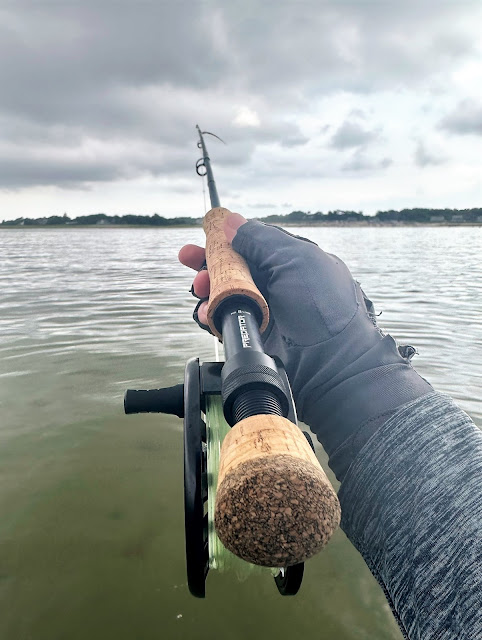
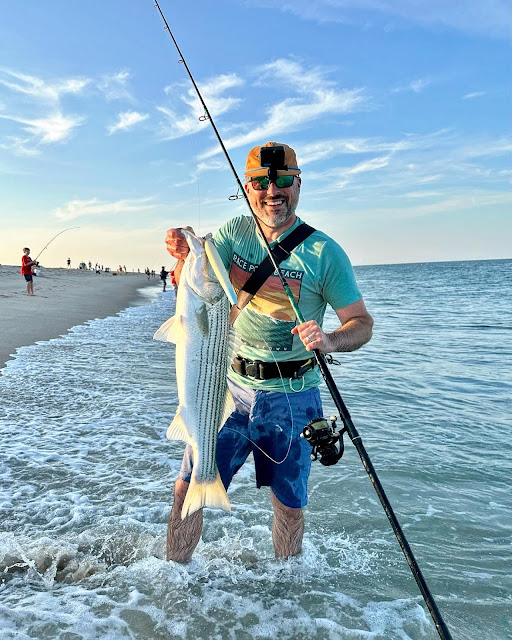
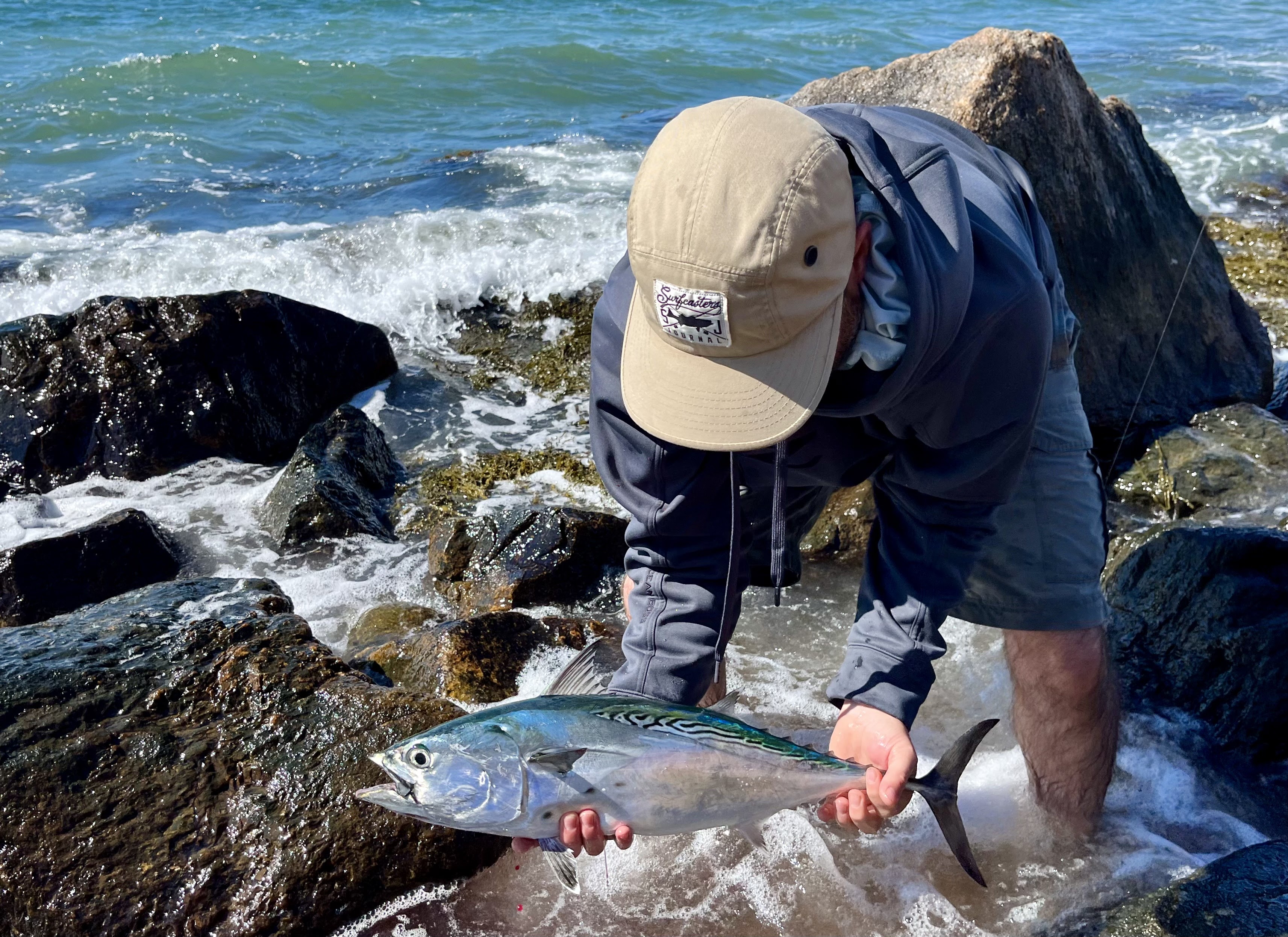
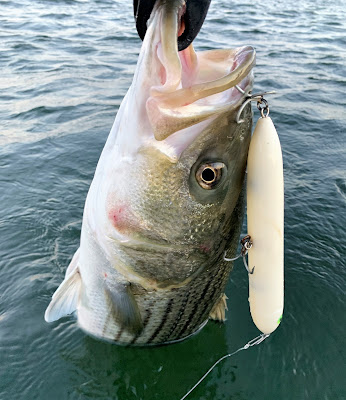
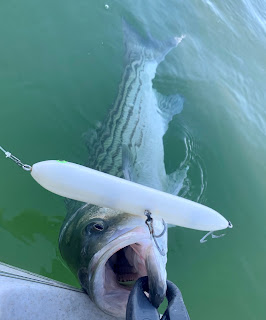
After the long winter we had, it has been refreshing to check off the boxes of another spring season. The first striped bass of the year is always a notable fish. For me, this came in mid-April along a sandy beach, at high tide, before getting chased off the water by lightning. The fish ate a yellow wooden darter made by my friend Jim. He was next to me when I caught the striper, which was pretty damn cool.
Sunday, May 10, 2026
Renewal
Monday, December 23, 2024
Legend of the Surf
Editor's Note:
Back in 2012, I had the opportunity to interview a living legend of surf fishing. By that point in time, though he’s too humble to acknowledge it, Pat Abate had long earned a reputation throughout the Northeast as a bonified surf sharpie; a member of the old guard with a knack for sniffing out big striped bass. It was also a time when Pat owned River's End in Old Saybrook, one of the more premier fishing outfitters in southern New England. For someone like me, who was at the pinnacle of my surf fishing effort and interest, it was an awesome experience to hear some of Pat's insights and stories. He eventually sold River's End and retired, allowing for more time on the water instead of behind the counter. It should come as a surprise to no one that Pat is not only an awesome angler, but also a salt of the earth kind of guy who is still plugging away in the surf.
KB: Do you remember the first big striped bass that got you hooked into surfcasting?
![]() |
| A younger Pat with a nice bass from the rocks. |
KB: Were you always in this location?
KB: If you could travel anywhere in the world for fishing, where would you go and what would you fish for?
KB: If you could only surf fish one state for the rest of your days, which would it be?
PA: Is a rigged eel a lure? [laughs]
KB: That’s a good answer! What direction do you see surfcasting headed? Is wetsuit fishing just a fad?
Monday, September 18, 2023
Artificial Intelligence
I love everything about American
eels. They are arguably the most effective and versatile bait when
targeting striped bass. Many a book chapter, magazine article, and blog post
have been written about their ability to entice stripers into gulping them down
like candy. An eel was responsible for my largest bass ever landed and I’m sure
the same can be said by countless anglers up and down the Striper Coast.
For a long time now, lure makers have
been trying to, with varying levels of success, duplicate the American eel’s
shape, suppleness, and action. I have been fishing eels in nearly every fashion
possible for as long as I can remember and don’t plan on giving them up
entirely anytime soon. All that said, they are expensive, can be a pain to deal
with, and are sadly becoming scarcer as the years tick by.
Companies like Lunker City, Hogy,
RonZ, Al Gag’s, Berkley were some of the OGs of my early days of fishing eel
imitations, and they still make great baits today. However, it’s been
intriguing to witness the arms race of long, slender soft-plastics come
to market over the last 20 years. By names like Got Stryper, Game On!, Fish
Snax Lures, JoeBaggs, Zinger Baits, and Gravity Tackle to name a few. There are
limitless combinations of size, color, and rigging options available to today’s
angler for nearly any situation they could encounter. So much so the choices
can be overwhelming.
Over time, I have been building
up my arsenal of soft-plastics and my confidence in using them. I am starting
to find more consistency in my success and part of that can be attributed to selecting
the right bait and rigging style to match the spot and its conditions on a
given outing. Like in every kind of fishing that I do, it has been a fun, never
ending journey of learning. The farther down this rabbit hole I go, the more I
realize how much there is still to learn, explore, and experiment.
We’re on a loop. Enjoy the ride.
| The author with a healthy striped bass that fell for a 13.5" GT eel rigged on a 1/2 oz. jig head. |
Monday, September 11, 2023
Triathlon Bass
While there was no swimming or
running involved, this lazy man’s triathlon did have its share of driving,
cycling, and walking. An end-of-summer fishing adventure with a good amount of
time and energy expended to reach a chosen spot; effort that would pay off in
spades just a few casts in.
Wearing wetsuits and standing in
water 50-yards from shore on a dark night, it was challenging not to think
about the plethora of brown sharks that chomped striped bass catches all over Long Island Sound this
summer. Jim, the trip planner and my host for the
night, started with a live eel. I opted for a lure that punched through the light
breeze to reach the dying current, which was going from right to left around a
rocky point with an ebb tide.
This lure was an Xplorer, the
brainchild of a talented angler and plug builder named John Stirpe. Made of
resin with a portion of its core being urethane foam, it is a unique and
versatile floating swimmer that digs on a fast or slow retrieve, flashing a
super realistic paintjob. It was gifted to me by my pal Eddie, a fellow fishing
and artifact junkie from Massachusetts. He has fooled a number of plus-size
striped bass over the past few seasons on Xplorers. Knowing I had coveted one
for some time, Eddie generously mailed me a plug from his personal stash with
the understanding that I would fish it hard.
Our first casts came right after full
darkness set in. I was aiming to about 1:30 on a clock face. On my second cast,
my lure had just splashed down and something whacked it, even before I had a
chance to put my braid on the line roller. A good omen no doubt and I hollered
to Jim to give him a heads up. While retrieving the very next cast, a fish
slammed the Xplorer and immediately thrashed around on the surface. It then
made a bee line right at me and I reeled furiously to stay in contact. When the
bass realized it was hooked, she did an about face and flexed her muscles,
peeling an impressive amount of line in the process.
This was the biggest test yet for
my 'Montauk Eel Rod,' a Lamiglas blank cut and wrapped in 2015 by a friend and
expert rod builder, Billy DiLizio. A rod soft enough to throw and feel lighter
offerings, yet with enough balls to put the screws to big striped bass, which
is exactly what I was doing in this moment for fear of having it bitten in half
by the taxman. A strong fish, but beaten pretty quickly and still green when my
Boga Grip clasped its lower lip.
In the faint beam of my headlamp,
the bass did its best planking impression just under the surface, allowing me
to snap a half decent photo with the Xplorer still in its jaw. Before letting
her go, I lifted the fish quickly out of the water and watched the numbers on
the scale drop to a hair below the 36 mark. This was a notable catch for me in
a few ways. It was the largest striped bass I had caught in years, the largest
ever landed on that particular rod, and my largest ever using an artificial lure.
Stoked doesn’t begin to describe it. Do I wish I had gotten a better photo? Yes,
but there was no good way to document it without bringing the fish to shore and
risking its health and possibly missing out catching other fish. I took solace
in how strong she bolted away for deeper water.
The fish were there as soon as we arrived, and likely before that, though they seemed to vacate the boulder field soon after, as the moving water grinded to a halt. Jim ended up losing what felt and sounded like another big bass on an eel and I had one more hit on the swimmer. That was it, though we kept trying for a while before the long walk, pedal, and drive back. My partner was on vacation and could have kept fishing for another 12 hours, but I had to be presentable at work the next morning. Still, I wouldn’t have changed anything. I floated on air the whole way home and for some time after.
That was a memorable fish and experience, and I am grateful for the many cool pieces that came together to make it possible—from Jim organizing the trip, to Billy wrapping the rod, to John building the plug, to Eddie mailing it to my door. One of the greatest things about fishing is, you just never know what is going to happen on any given outing.
Sunday, August 27, 2023
Vacation Blitz
“Lotto fishing,” quipped the Cape Codder from across the street. “You need to be in the right place at the right time and get lucky.”
My family and I were renting the same cottage that we have
each summer for the last several years. While chats with the neighbor are
minimal during our stay, I always take stock in what he says. A hardworking
waterman, in summers past he had gifted us freshly-raked little necks. This
time he offered fishing advice, or at least hope that something special could
happen if luck was on my side.
There was a pile of striped bass feeding just offshore of
the outer beaches, and they could easily follow bait to within casting range at
a moment’s notice, but you needed to be there when it happened. Reports from other
anglers and tackle shops nearby confirmed as much. So, while it was a family
vacation, I put in as much time fishing as I could get away with.
Our third day there was the Sabbath. We spent it at our
favorite bayside beach. I brought my fly gear along and spotted a few spooky
stripers on the flats during low flood tide. Despite some casts in front of
moving targets, there were no takers. Come to find out, these bass have been dialed-in
on crabs more than usual and I made the mistake of having only sand eels in my
fly box. The lesson here being that you should always hit the local fishing
shop at the beginning of vacation. Even still, it was really neat to see stripers
hunt the shallows in August, and I hope the adrenaline rush from sight-casting never
fades.
After the Bay, we went mini golfing, grilled burgers back at
the cottage, then biked down the street for homemade ice cream. It was still
early, around 6 p.m., when we decided on a whim to see the water again, this time
the ocean. I put the surf rod on top of the truck just in case. I had fished
and blanked on this stretch of shoreline the previous two sunrises. No signs of
fish or bait that I could tell, but the large seals cruising the surf line hinted
otherwise.
The evening beach crowd was in full effect when we arrived.
Large groups of vacationers sitting in Tommy Bahama chairs, set up in
half-moons facing the water. I spiked my rod and laid a blanket on the beach
berm, but no one sat. We all stood there soaking in our surroundings, enjoying
the waves crashing at our feet and the sun getting lower in the sky behind us.
My wife pointed it out first. A few hundred yards to our
left, there was a large patch of water darker than the rest, parallel to shore
with a commotion of birds flying around it. It was the pot of gold at the end
of the rainbow; a bonified blitz that was slowly moving south towards us. I
could see a line of fishermen at the water’s edge in the distance, but it was
hard to make out if they were hooked up or not. To be honest, I didn’t freak
out right away because the action looked beyond casting distance. Once I saw
splashes tighter to shore, on the inner side of the main body of fish, I bid
adieu to my family and began a brisk walk to intercept the melee.
The walk changed to a jog when bent rods came into view. The
beachgoers I passed were completely oblivious to what was going on, at least
for the time being. I stopped well short of the nearest angler, it was a kid
from Canada who was catching hickory shad on epoxy jigs when we first arrived. The
fish he was casting to now were striped bass, thousands of them gorging on
unidentified baitfish.
The plug I had been using most on the trip to this point was
a pencil popper in a green mackerel pattern made my 247 Lures. That was before
I broke it off earlier in the day and watched it bob-away in shark-infested
waters. What I reached for next was more sentimental, a flat-bottomed pencil turned
decades ago by the late John Haberek. I
clipped on the Hab’s, leaned back and launched the furthest cast I could. A
striper crushed it on the surface before a full turn of the reel handle. It had
been a long time since I had hooked one in the Atlantic surf—it felt damn good.
When the bass came through the last
wave and hit the wet sand, a few inquisitive kids stepped forward asking all
kinds of questions. As instructed, they avoided the pointy dorsal fin and ran
their fingers down the flank of the fish before watching it dart back into the
wash. By now my family had caught up and served as a cheering section and
paparazzi rolled into one. The highlight of the whole vacation was sharing the
unfolding scene with them. A second cast into the outskirts of the frothing
water produced a tight line nearly as fast as the first. Another bass, not
especially large, but aggressive and punching above its weight class in the
ocean currents.
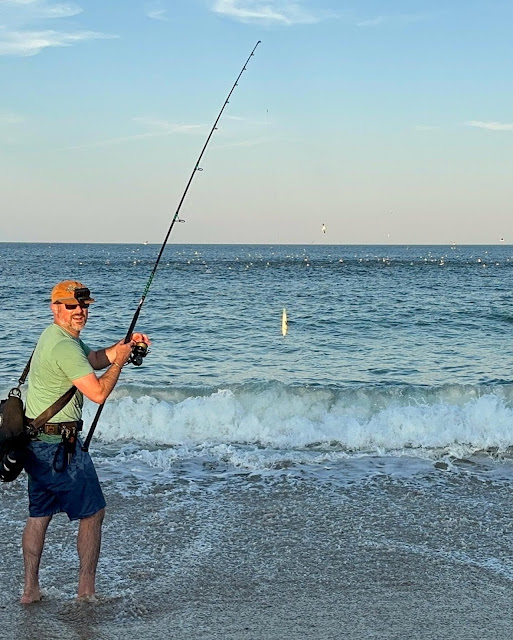
The next 20 minutes went on like that...wash, rinse, repeat. Acres of boiling water sluggishly moved down the beach as anglers followed along, fighting and releasing fish, then leap-frogging others who were hooked up in order to get in position for their next cast. The noncombatants behind us watched in awe at what was taking place. There was good reason to be amazed. I had been visiting and fishing the Cape for more than two decades and had never stumbled into anything like it. Only once before did something remotely similar happen to me on vacation, about 25 years earlier with my Uncle Frank in Charlestown, Rhode Island, but even then, that blitz was all bluefish.
While it all felt surreal, I was ready for this exact scenario,
beaching a half dozen stripers up to the mid-30-inch class and dropping a few others.
By the time we made it back to our blanket, the top-water action drifted far enough
away from shore to make the decision to call it a night easier. A few anglers
kept up in pursuit, but the damage was done was for us. My girls and I absorbed
what just went down while enjoying the last frames of sunset.
Each of the next four days, we spent significant time along the
Cape’s outer beaches and never saw another fish or bent rod, still marine life
was all around us. We were treated to an incredible display of whales a few hundred
yards offshore, humpbacks full-on breaching and bubble-net feeding for hours. Another
lively sighting was a giant ocean sunfish, mostly exciting because its fin poking
out of the water looked awfully like a shark fin as it passed us on the beach.
Toward the end of our trip, I visited a tackle shop to stock
up on crab flies and replace the pencil popper I had lost earlier in the week. In
comparing notes with one of the employees, he experienced the same blitz we did, and shared that the next three evenings at
that beach were dead; no signs of life anywhere. In turns out, we were in the right place at
the right time and got lucky. That’s lotto fishing for you.
Friday, July 14, 2023
Sunday, November 6, 2022
The Fall Classic
Friday, December 31, 2021
Year of the Yak
The year of our lord 2021 was a game-changer thanks to a kayak
that willed its way to me. Investing in a proper platform for outings on Long
Island Sound and beyond had been on my mind for years. Things accelerated last
March in the classifieds section of a Connecticut fishing forum. For sale was a
second-hand Hobie Mirage Revolution 13 in good condition with a mess of
accessories going for a very fair price.
Contacting the seller set off a chain of events and a roller
coaster of emotions. As luck would have it another angler inquired just before
I did. The seller honored this order while assuring me the other guy wasn’t a
serious buyer. Daydreams of pedaling through epic blitzes were dashed when a
text, apologetic in tone, explained that the buyer was serious after all and—poof—the
Hobie was gone. It was business and life went on.
Two weeks later I found myself on that forum again with a
blinking icon on the screen. Low and behold it was a message from the fella who
beat me out for the kayak. He had realized that his back wasn't cut out for hauling
around the heavy Hobie and wanted a center console instead. An interesting
development, but by then the news was almost a week old and the kayak had been listed
for sale again. Here’s the kicker, a new buyer was supposed to pick it up at the
guy’s house yet never showed. By this point the Fish Gods had made their
intentions clear—this kayak was meant to be mine. I sent a deposit to hold it
and a few days later drove it home in the slow lane on 95 like there was a
newborn in my truck.
One of the best parts about this new chapter is all the
learning that comes along with it. While I made some memorable one-off trips in
the past—Costa
Rican roosterfish remains one of the coolest experiences of my life—I never
put in enough time to get truly dialed-in on a kayak. The technology has come a
long way since and this would be my first time using a yak with pedals and a rudder.
A rookie season of trial and error lay ahead of me and I was stoked to
reinvigorate my passion for angling by introducing new tools and techniques.
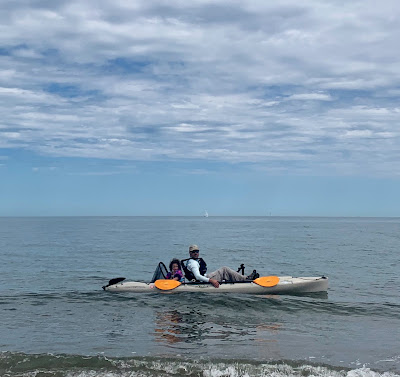
The first expeditions were family beach days where I brought
the Hobie along to get my bearings. After ferrying my daughters around and
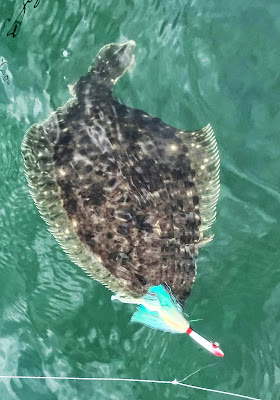
making drifts for fluke (and catching mostly sea robins), I confirmed what I
already knew—the MirageDrive is outstanding. The pedal-system really gets the
kayak moving at a good clip and fingertip steering with the rudder control is a
breeze. I also accepted that it’s going to take some getting used to how wind,
tide, current, and pedaling influence my drifts.
By the time the fall run kicked into high gear locally, things
were clicking a little more on the yak. On a sunrise mission in September, I made
a short peddle to a submerged boulder field that boaters often blow right by. It
is ideal surfcasting habitat, yet the land around it is private and a pain to
reach legally. The kayak solves that issue and for the first hour of daylight,
each drift passed the point resulted in a hook up. Stripers and blues were fighting
over my spook, sometimes slapping it a few feet in the air. That morning was further
validation that the Hobie will be key for accessing spots that seem to be dwindling
by the year.
Arguably my most gratifying kayak experience in 2021 didn’t
involve a rod and reel. My friend Greg kindly invited me on an excursion to a
salt pond for an afternoon of clamming and looking for Native American
artifacts. We crossed the pond to a stretch of shore that has produced a number
of ancient stone tools for Greg over the past few years. It was awesome exploring
a beautiful and bountiful place that indigenous peoples had hunted and gathered
for millennia. There must have been a horseshoe up my arse because my first
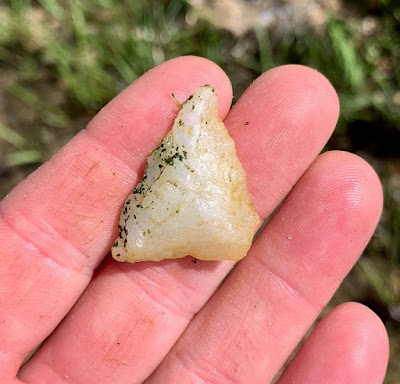
time there I found a gorgeous quartz projectile point, nearly intact except for
a missing ear on the base.
Later we anchored in knee-deep water over a patch of silt
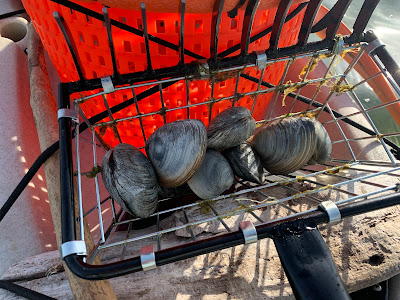
and sand that is home to quahogs—a species of shellfish that has drawn humans
to salt ponds like this since the ice sheets retreated. Using steel rakes with wire
baskets, we worked the bottom and occasionally heard or felt one of the hard-shelled
bivalves knock against the teeth of our rakes. A dozen or so perfect specimens made
their way home with me and were cooked on the grill that night. The kayak turns
out to be an ideal mode of travel to reach clam beds and arrowhead spots and my
hope is that these types of trips will only increase in frequency.
The last tour of 2021 came in November and had me in a
wetsuit because of colder water temperatures. Hellbent on catching my first
keeper-sized tautog from a kayak, I focused on jigging with Asian crabs over rocky
structure in about 10-15 feet of water. After realizing I need more practice in
the anchoring department, I moved on to peddling against the current in an
attempt to stay on top of the desired spot. Situations like this are why spot-lock
technology is so highly coveted. It was not optimal, but I managed to land a pile
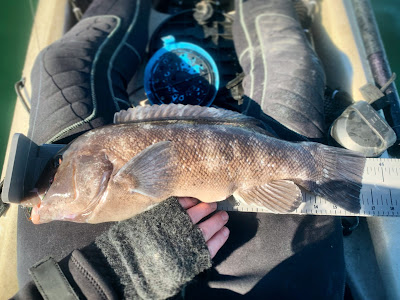
of shorts before finally putting an old bulldog on my lap.
With birds wheeling in the distance, I gave up on any shot of a limit and released the blackfish. For the next hour I peddled after a body of fish that would surface briefly, go down and then pop up again a football field away. The water clarity was crystal clear and I witnessed multiple stripers following each retrieve of the lure. Not giant fish, but it was a gas and my legs were burning from all the chasing. A memorable way to close out the inaugural season.
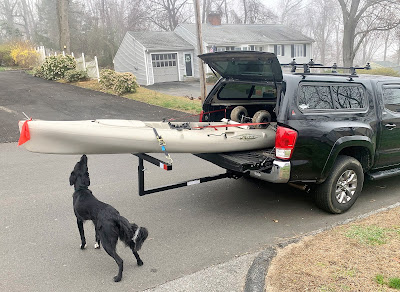
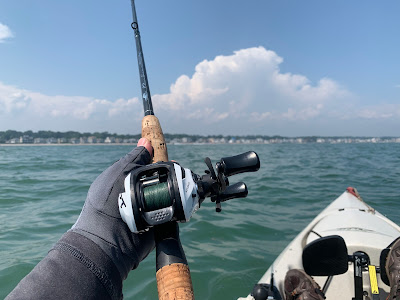
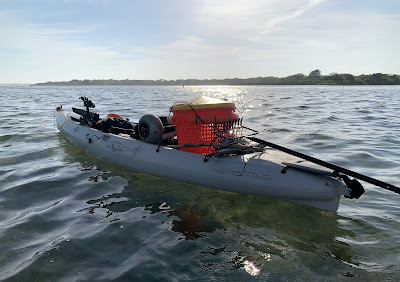
At nearly 14-feet and 90-pounds fully rigged, the Hobie is a beast that takes some effort to get loaded and launched. Outings require a little planning ahead and a decent window of time to make the exertion worthwhile. Though I didn’t get out as much as I wanted this year, it’s a long-term investment and built to last. I plan to add a few creature comforts in the offseason, specifically setting up a fish finder. The kayak came with a couple older model Humminbirds that will do the trick until I upgrade down the road. Something to tinker with until we get ice strong enough to fish on. All in all, I’m pretty jazzed up on this kayak thing and look forward to the journeys ahead.