Showing posts with label alewives. Show all posts

Wednesday, April 12, 2023

Spring Seef

Coming off a winter with zero chances to ice fish any of Connecticut's deep-water lakes, I had been itching to visit one in a kayak this spring. It took a little help during Holy Week for my cards to line up right. With a day off of work, kids in school, and ideal weather conditions, excitement levels were through the roof as I drove north last Thursday.

When I finally launched at 8:30, it was 46 degrees with fog thick enough to make me question how well I knew my surroundings. Later in the morning, when it eventually burned off, temps spiked over 20 degrees. Thankfully there was little to no wind to speak of, making the surface of the lake smooth as glass and allowing sound to carry more than usual. The loud and eerie calls from a handful of loons fishing nearby reminded me of time spent on Woods Pond in Maine as a kid.

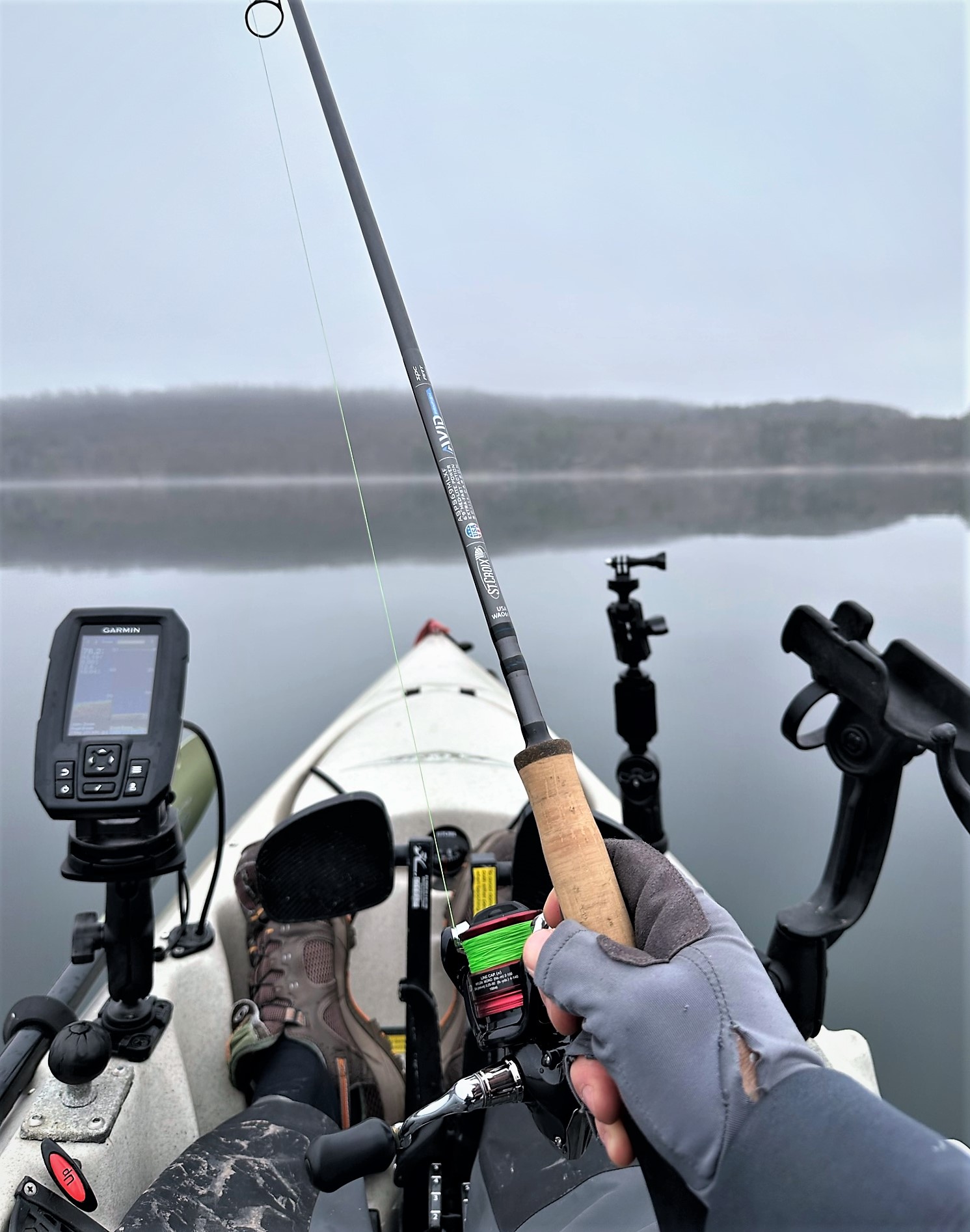
rigged & ready 


After peddling halfway to the planned starting point, I saw a fish eat on the surface close enough to warrant a hasty cast. It resulted in a reactionary strike and a long-distance release, but it was a welcomed sign of activity to come. As I approached the deepest bowl of lake, there were two gents drifting in a small jon boat – the only other anglers on the entire body of water.

My game plan was the same in the kayak as it was when I have been fortunate to ice fish here: vertical jigging with soft plastics and metal spoons to imitate the lake's main forage of landlocked alewives. Whether my fish finder was not up to the task or I still haven't fully dialed-in the unit yet, I couldn't see my jig or targets on screen in detail like I usually do while on the ice. Though still confident in my method and the spot to keep doing what I was doing, part of me felt like I was fishing blind.

glass

soft plastics

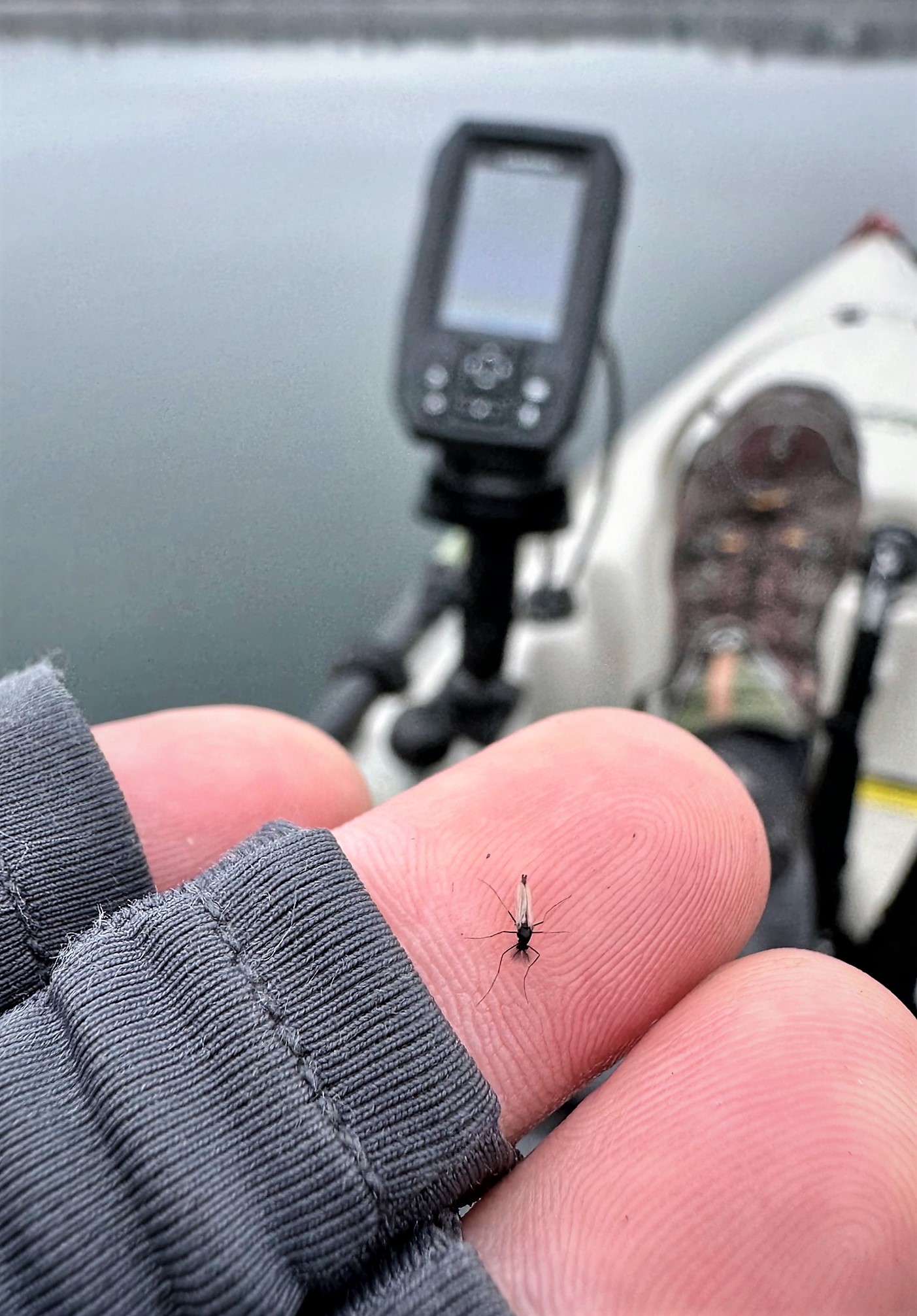
That method consisted of jigging on bottom and up through the water column with occasional pauses in hopes a chasing trout would pounce on my offering. More than few times I stopped to cast at the ever increasing number of trout feeding on top. Some of the takes were gentle sips while others were a porpoising action that revealed flanks of spotted silver and copper. There were unmistakably large fish in the mix. I reached over the side of the kayak and cupped in my hand what they were eating—small midge that were emerging from the lake bottom about 75-feet underneath. As the sun started to peak out, the hatch shifted from midge to larger stone flies. It was a sight to see.

elephants eat peanuts; big trout eat midge

a stonefly takes flight

The brown trout eating on the surface were keyed in on bugs, wanting not much to do with the baitfish offerings I presented them. Never during the trip planning stage did I ever think a fly rod and assortment of dry flies would be needed. I hooked and lost one more on the surface, but ultimately decided my time would be better spent targeting the trout I couldn't see eating herring down below.

During one of the many retrieves with a lead head and soft plastic, something heavy doubled over my new St. Croix rod on its maiden voyage. With the water so clear, I got the first look of the fat seeforellen brown trout when it was still more than 10 feet deep. I had stared down at many silvery trout on this lake through holes in the ice, but never before in open water. The sharp single hook of the jig was firmly planted in the trout's jaw, yet the jerky headshakes and barrel rolls on its way up from the depths had me muttering a hybrid of prayer and cursing. When it finally came within arm's length, I slid the net under the weight of its body, hoisted up, and let out a sigh of relief.

On a bump board on my lap, the fish measured a hair over 22-inches. More impressive than its length though, was its girth. This trout was built like a Mack truck—a body type achieved on a healthy diet of fish, not just bugs. The population of illegally-introduced alewives in this lake is booming, and the seeforellen strain stocked here are taking full advantage.

herring eater

seeforellen


catch & release trophy for CT waters


After admiring the trout in the water, one of the heaviest I have ever landed in Connecticut, it kicked away strong, straight back down to whence he came. It was an awesome feeling and affirming moment. The idea of a solo kayak mission on this body of water had been consuming me for months since the winter that never was. While I may never luck out with the same extraordinary conditions again, it was satisfying to know that I could pull this type of trip off and have a chance to catch big trout like that, or bigger. 

Morning grew late and the fog completely burned off, revealing a bright blue sky and a completely different day than when I started. It was darn right hot out for April. The amount of fish eating up top dwindled. I missed one more solid hit just off bottom. My time on the water was growing thin, but the long peddle back to my truck was an enjoyable one. I hugged the shoreline and snuck right up on a pile of largemouth bass of impressive size, yet couldn't coax one into biting a tube. There were two bald eagles perched in a tree along the last leg of my journey back. A fitting way to finish an outing that I will look back on for as long as I'm around. 

a gorgeous body of water
had to pullover for this on the way home; spring in New England

celebratory libations

Monday, January 2, 2023

Chain Gang

Most years, during late fall and early winter, there are a few weeks between hanging up my saltwater gear and tuning up my ice fishing equipment. It's a time when I like to visit a favorite body of water in Connecticut—a challenging fishery with incredible scenery where I have spent many a chilly outing chasing trout and walleye.


Not many lakes and ponds in my home state are home to both walleye and the fast-growing seeforellen brown trout. Throw in a healthy population of smallies and crappie and, at least to me, that rounds out a desirable lineup of target species. And here, they all have the potential to reach true trophy size—think state record potential. 

One reason for this is their diet consists mostly of landlocked alewives, which you can see schools of dimpling the surface on calm mornings. Another reason these fish have the ability to grow so large are the strict angling regulations in place. Rules that limit big chunks of when, where, and how you can fish, which ultimately deter some anglers from even bothering to try.


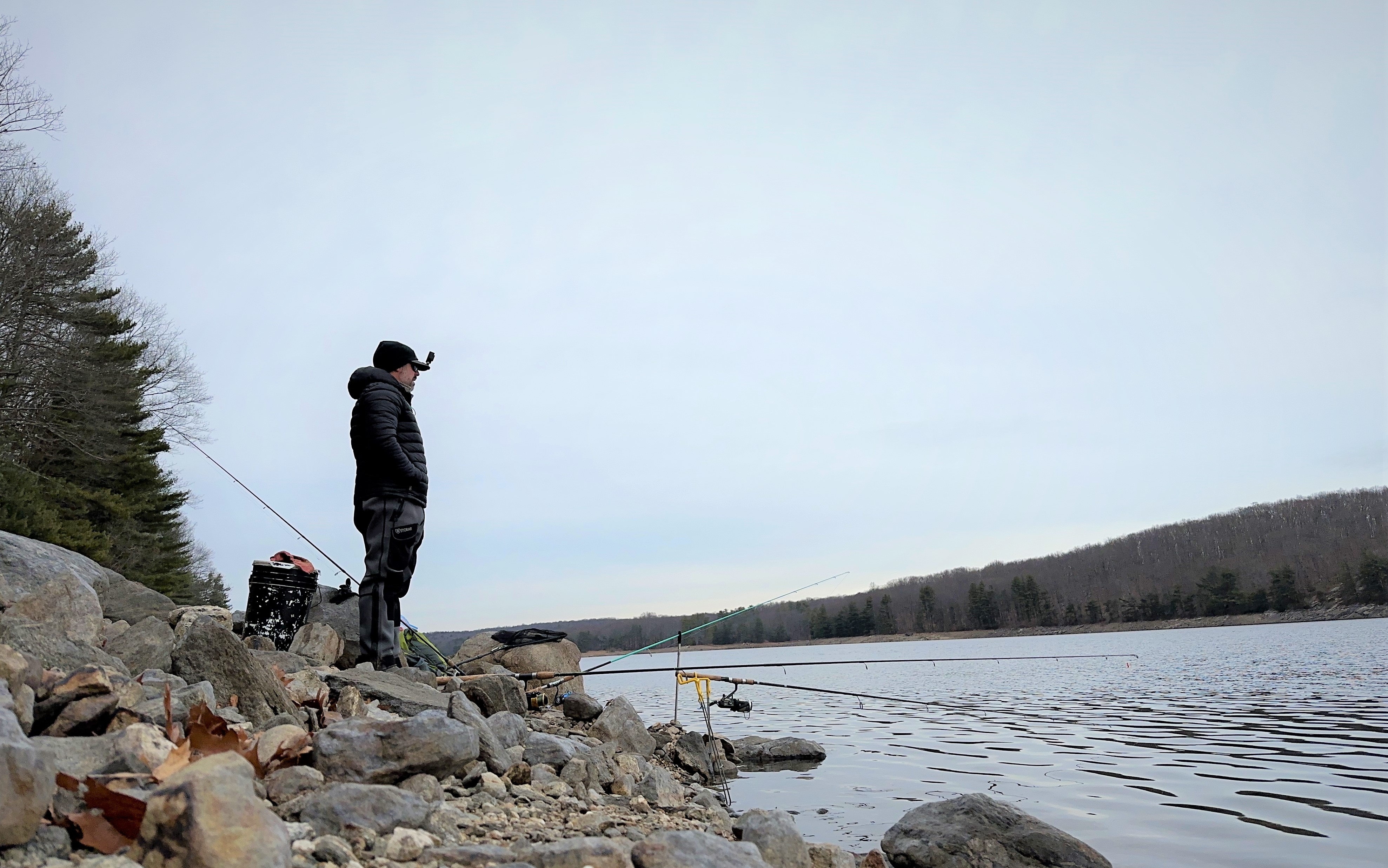
All that said, for me, it's the chance of encountering something genuinely special on any given outing that is a main motivator for logging hours and miles along its rocky shores. Over the years, more times than I'd like to admit, I have gone home without catching a single fish. Yet each trip, skunk or success, I learn from, and if you are going to get blanked, it may as well be at a place as beautiful as this.


This past November and December I was only able to make three trips—two morning shifts and one evening. What's more sad than the lack of time I spent there were my piss poor results. I landed a handful of fish, but none that I actually set out to catch. One was a brown bullhead that ate a shiner I had set on bottom in hopes of a sunrise walleye. Another was an unimpressive largemouth bass that fell for a shiner suspended under a slip bobber. 


Most discouraging though, were the high number of chain pickerel that I landed on both lures and live bait. Pickerel are a native species that I respect, yet have never seen in these numbers in this body of water. It wasn't just me either. I talked to a few other anglers and a tackle shop owner that reported similar results—the most pickerel any of them had ever experienced. I don't know what to make of the population explosion, but I hope the trend doesn't continue in 2023. God willing I will be there perched on a rock next fall to find out. 

Tight lines and happy New Year!

Tuesday, February 22, 2022

Raising the Bar

I have hooked and landed longer brown trout through the ice, but never one so heavy. This fish was stuffed yet still had room for my pike shiner set 30-feet down. By the time I had reached my tip-up, it had ripped dozens of yards of Dacron from my spool. Then I gained it back, hand over hand, and it froze on contact against the bare ice. Luckily most of the long battle was between the last 20-feet of line, half of which was 10# test fluorocarbon that gave me a little more confidence during the final throes around the hole. 

When my fishing partner reached down and helped scoop the trout topside, there was a sense of joy and relief, followed by fast action to document the new personal best before its healthy release. It is moments and fish like this one that become seared into our memory and drive us out into the elements each winter.


Saturday, February 12, 2022

Return of the Jig

I really enjoy ice fishing with tip-ups, but there is something special, and different, about jigging. Hooking and fighting my quarry through the ice with a rod and reel is such a thrill to me. When the target species is a quality trout that rushes 20 feet up the water column to eat a metal spoon I am pulling away, well, even better. 

It had been 11 winters since my last trip to this favorite body of water. Like seeing an old friend, we picked up right where we left off. I already can't wait to get back there, and God willing it won't be as long until next time. 


Saturday, December 12, 2020

Stepped in Crappie

There was no sign of them only a week earlier, so I was both surprised and delighted to see tiny rings scattered across the glassy surface of the reservoir. What looked like a passing rain shower was actually baitfish schooling at the top of the water column. Sunday breakfast was served and soon followed the first boil that cut through the morning silence.


Anadromous alewives have been running our tidal rivers each spring since the last glaciers retreated, but it wasn’t until around 1990 that the landlocked variety were introduced in Connecticut. Since then, in a number of waterbodies around the state, this member of the herring family has become a favorite forage for larger predators like trout, walleye, bass, and almost anything big enough to eat them. And where populations of landlocked alewives are present, there is usually opportunity to catch special fish.

On this morning I had set out while still dark with high hopes for walleye. I was fishing two slip bobber rigs with bobber stops set so my shiners dangled just over where I thought bottom was. The first bobber went under as the sun started creeping over the tree line. To my surprise it was a black crappie; not a large one nor the species I was after, but I was happy to rid the skunk. While I’m no expert in the calico bass department, I do know where there’s one, there’s usually more.

All this time alewives were still dimpling on the surface. After a few more boils from what I assumed were trout, a good enough case had been made to ditch the walleye plan and bring my baits up higher.  I made one more cast before adjusting and, as luck would have it, my rig got fouled around my slip bobber and the shiner began flailing on the surface when it hit the water. The struggling prey was too enticing and something engulfed it almost immediately, crashing on it like a striper would a pencil popper. I set the hook and reeled in a respectable brown trout—my first from this reservoir in years. Without that tangle, I wasn’t catching that trout—sometimes it’s better to be lucky than good.

There was a time when most brown trout caught in this reservoir were seeforellens. DEEP brought the German strain to Connecticut in the early 90s and they thrived in a handful of our deep lakes with high populations of alewives. It was a real gut punch in 2016 when seeforellen production was cut from our hatchery system due to cost-saving measures, but not before the strain made a lasting impact with Connecticut’s brown trout record changing hands twice between 2011 and 2014.  

There are undoubtedly some giant pre-2016 “seefs” still lurking in our waters, and thankfully it looks like the days of rearing this strain in Connecticut are returning. According to the state’s latest salmonoid action plan, the Fisheries Division is “currently re-establishing a broodline of the seeforellen brown trout strain” at the at the Kensington State Fish Hatchery, which is welcomed news to this angler.

After releasing the trout, I adjusted the two slip bobber rigs to suspend my shiners about five and six feet below the surface. There was a light breeze that created a left-to-right drift and took my bait from deep water over a shallow shelf. Just like you’d expect them to be, the fish seemed to be straddling this drop-off and that’s where my bobber went down four different times, but it was the final two that are going to stick with me for a while.

A little after 7 a.m. the fish gods made it clear that it wasn’t walleye or trout that I was supposed to catch that day. The next bobber take-down resulted in another black crappie, but this one was an absolute unit. It taped out to 15.25-inches, my largest calico ever, and had a full belly on it. The shiner was halfway down its gullet and this fish was unquestionably suspended over the shallow structure, pigging out on the schooling alewives. While crappie are considered excellent table fare, this specimen had me in awe and I decided to let it go.

Over the next hour I tried tapping into what I assumed was a good school of crappie in front of me. Along with drifting live bait, I peppered the area with artificials—hair jigs, plastic tubes, blade baits—but nothing. Then, with only minutes before my cut-off time, another bobber down by another giant calico—a near carbon copy of the previous one, if not a touch heavier. Just an incredible specimen that I couldn’t bear to harvest. I released the fish, packed my gear and left them biting, but it was a hell of way to go out.  

What happened in those two hours was not lost on me—originally out for walleye, then changing it up for trout, only to stumble upon the two best crappie of my life. It was an eventful morning that did wonders in boosting my appreciation for the species. It also reminded me that no matter how much I want to stick to a specific game plan, often times it pays to observe what’s happening and just go with the flow (or just get lucky). Two of the three alewife-stuffed calico bass I caught would have qualified for DEEP’s trophy fish award program had I done the proper documentation, but I’m content with the memory and that their genes are still in the gene pool. 


Tuesday, November 26, 2013

Reservoir R&R

Saltwater fishing is over and done with for me and ice fishing is still another cold spell away. So while waiting for hardwater, friends and I have been logging hours at a local reservoir with our sights set on trophy trout and walleye. The big fish have eluded us so far, but as the saying goes, if it was just about catching we would have stopped going long ago...


Friday, May 20, 2011

Buckle Up

Every angler has their priorities and right now my priority is striped bass from the surf. Big bait and ensuing stripers are showing up in full force across the region. The next month or two should offer some of the best surfcasting of the year. Thankfully I got my fill of trout fishing in this spring because I may not be stream-side for a while. Here are some recent captures of Marone saxatilis from our local Connecticut waters. Buckle up for a long season!


Thursday, January 20, 2011

Trout Bum(mer)

Deep snow, sketchy ice and emaciated trout would accurately describe our latest escapade. Four anglers only managed two skinny browns during a half day on ice fishing this weekend. The trout population in this particular body of water is hurting from a decline in their main forage of land-locked alewives. Though illegally introduced, the alewives were the best thing that ever happened to trout in this lake. There are multiple reasons why the baitfish are dying off and it could be several years, if ever, before their numbers bounce back to where they once were. That means the holdover brown trout fishery we have been fortunate to experience over the last several winters is just a memory. It may be time to think outside of Connecticut  if I really want to target trophy trout through the ice. I can also stay local and focus more time on other target species like walleye and northern pike.


Photo credit: Aaron Swanson

Sunday, December 26, 2010

Jigging Fix

Our first trout trip of the year was a far cry from what we had hoped for. The ice was just over three-inches thick, perhaps that's why we were the only ones on the lake that day; or maybe it was the 30 MPH gusts. The wind was so fierce it had us confined to the portable shelter and eventually snapped a pole supporting one its hubs. The fishing sucked too. When our honey hole didn't produce, we packed up the shelter and moved base camp a few hundred yards away for good measure. A few trout did cooperate and it was awesome watching them spiral up towards the hole through the crystal clear ice. We'll try again soon under better conditions and hopefully our results follow suit. 

Photo credit: Aaron Swanson

Photo credit: Aaron Swanson

Photo credit: Aaron Swanson


Tuesday, June 1, 2010

Strike While The Iron's Hot

Our local waters are loaded with life and fishing very well at the moment. Fresh with sea lice, migratory striped bass have returned to the area and are corralling pods of Atlantic menhaden in the shallows. Like clockwork, bluefish have also joined the party. In addition, thousands of alewives and blueback herring are dropping out of tidal rivers while schools of silversides and sand eels round out the baitfish smorgasbord.

Now would be a good time to log some hours on the water before summer sets in. Water temperatures remain cool enough for nice bass to be taken close to shore in broad daylight. As long as all this food sticks around, the shallow water all-you-can-eat buffet will continue. And as the water warms up, it will be time to start playing the night game a little more. Bottom line: go fish!


Tuesday, May 4, 2010

Keepers On The Fly

Over the last month or so, impressive numbers of river herring have made there way into many waterways along the Connecticut coast. According to weekly Connecticut DEP anadromous fish reports, some streams and rivers this spring are hosting the most herring since modern record keeping, which should also bode well for hungry striped bass hot on their tail.

I have been fortunate to tangle with some small striped bass this year, but nothing of any size yet.  Last night I got my chance when a friend and I did a bar-hop of fishing spots. We scouted many new and old haunts, but one thing was consistent at each stop--thick amounts of big juicy herring. Boils and surface crashes could be seen and heard in the distance. While retrieving our nine-inch flies, we even noticed herring trying to mate with the artificial offerings. 

Just before midnight, during the low outgoing tide, three solid stripers smashed our herring imitation one after another. Aided by the swift river current, the feisty fish put up some good battles on the fly rod and were all released in good health It turned out to be a hell of an outing and tonight we'll go back for more.   

Thursday, January 14, 2010

Early Ice Video

Here's a great way to burn a couple of minutes. My buddy Derrick did an excellent job capturing and editing this footage from some first-ice trout trips. The fishing was hot and heavy for a few days in a row. Check it out!

Monday, January 11, 2010

Early Ice Trout

CT DEEP's Inland Fisheries Division stocks a number of our lakes with trophy Seeforellen brown trout, a fast-growing German strain that thrives in deep, cold water. These big lakes are typically some of the last to freeze over leaving anxious trout anglers keeping close tabs on long-term forecasts each winter. With last week's arctic blast, we had high hopes that the lake was locked-up and ready to go. On Thursday a friend scouted and fished there, confirming our suspicions and saving us a 3-hour recon trip. By Friday morning, we were walking on three inches of black ice above 80-feet of water.
 
Derrick and I walked out to a virgin piece of ice and got to work.  I took my time jigging while setting tip-ups, while Derrick quickly put in his limit of traps.  When the sun came up, the bite turned on and we chased flags for the next two hours. The action was hot and heavy and we had trouble keeping our lines in the water.  At one point there were six traps on the ice that needed to be reset, but that's a good problem to have.  We both iced some nice specimens on the tip-ups during the morning window, though Derrick had the hot hand and put on a good show.    

Photo credit: Derrick Kirkpatrick

A friend and trout guru, Capt. Alewife, soon ventured out to meet us, but unfortunately the fierce morning action had cooled.  We did have a slow pick of fish throughout mid-day, but nothing like only a few hours earlier. The weather conditions changed, most likely turning off the bite.  A low pressure system moved out and a high, which would park itself over us for the next few days, rolled in.  The wind we knew was coming finally reared its ugly head and the one-man shelters came in handy. 

Throughout the afternoon, we made adjustments for the finicky trout, finally breaking their lock jaw with some finesse jigging.  We eventually pulled most of our traps and focused on jigging with electronics to put more fish on the ice.  We settled into a nice groove by late afternoon before packing up for the long ride home.  It would only be a few short hours before we got up and did it all over again.  The lack of sleep and hefty gas bill didn't matter, we were about to experience some of the best ice fishing we ever had. 


Day Two

Taking what we learned from the day before, we tweaked our game plan slightly for the next outing.  We were the first ones on the ice again, this time joined by Aaron, who was chomping at the bit from being stuck at work the day before.  We set tip-ups right off the bat, without early jigging to slow us down.  We did not set as many however, nor did we spread them so far apart.  I think we all knew the jigging would produce a higher number of fish collectively, but the traps were hard to neglect, as any flag could produce a trophy.  With all of the traps nearly set, a gust of wind came through signaling that it was time to set up base camp and lock her down with ice screws.  The wind blew a consistent 10 to 25 all day, putting the wind chill factor near zero.

With the tip-ups in and base camp locked down, we sat three abreast in the roomy Eskimo and began to call in the trout.  Right from the start, we were marking many targets on our fish-finders, right off bottom in over 70 feet of water.  It is almost hard to describe the fishing that occurred in that shelter for the next couple of hours, but it was nothing short of stellar.  There were several double hookups and even a rare triple.  Hoots, hollers and high-fives were commonplace for the day.  There wasn't a span of five minutes where a rod wasn't bent over.  With the wind blowing outside, it was hard to venture from the shack, even for tripped flags.  However, knowing the caliber of fish that roam this lake, every flag must be tended to, and it just so happened that the largest trout of the day came on a trap.

Photo credit: Aaron Swanson


As productive as trap fishing can be, they can be burn valuable time due to maintenance.  Unraveling 70-plus feet of braided line in temperatures hovering near zero degrees is a slow and painful process.  When the fishing is "on", time is of the essence and this is where the jigging rod can shine.  We had the trout in a frenzy on the bottom of the lake and we had to keep them interested.  One at a time we pulled our traps, which helped us from losing our hands to the cold.  We left a select few tip-ups out with rather large baits for the trout that never came.  We continued to pluck quality fish from the depths until the action came to a halt in the late afternoon.  Nothing of serious size came through the holes in the shelter, but 16 and 17 inch trout became the norm, with multiple 18 and 19 inch fish iced too.


Photo credit: Aaron Swanson

Photo credit: Aaron Swanson

Photo credit: Aaron Swanson

The action dwindled as the day wore on, but full advantage was taken during the early ice melee.  We hadn't achieved the size class of Seeforellens we were after, but the sheer numbers of fish iced certainly helped.  It was all smiles during the long pull back to the trucks.  We had a great couple days on Connecticut's trout-Mecca, along with good company and many a long laugh.  The weather conditions were brutal, but equipped with the proper gear, we made it happen. I already know where I'll be next weekend and with any luck we'll crack into a bigger class of trout.